

Call for Essays: Chief Justice E.S. Venkataramiah Memorial Best Essay Prize — Inaugural Edition
August 5, 2026
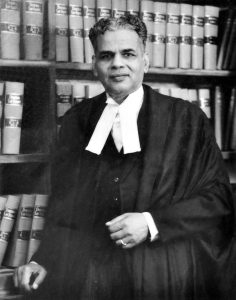 The National Law School of India Review (NLSIR), the flagship student-edited, double-anonymous peer-reviewed law journal of the National Law School of India University (NLSIU), Bengaluru, is pleased to announce the institution of the ‘Chief Justice E.S. Venkataramiah Memorial Best Essay Prize’, an annual national essay competition open to undergraduate law students across India, instituted with the support of the family of late Justice E.S. Venkataramiah. The inaugural edition of the contest is now open. Please see below for more details.
The competition will be conducted between July and September every year. Each year’s essay competition will be organised around a contemporary and significant theme in law. Shortlisted entries will be evaluated by a panel of eminent academics and practitioners with relevant subject-matter expertise. The winning entry will be published in NLSIR and the winner will receive a cash prize of Rs. 25,000 and a citation plaque bearing the winner’s name.
Theme for the Inaugural Edition
“Does the Constitution Choose an Economic Model? Directive Principles and the Question of Ideological Neutrality”
In Property Owners’ Association v. State of Maharashtra (2024), a nine-judge Bench of the Supreme Court considered whether all privately owned property falls within the expression “material resources of the community” under Article 39(b) of the Constitution. The majority held that it does not, reasoning that the Constitution does not commit India to any single economic ideology and that treating all private property as a material resource would require the Court to endorse a particular vision of the country’s economic and social order.
The judgment raises a deeper constitutional question: can the Constitution – and particularly the Directive Principles dealing with ownership, distribution, and the common good – ever be neutral between competing economic models? Or does interpreting these provisions inevitably involve normative choices about property, markets, redistribution and the role of the State?
This year’s essay competition invites participants to engage with these questions through the lens of constitutional theory. Rather than writing a case comment, entrants should use Property Owners’ Association as a starting point to explore whether and to what extent, the Constitution embeds, permits, or rejects particular economic visions. Strong essays will engage with comparative constitutional perspectives, as well as political and economic theory, to reflect on the implications of these questions for constitutional interpretation.
Submission Guidelines
- Each entry should be an original, unpublished, single-authored essay in English.
- Every essay must clear anti-plagiarism checks.
- Every essay must be supported by a bona fide certificate, duly signed by the Registrar/Vice-Chancellor or other Appropriate Authority, confirming their enrollment as undergraduate students in a law programme at the time of submission.
- Abstracts or proposals are not required. NLSIR will not consider or review abstracts or proposals submitted separately.
- Entries should be formatted in Times New Roman, size 12 font, 1.5-line spacing on an A4 sheet, and carefully referenced using the OSCOLA citation guide.
- Word Limit: 8,000 to 10,000 words (inclusive of footnotes)
- Final Deadline: 31st October 2026
- Every essay must comply with the NLSIR Style Guide and other policies notified on the NLSIR Repository.
- Submit your essay here. This form will begin accepting submissions from 1 September 2026 onwards.
- No prior registration or registration fee is required. Interested participants may directly submit their manuscripts, provided they satisfy all the eligibility and submission requirements specified in the submission form.
For any queries, please write to .
Eligibility
The competition is open to all undergraduate law students (enrolled in either the five-year or three-year law programmes) at any law school recognised by the Bar Council of India (BCI).
About NLSIR
NLSIR is the flagship student-edited, bi-annual, double-anonymous peer-reviewed law journal of NLSIU. The journal is one of India’s oldest student-edited law reviews, now in its 38th year of publication. It occupies a distinctive place in Indian legal academia as a forum that has consistently sought to combine rigorous doctrinal analysis with broader normative and theoretical inquiry. Over the years, the journal has been cited by the Supreme Court of India on multiple occasions, in K.S. Puttaswamy v. Union of India; Unaided Private Schools of Delhi v. Director of Education; Union of India v. M/s Mohit Minerals and A.M.U. v. Naresh Agarwal.
NLSIR features pieces from both scholars and practitioners. NLSIR has featured contributions from Dr. Justice D.Y. Chandrachud (Former Chief Justice of India), Prof. Michael Furmston (who was at the time Dean and Emeritus Professor of Law, Singapore Management University), Prof. Cass Sunstein (Professor, Harvard Law School), Prof. Chan Wing Cheong (Professor of Law, Singapore Management University), Prof. Richard Whish (Emeritus Professor of Law, King’s College London), Prof. Martin Hunter (who was at the time Barrister, Essex Court Chambers), Prof. Rosalind Dixon, Prof. Dev Gangjee (Professor of Law, University of Oxford), Justice (Retd.) Altamas Kabir (Former Chief Justice of India), Justice (Retd.) S.B. Sinha (Former Judge, Supreme Court of India), Justice (Retd.) B.N. Srikrishna (Former Judge, Supreme Court of India), Prof. Jonathan Herring (Professor of Law, University of Oxford), Late Fali Nariman (Former Senior Advocate, Supreme Court of India), Arvind Datar (Senior Advocate, Supreme Court of India) as well as other eminent practitioners and scholars.
For further information, visit the NLSIR Repository and follow NLSIR on Linkedin and Instagram.
Statement from Ms. Nayana Tara B.G.
“Justice E.S. Venkataramiah was born to a schoolteacher in the village of Manikyanahalli and rose to become the 19th Chief Justice of India. He was also the Advocate General for the State of Mysore, and a Judge of the High Court of Karnataka prior to his elevation to the Supreme Court where he served for nearly a decade. Throughout his life, he sustained a commitment to scholarship in general and legal scholarship in particular, evident in his judgments, and other writings. He devoted time as an Advocate to teaching and writing, alongside a flourishing practice. Unusually for a former Chief Justice of India, he returned to the classroom at NLSIU where he also held the M.K. Nambiar Chair in Constitutional Law and taught till his passing in 1997. This Prize instituted in his memory seeks to honour his legacy of commitment to legal scholarship. While the prize rewards excellence, its deeper purpose is to give students an opportunity to reflect on contemporary legal issues with intellectual rigour and discipline of persuasive writing. The Prize materialises Justice Venkataramiah’s conviction that scholarship paves the way for development of the law.”
Statement from the NLSIR Editorial Board
“Justice E.S. Venkataramiah, a former Chief Justice of India, was also a member of the faculty at the National Law School of India University, and his distinguished contributions to the legal profession, adjudication, legal education and cultural life continue to inspire us. At NLSIR, we hope this Prize will encourage rigorous academic writing among undergraduate students and serve as an aspirational benchmark for sustained scholarly engagement with legal theory and doctrine across law schools in India. We are very grateful to Hon’ble Mrs. Justice B.V. Nagarathna (Judge, Supreme Court of India) and Ms. Nayana Tara B.G. (Advocate and alumna of NLSIU) for their immense support in making this endeavour possible.”
NLSIR thanks Prof. (Dr.) Arun K. Thiruvengadam, Dr. Sidharth Chauhan, Mr. Kunal Ambasta and Ms. Hrishika Jain for their inputs in finalising the theme. NLSIR also thanks the Vice-Chancellor, the Registrar, and the Dean Research’s Office of NLSIU for their support in instituting this Prize.