

Public Lecture | Science, Law, and the Rights of Nature: Innovative Approaches in Latin America
Training Centre, Ground Floor, Conference Hall
Open to public. Register here.
Monday, July 27, 2026, 5:00 pm
Open to the public.
The National Law School of India University (NLSIU), Bengaluru is organising a public lecture on “Science, Law, and the Rights of Nature: Innovative Approaches in Latin America” by Dr Clara María Minaverry and Daniela Belén Velazquez in discussion with Dr. Gayathri D. Naik, on 27 July 2026.
The event is open to public, please register here.
Abstract:
Technical reports from the Intergovernmental Science-Policy Platform on Biodiversity and Ecosystem Services (IPBES) and the Intergovernmental Panel on Climate Change (IPCC) provide the factual basis demonstrating the inadequacy of traditional environmental law. The latter—predominantly anthropocentric in nature and administrative-regulatory in design—has historically been structured around weighing and authorising permissible negative externalities, while keeping ecosystems within the dogmatic category of objects of property and resources for economic exploitation.
In response to the limitations of this regulatory approach, Latin American constitutionalism has introduced an epistemic shift by granting legal personhood to nature. This process of legal formalisation is evident in the Constitution of Ecuador and in legislative developments in Bolivia, where nature transitions from an object of protection to a subject of substantive rights (regarding existence, structure, and regeneration).
At the jurisprudential level, the Constitutional Court of Colombia has complemented this doctrine by formulating the concept of biocultural rights. This approach inextricably links biodiversity preservation with the safeguarding of the autonomy and traditional practices of local ethnic communities, recognising them as co-guardians of ecosystem stability.
However, the sociological efficacy of these norms faces a stark legal contradiction. An ecocentric normative framework coexists alongside public development policies based on neo-extractivism and transnational commercial law in the region. Operationalising the Rights of Nature, therefore, requires resolving these normative conflicts by subordinating commercial and contractual regulatory frameworks to the global biophysical limits established by scientific consensus.
About the Speakers:
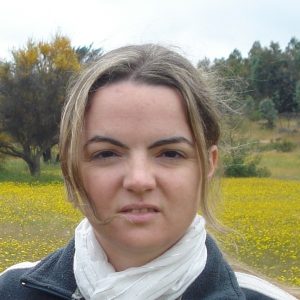 Dr. Clara María Minaverry is an Independent Researcher at the National Scientific and Technical Research Council (CONICET, Argentina) and Associate Professor of Environmental Law at the National University of Luján. She holds a PhD in Law from the University of Buenos Aires, a Postdoctoral degree in Social Sciences and Humanities, and a Master’s degree in Environmental Law from the Complutense University of Madrid.
Her academic and research work focuses on environmental and international law, ecosystem services, forests, climate change, biodiversity, and the rights of nature from socio-legal and interdisciplinary perspectives. She was a Visiting Scholar at Duke University Law School (USA) in 2024 through a Fulbright-CONICET postdoctoral fellowship. She is the Director of the Environmental Law Program (PRODA) at the Department of Social Sciences at the National University of Luján (UNLu).
Dr. Minaverry currently serves as Lead Author for the IPCC Special Report on Climate Change and Cities and for assessments developed by IPBES under UNESCO. She has also collaborated with international organizations and public institutions on environmental governance and biodiversity-related projects.
She has directed several research projects in Argentina and has an extensive academic production, including books, book chapters, and peer-reviewed articles. She also supervises doctoral and master’s theses and environmental law research programs.
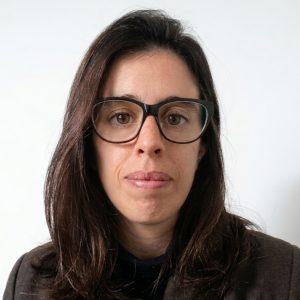 Daniela Belén Velazquez is an Argentine attorney graduated from the Universidad Abierta Interamericana (UAI), specializing in Environmental Law from the University of Buenos Aires (UBA), and is an Internal Doctoral Fellow at CONICET.
With a strongly interdisciplinary profile, she has extensive experience in the defence of Human Rights, providing legal counsel to Indigenous communities in land-related conflicts, and contributing to the development of public policies focused on gender equality and sustainability.
She has served as a technical advisor to national institutions such as the National Institute of Indigenous Affairs (INAI) and has been a member of the Interamerican Association for Environmental Defense (AIDA).
In addition, she teaches undergraduate and graduate courses at various universities and is a researcher with the Environmental Law Program (PRODA) within the Department of Social Sciences at the National University of Luján (UNLu). Her work is supported by an extensive record of research and specialised publications on environmental law, the rights of nature, and biocultural rights, among other topics.