

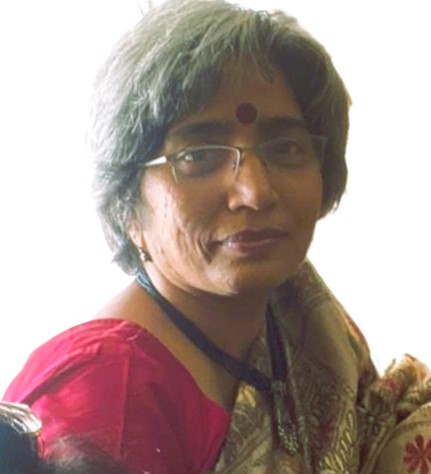
Shanti Mahendra
Visiting Faculty
Teaching
Courses
Education
Development Studies
Profile
Shanti has a strong global health background and has led and advised cross-sectoral health programmes. She has worked over nearly three decades international development, advising and driving programmes in South Asia and sub-Saharan Africa. Her focus has been on bridging policy and practice to strengthen systems for the advancement of women, adolescents and children’s well-being. Her strategic leadership support to both small and large programmes has ranged from design, oversight, research, monitoring, evaluation and knowledge management. She has in country work experience in India, Nepal, Bangladesh, Nigeria, Kenya and Sierra Leone, and has provided remote support to multi-country programmes in Francophone and Anglophone Africa.
Beyond this core work, she has extended her skills and expertise to a start-up to develop solutions for children with learning difficulties; and to an NGO to generate sustainable support for children from underprivileged backgrounds to develop life-skills.
Research Interests
Health Systems, Women’s Health, Intersections of Health Sector with other sectors; Quality of Care, Equity
Publications
Mahendra S, Style S, Pant A, Nam S (currently in development) – Use of process mapping in health systems strengthening – lessons from Nepal
Mahendra S, Rajbhandari B, et al (currently in development) – Equity in access to maternal and newborn health services in Nepal: a deeper dive into Nepal Demographic Health Survey 2022
Dar Iang M, Dembo-Rath, A et al (2024) Optimising Caesarean section use in Nepal through hospital generated and population-based data on Caesarean section rates to inform policy and practice (In Review with BMC Pregnancy and Childbirth)
Bandali S, Thomas C, Mahendra S, et al (2019) Strengthening the “P” in Maternal and Perinatal Death Surveillance and Response in Kenya: Implications for Scale-Up, BMC Health Services Research (2019) 19:611, https://doi.org/10.1186/s12913-019-4431-4
Neal S, Mahendra S, Krishna Bose, et al (2016). The causes of maternal mortality in adolescents in low and middle income countries: a systematic review of the literature, BMC Pregnancy and Childbirth, December 2016, 16:352 http://link.springer.com/article/10.1186/s12884-016-1120-8
Kilaru A., Mahendra S., Karachiwala B., and Matthews Z. (2014). The rise of institutional births in India – are maternal and newborn risks adequately addressed? in Moor, R. and Rajeev Gowda MV (eds) India at Risk: Managing threats to health, environment and livelihoods, Oxford University Press
Ramakrishna J, Ganapathy S, Matthews Z, Mahendra S. and Kilaru A (2008). Health, Illness and Care in the Obstetric Period: A Prospective Study of Women in Rural Karnataka, in M Koenig, S Jeejeebhoy, J Cleland, and B Ganatra (eds) Reproductive Health in India: New Evidence. New Delhi, Rawat Publications (http://www.rawatbooks.com/book_more_detail.aspx?id=327)
Matthews Z, Ramakrishna J, Mahendra S, Kilaru A and Ganapathy S. (2005). Birth Rights And Rituals In Rural South India: Care Seeking In The Intrapartum Period, Journal of Biosocial Science Volume 37, Issue 04, pp 385 – 411(http://eprints.soton.ac.uk/40741)
Matthews, Z., Mahendra, S., Kilaru, A. and Ganapathy, S. (2001). ‘Antenatal care, care-seeking and morbidity in rural Karnataka, India: Results of a prospective study’ Asia-Pacific Population Journal, June 2001, pp11-28. (http://eprints.soton.ac.uk/40961)
Kilaru A., Matthews Z., Mahendra S., Ramakrishna J. and Ganapathy, S (2004). ‘She has a tender body’: Postpartum care and care-seeking in rural south India, in Unnithan, M. (ed) Reproductive Agency, Medicine and the State. New York: Bergahn Books (http://www.amazon.co.uk/gp/search?index=books&linkCode=qs&keywords=9781845450441)