
‘Strengthening Accountability Systems: Reflections, Innovations, and Collective Action’
March 5, 2026
On February 14-15, 2026, the Theory & Practice of Social Accountability Project at NLSIU hosted a two-day consultation titled ‘Strengthening Accountability Systems: Reflections, Innovations, and Collective Action’ at the University campus. The event was jointly organised by nine civil society organisations:
- Social Accountability Forum for Action and Research (SAFAR)
- Mazdoor Kisan Shakti Sangathan (MKSS)
- LibTech India
- Foundation for Ecological Security (FES)
- Centre for Financial Accountability (CFA)
- Land Conflict Watch (LCW)
- Alternative Law Forum (ALF)
- Campaign for Judicial Accountability & Judicial Reforms (CJAR)
- National Campaign on Dalit Human Rights (NCDHR)
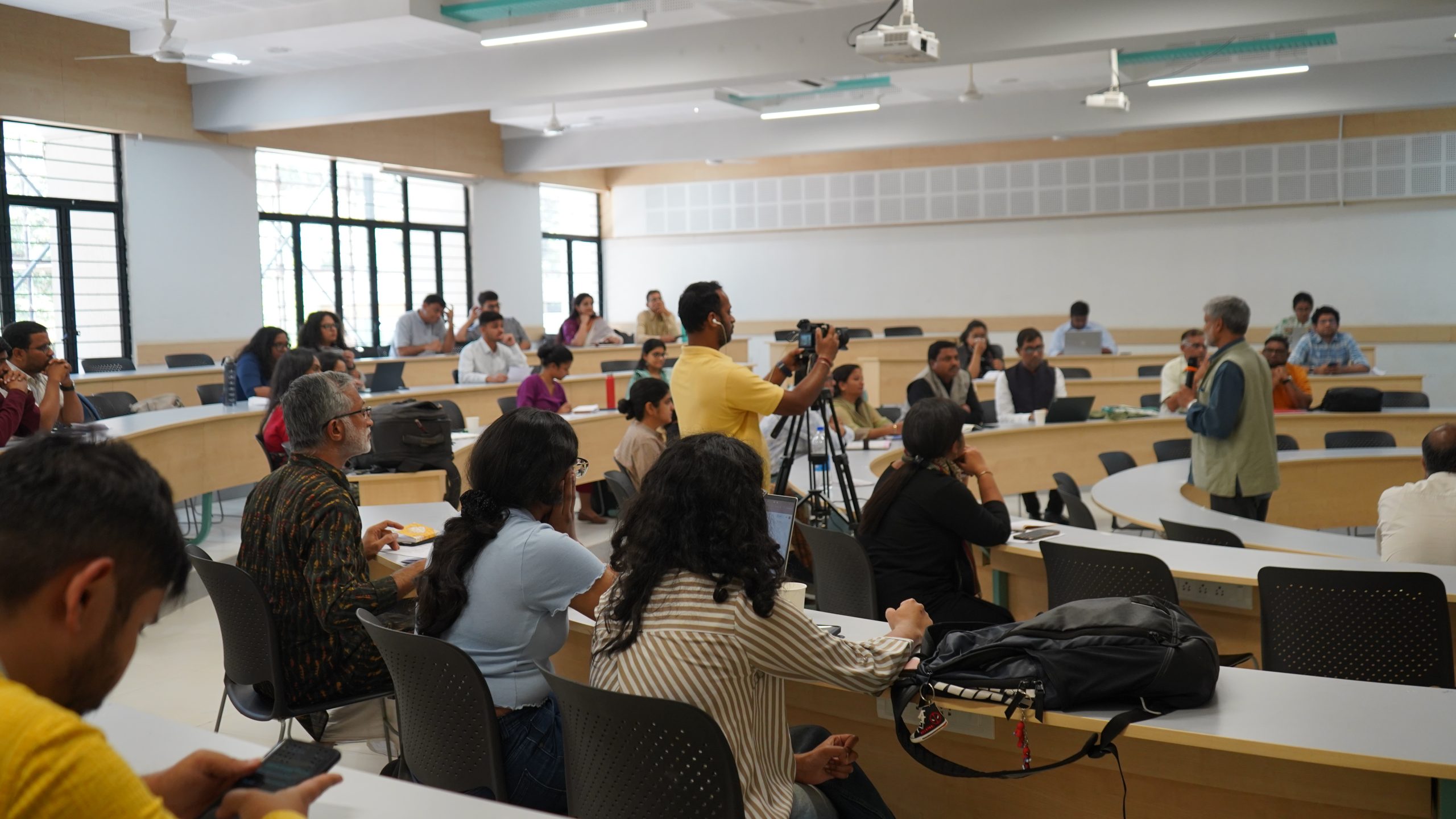
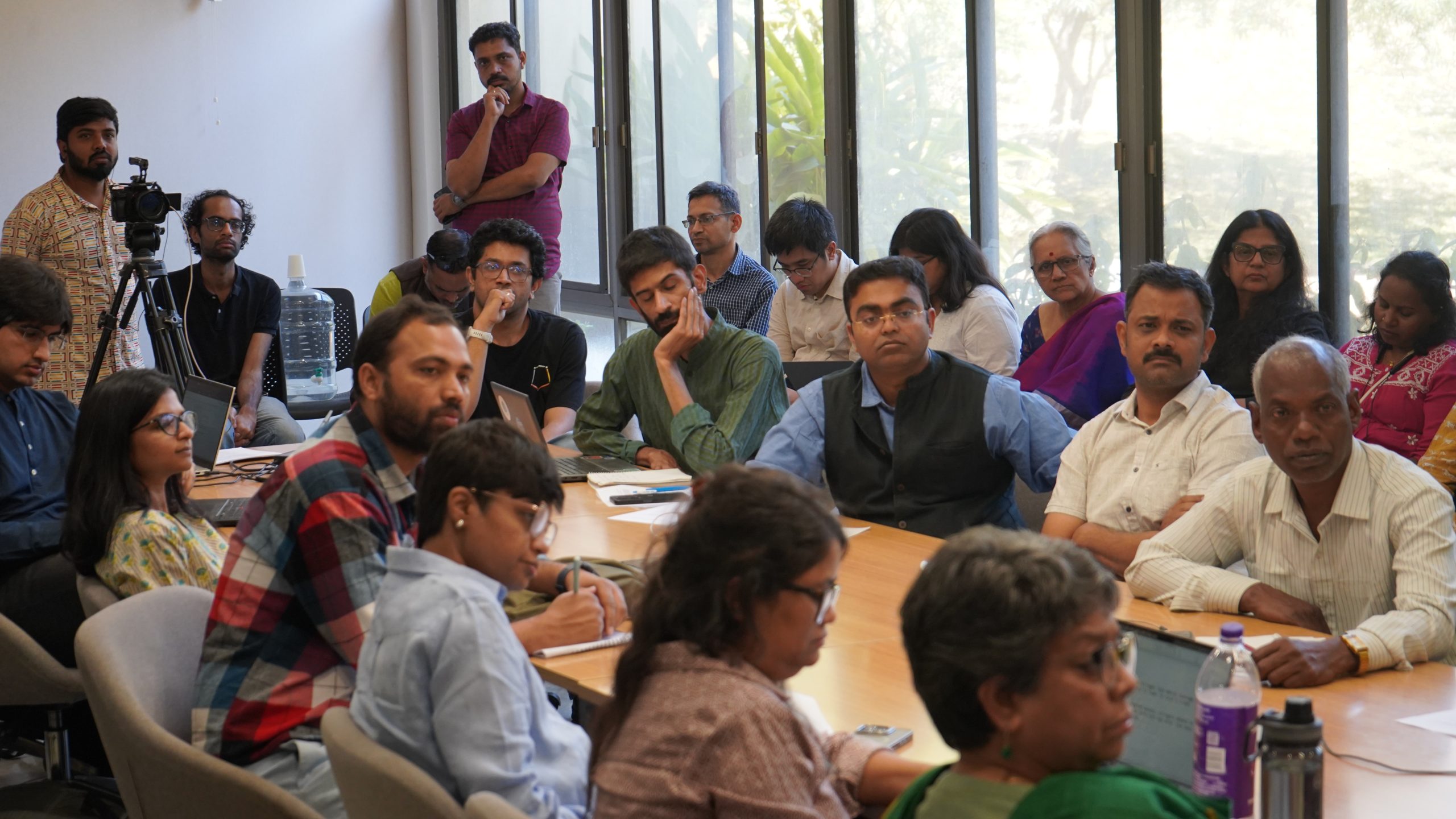
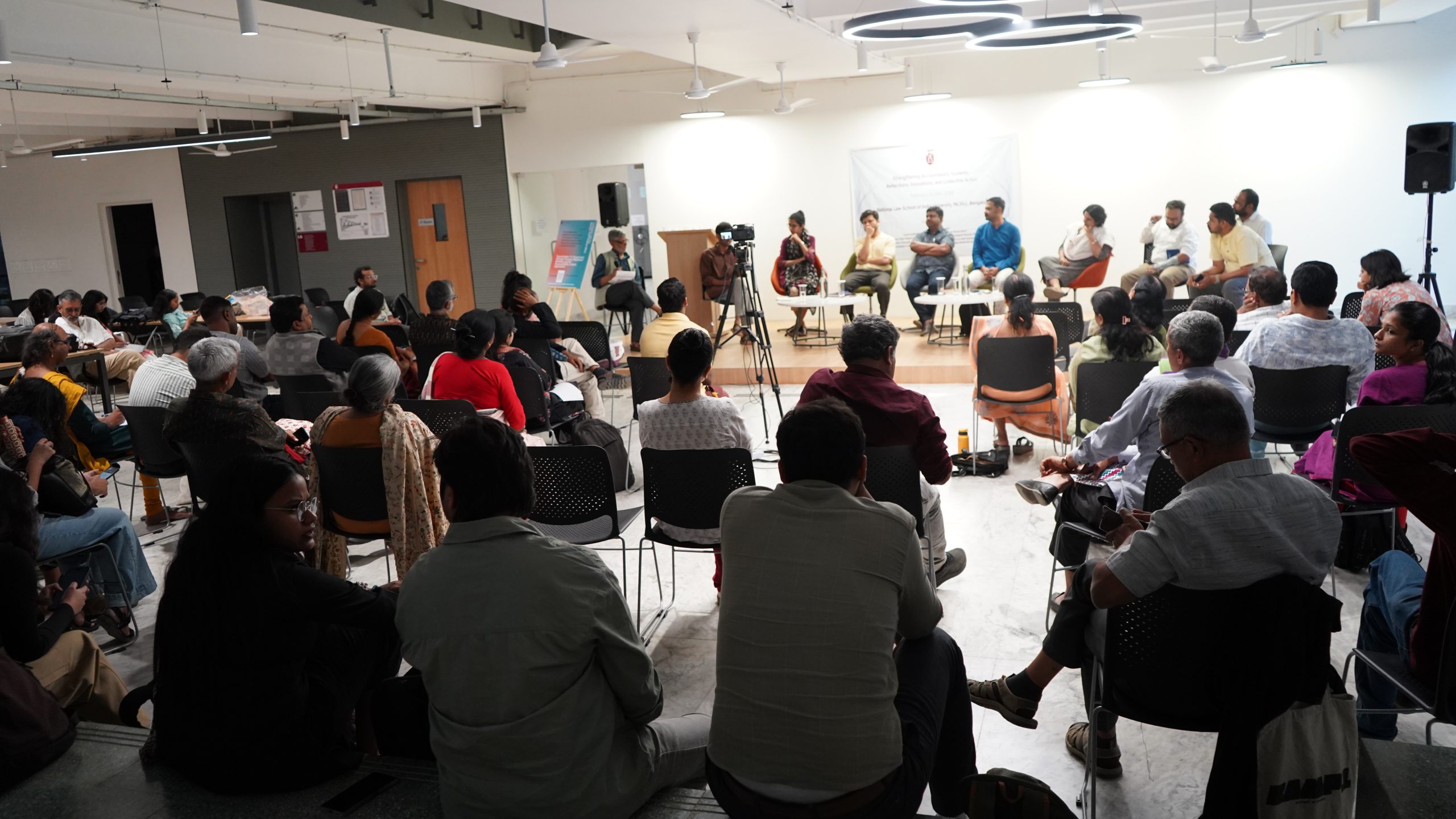
The trimester break, generally a quiet time on campus, became a lively space for civil society organisations, scholars, and practitioners to come together, reflect, and think out loud. The consultation reflected on practical interventions to strengthen public accountability—from social audits and grievance redress to proactive disclosure and transparency across a range of sectors from policing to technology for welfare to elections. It brought together nearly 200 practitioners, researchers, bureaucrats, frontline functionaries, and citizens to share experiences and develop a shared agenda for citizen oversight. The NLSIU library also saw exhibitions and stalls from the co-organisers and other civil society organisations.
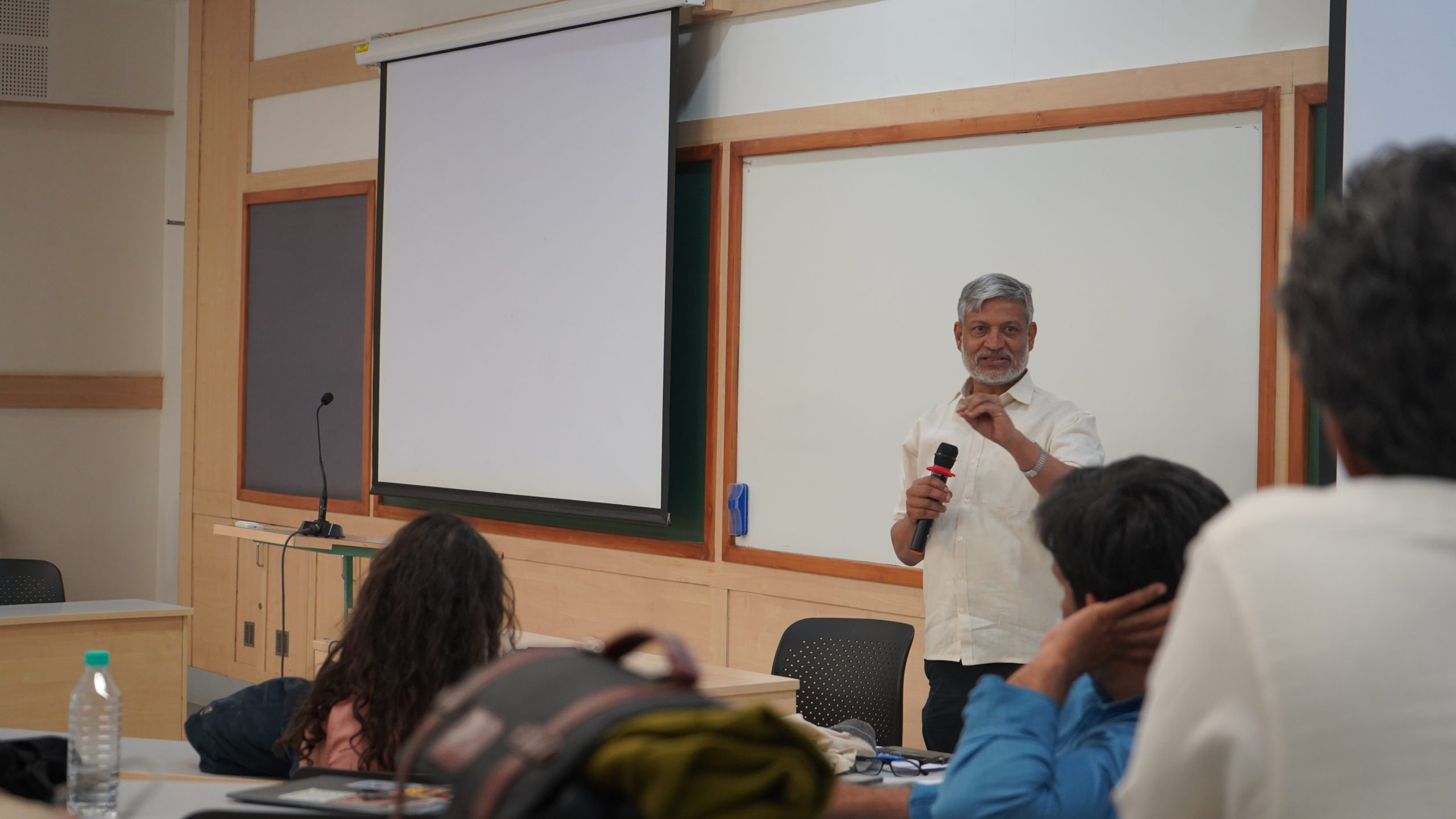
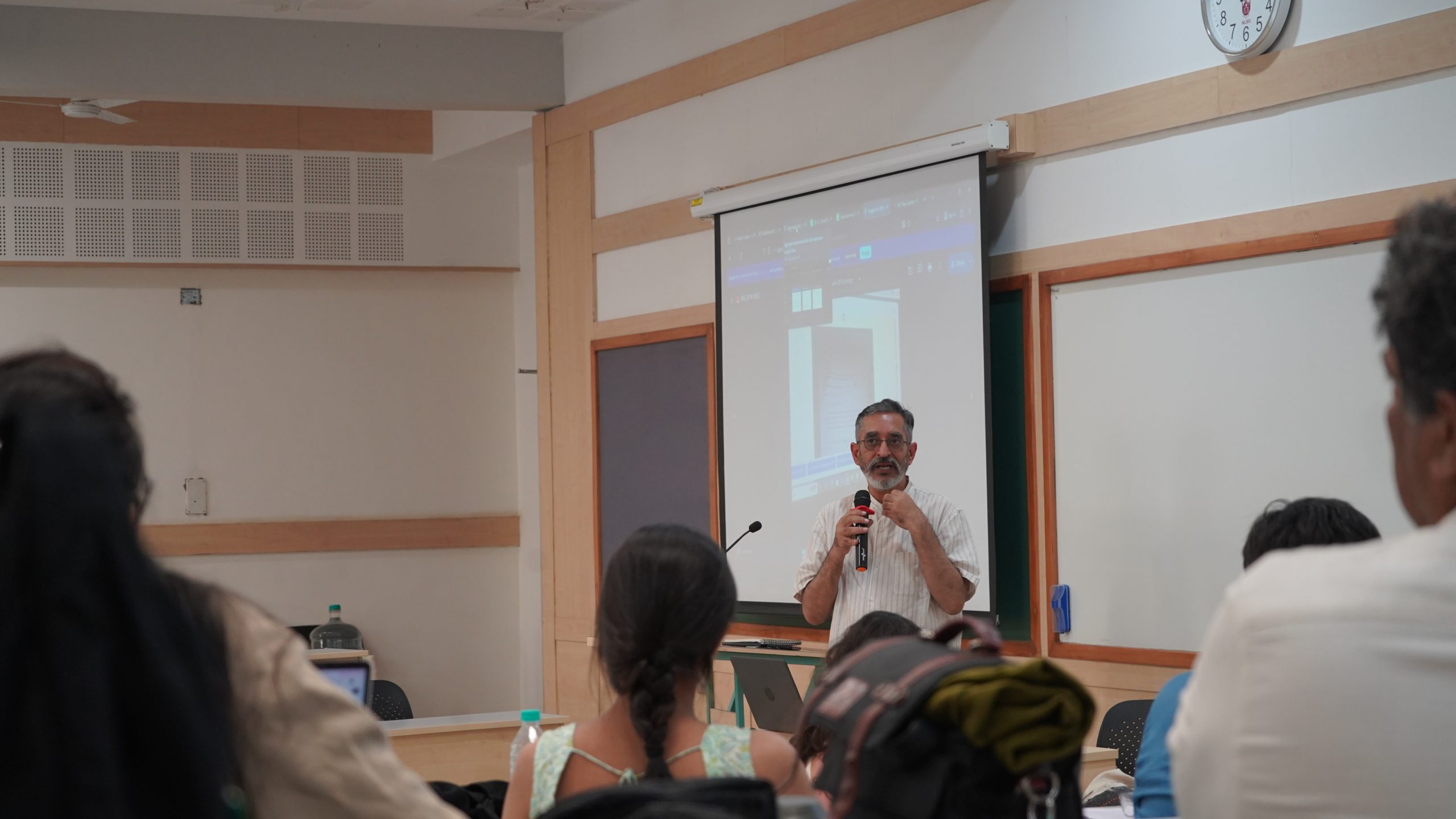
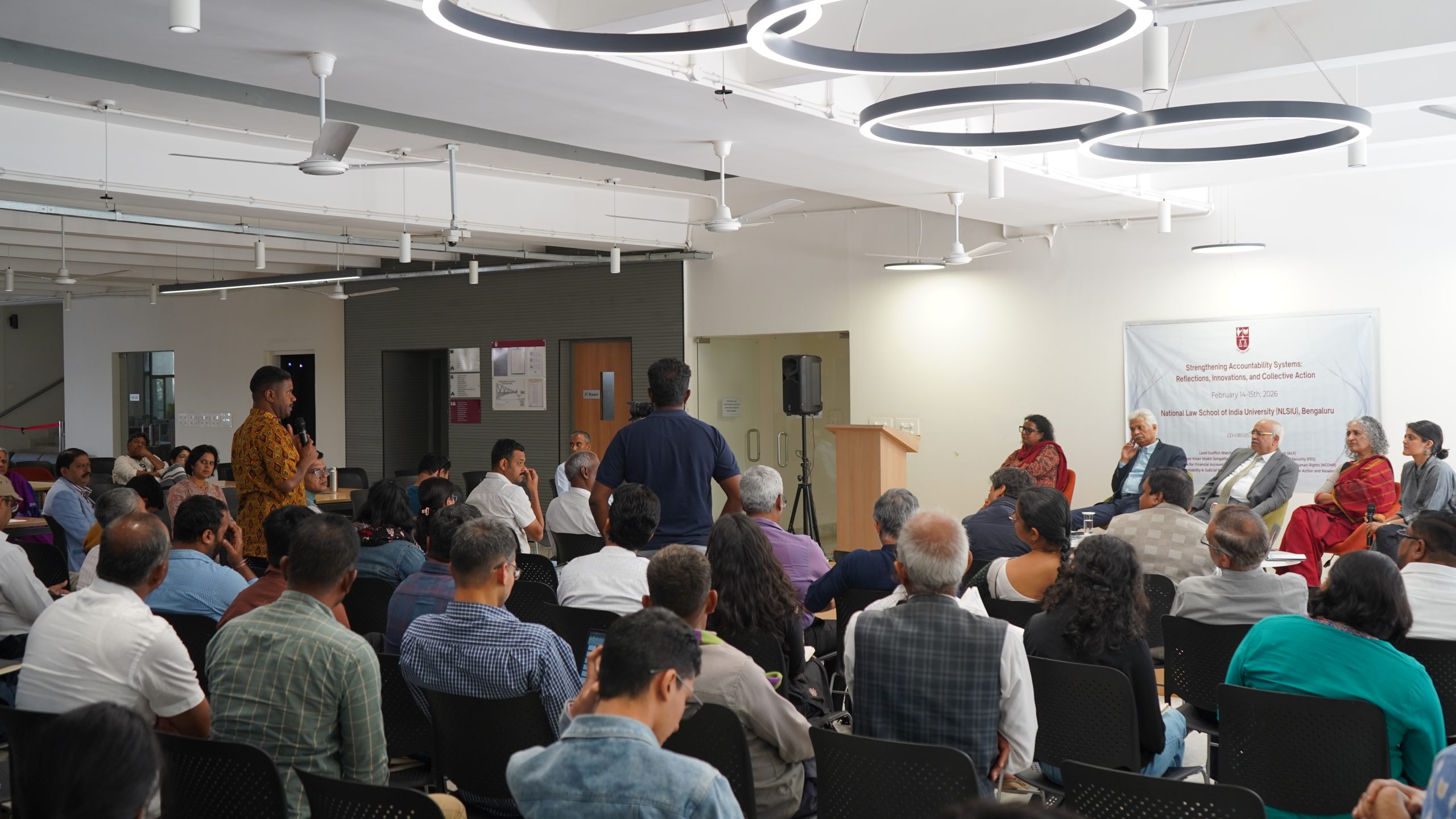
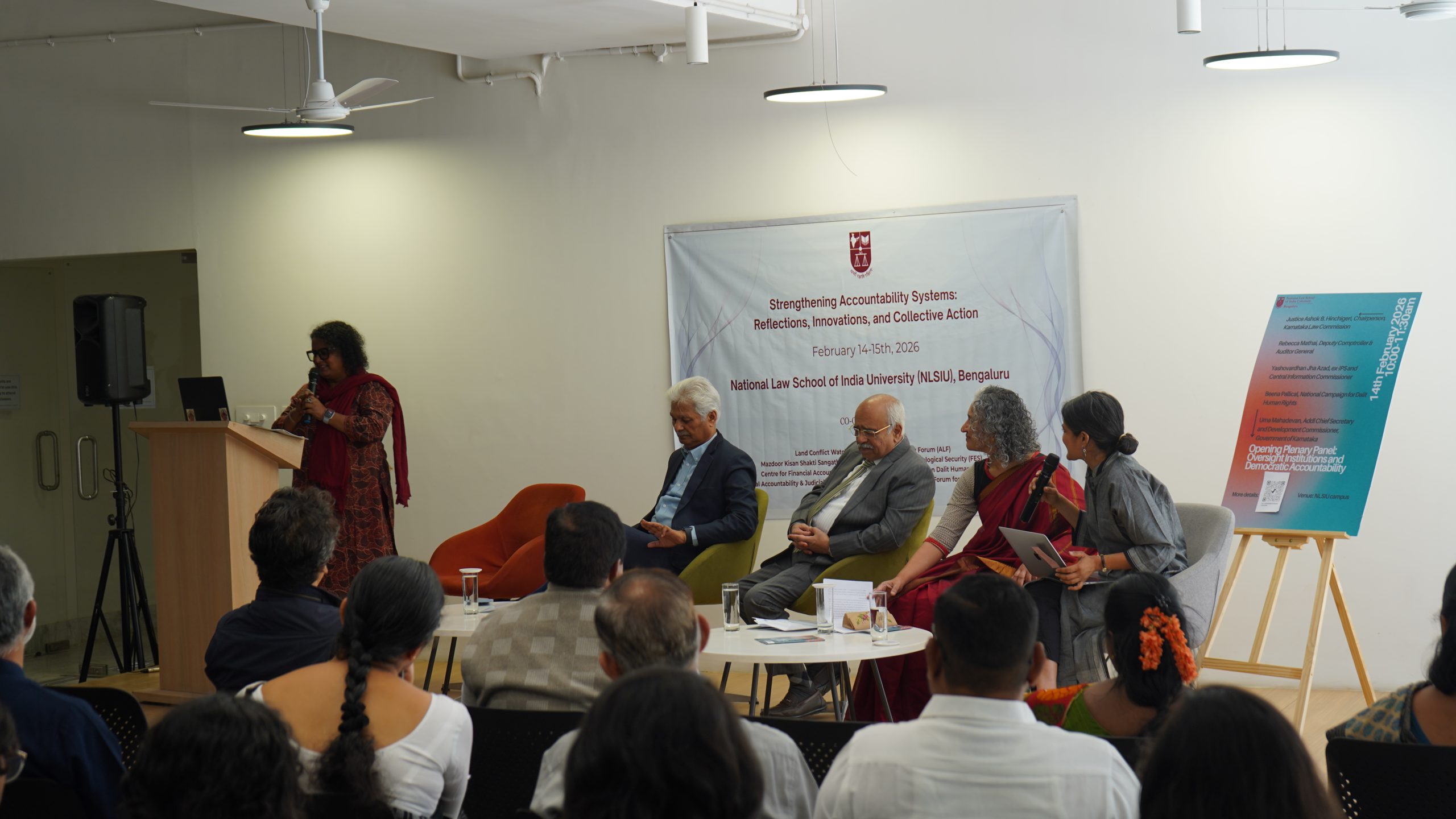
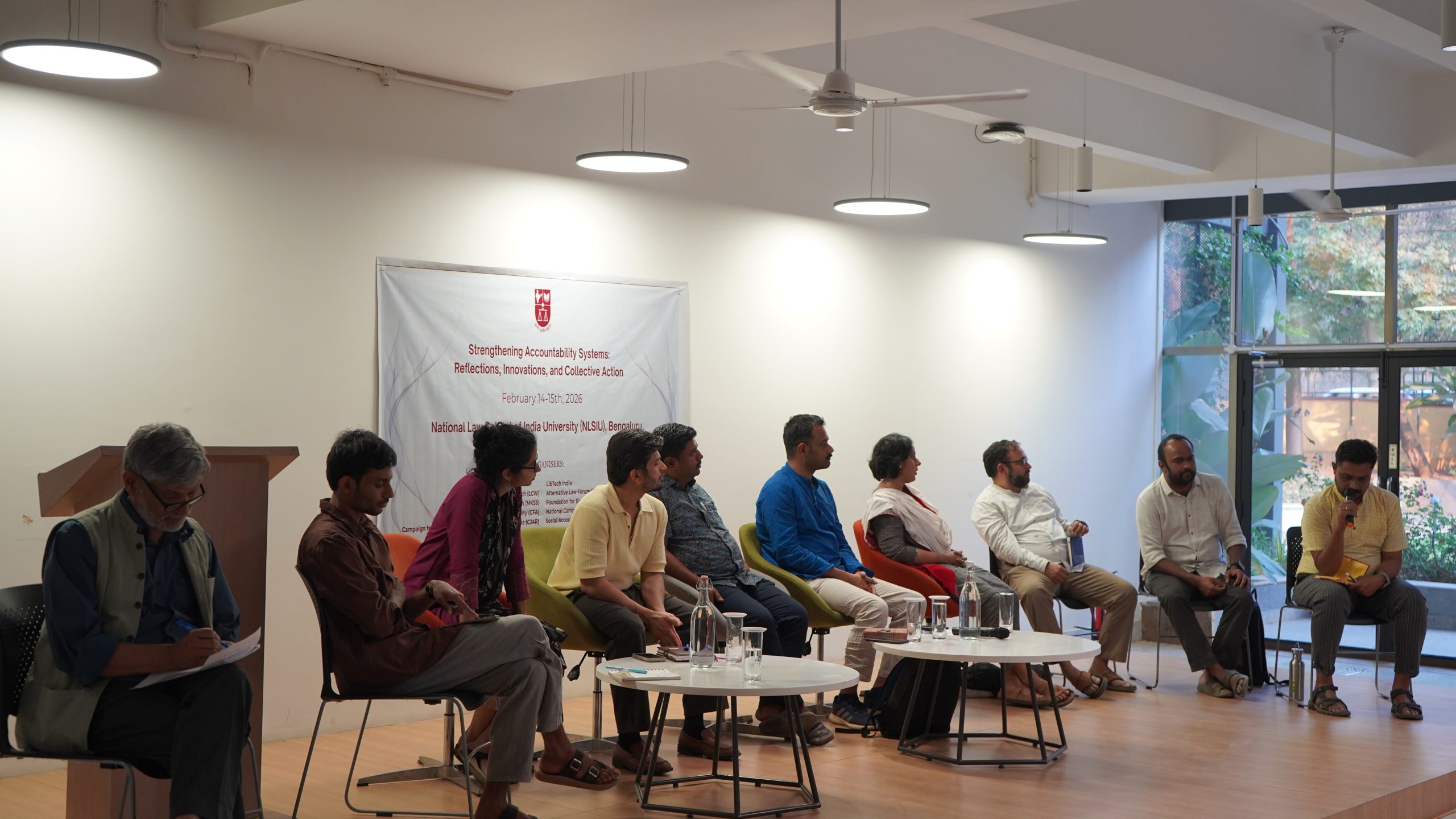
The morning of Day 1 opened with a plenary session which set the tone for the two-day gathering. The panel had Hon’ble Justice Dr. Ashok B. Hinchigeri (Law Commission of Karnataka), Rebecca Mathai (Deputy CAG), Yashovardhan Jha Azad (former CIC), and Beena Pallical (NCDHR). The session included remarks from Prof. (Dr.) Sudhir Krishnaswamy,Vice-Chancellor, NLSIU who called for a focus on accountability of markets and capital alongside the state. The session was moderated by Dr. Anindita Adhikari (Assistant Professor, Social Science, NLSIU).
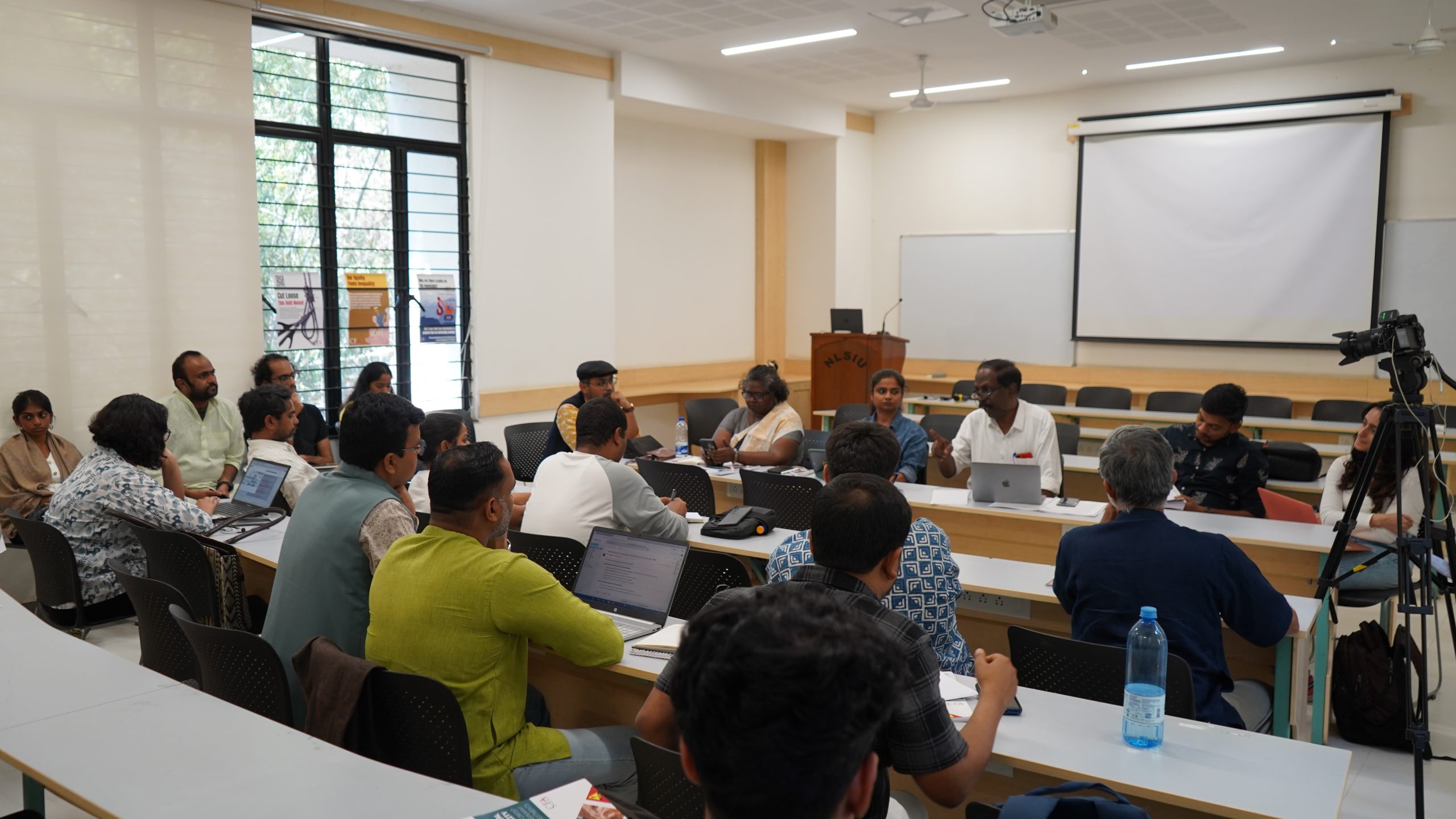
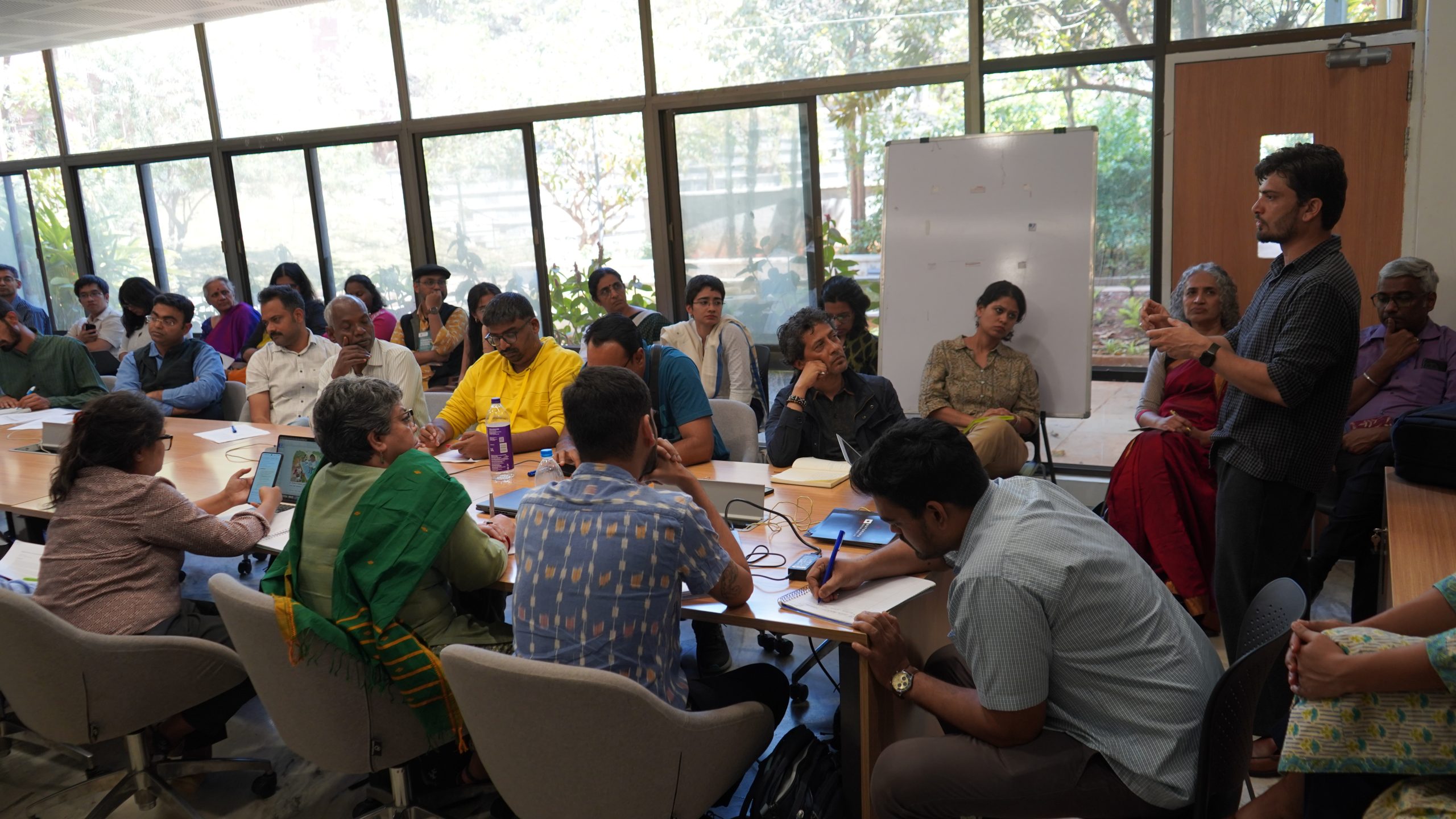
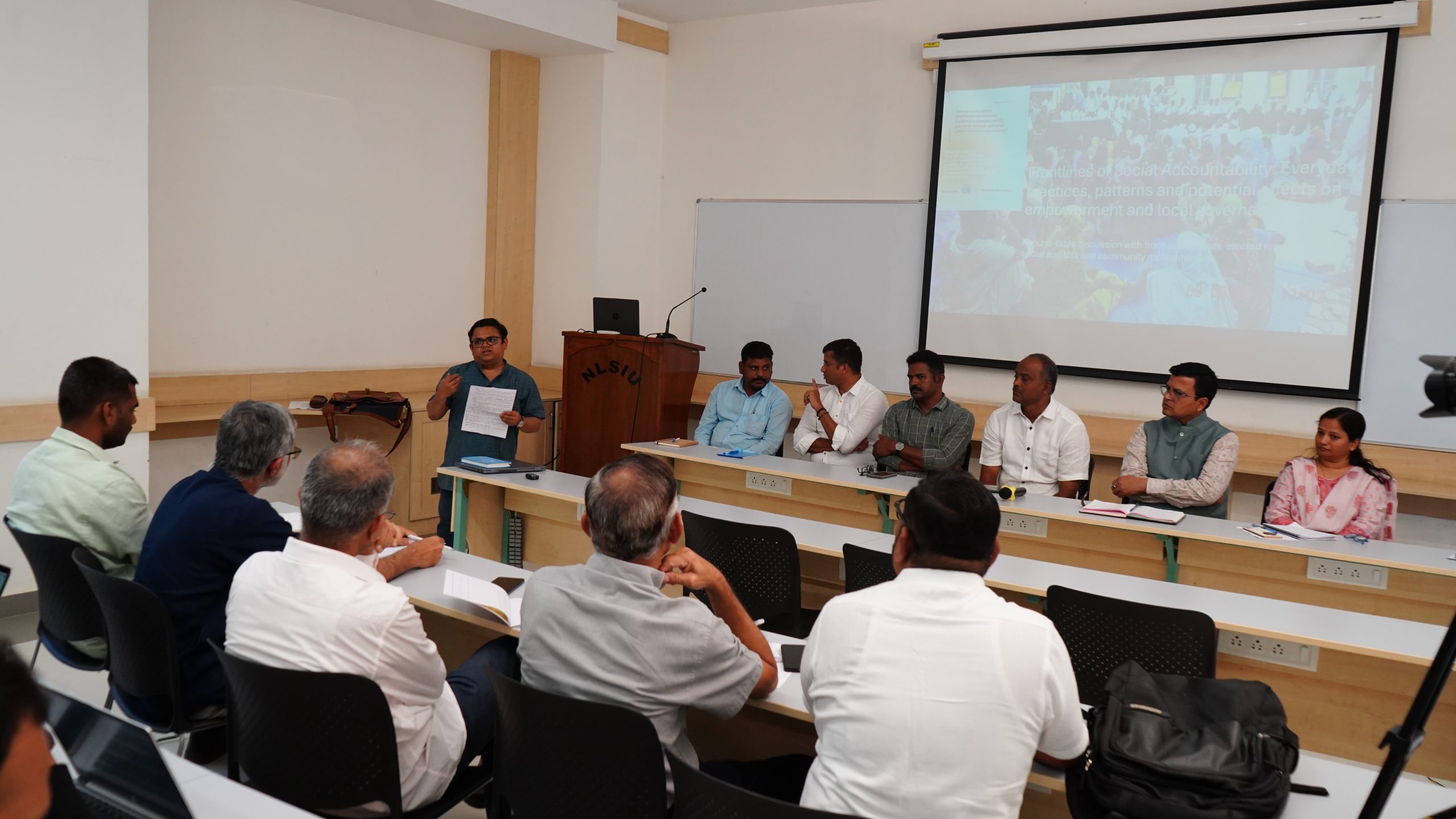
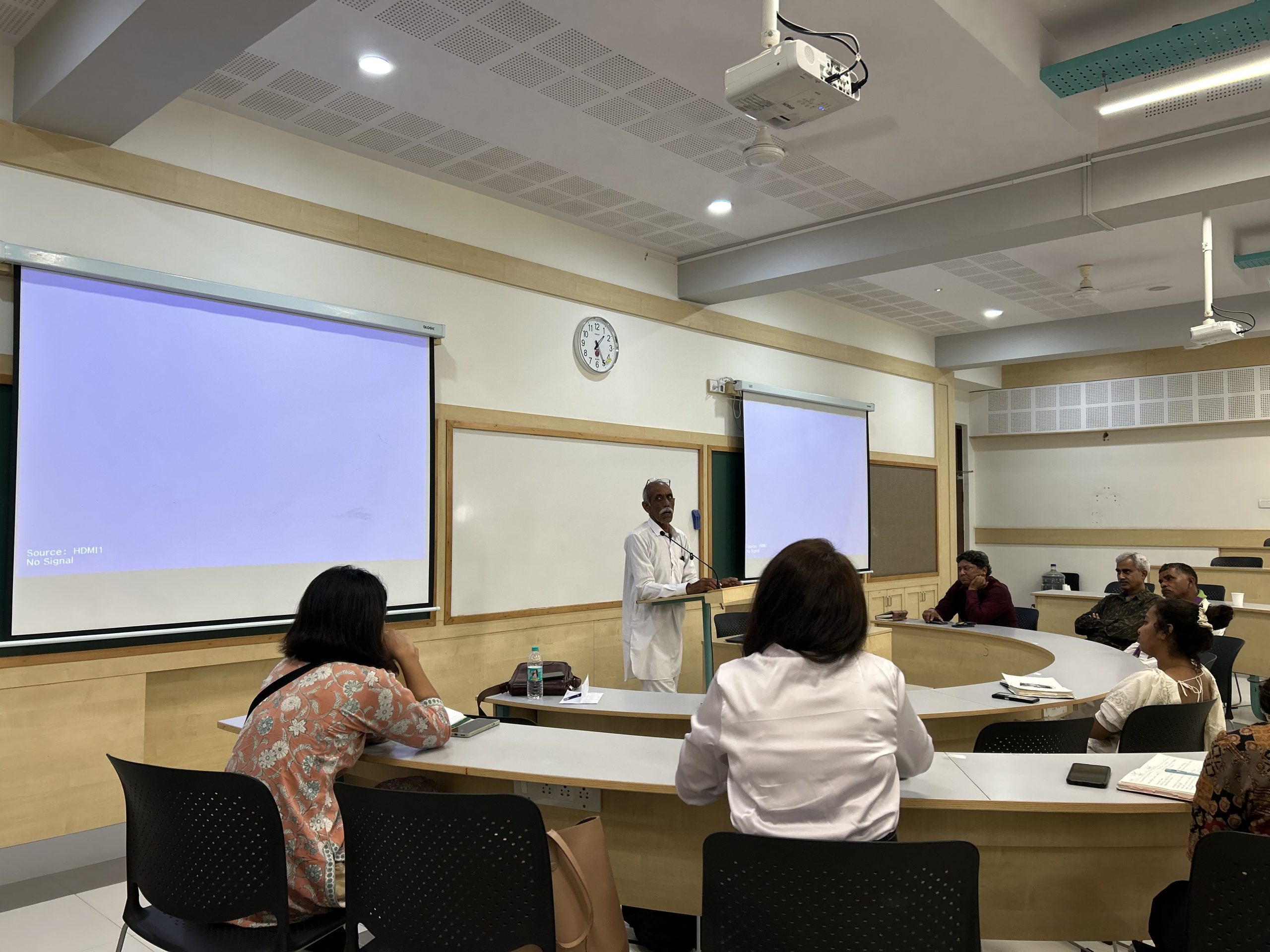
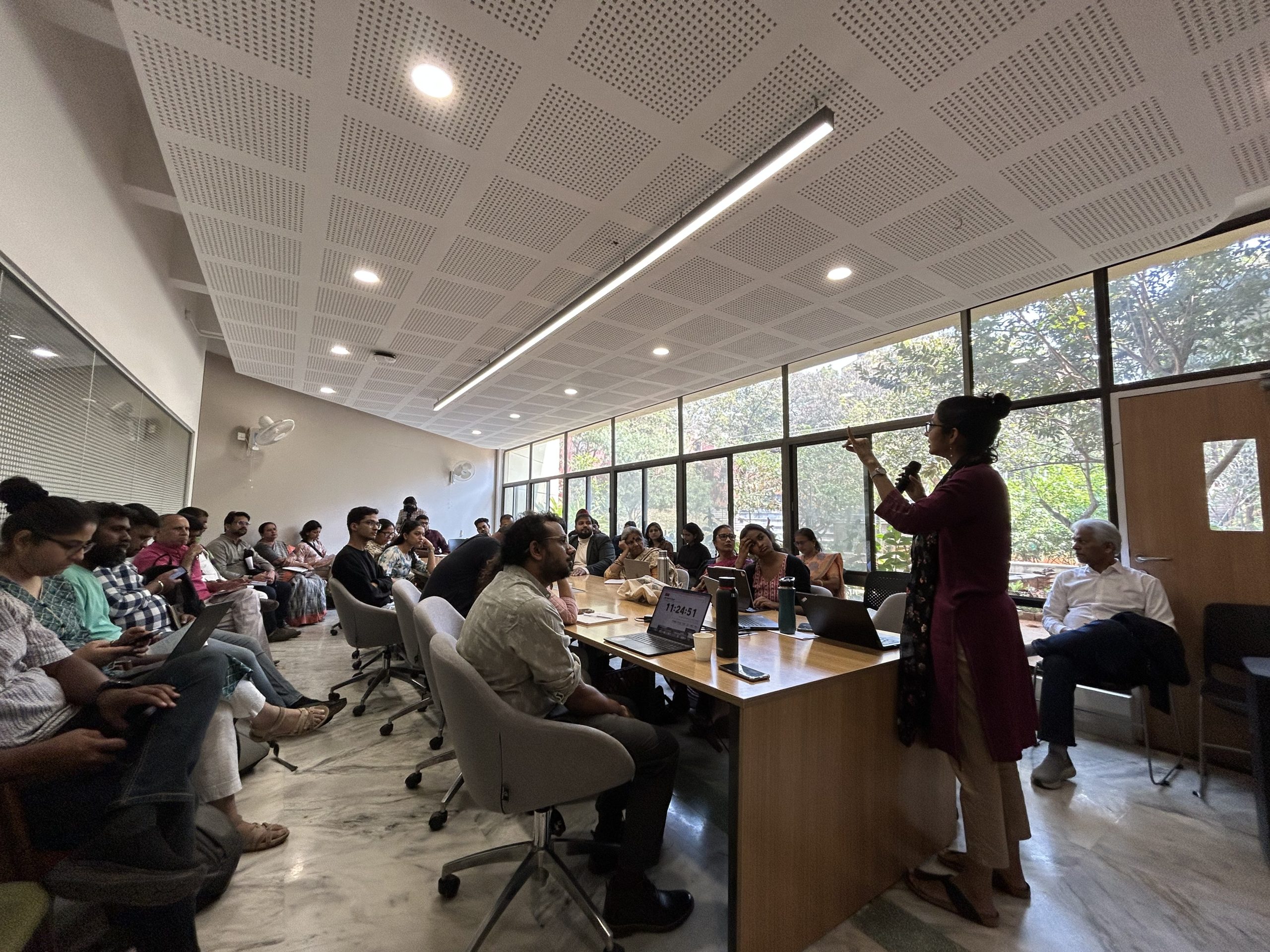
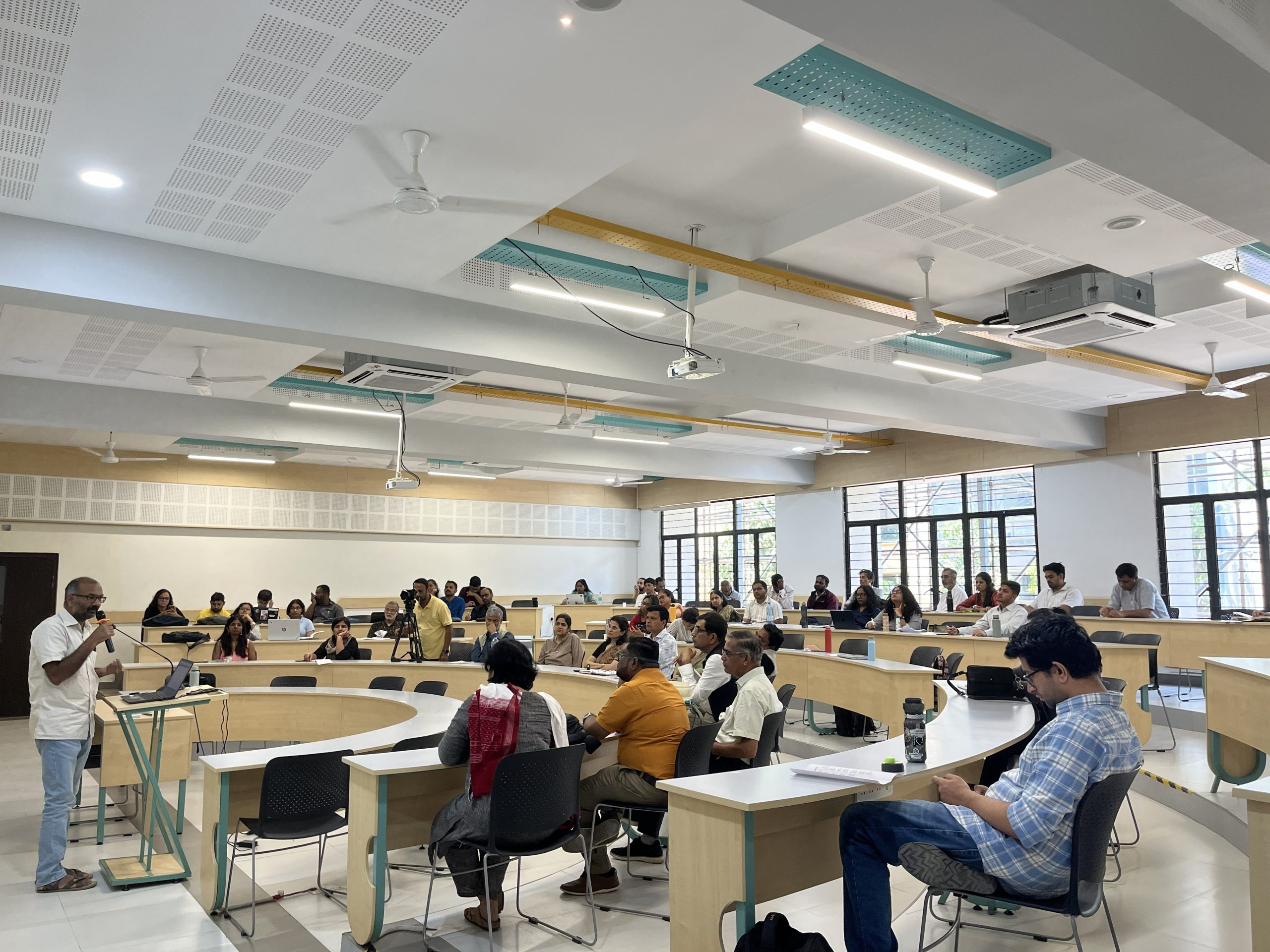
Following a break, participants transitioned between classrooms & conference rooms for three parallel roundtables: ‘Algorithmic Accountability in Welfare and Identity Systems’, ‘Electoral Accountability: Social Audit of Electoral Rolls and Protecting Voter Rights’, and ‘Frontlines of Social Accountability: Everyday Practices, Patterns, and Potential Effects on Empowerment and Local Governance.’ Despite the parallel tracks, some sessions were overflowing, with extra chairs being pulled in to accommodate the turnout. These sessions were respectively led by Nutgraph Social Data Lab, the Alternative Law Forum (ALF), and Sham Kashyap (Azim Premji University).
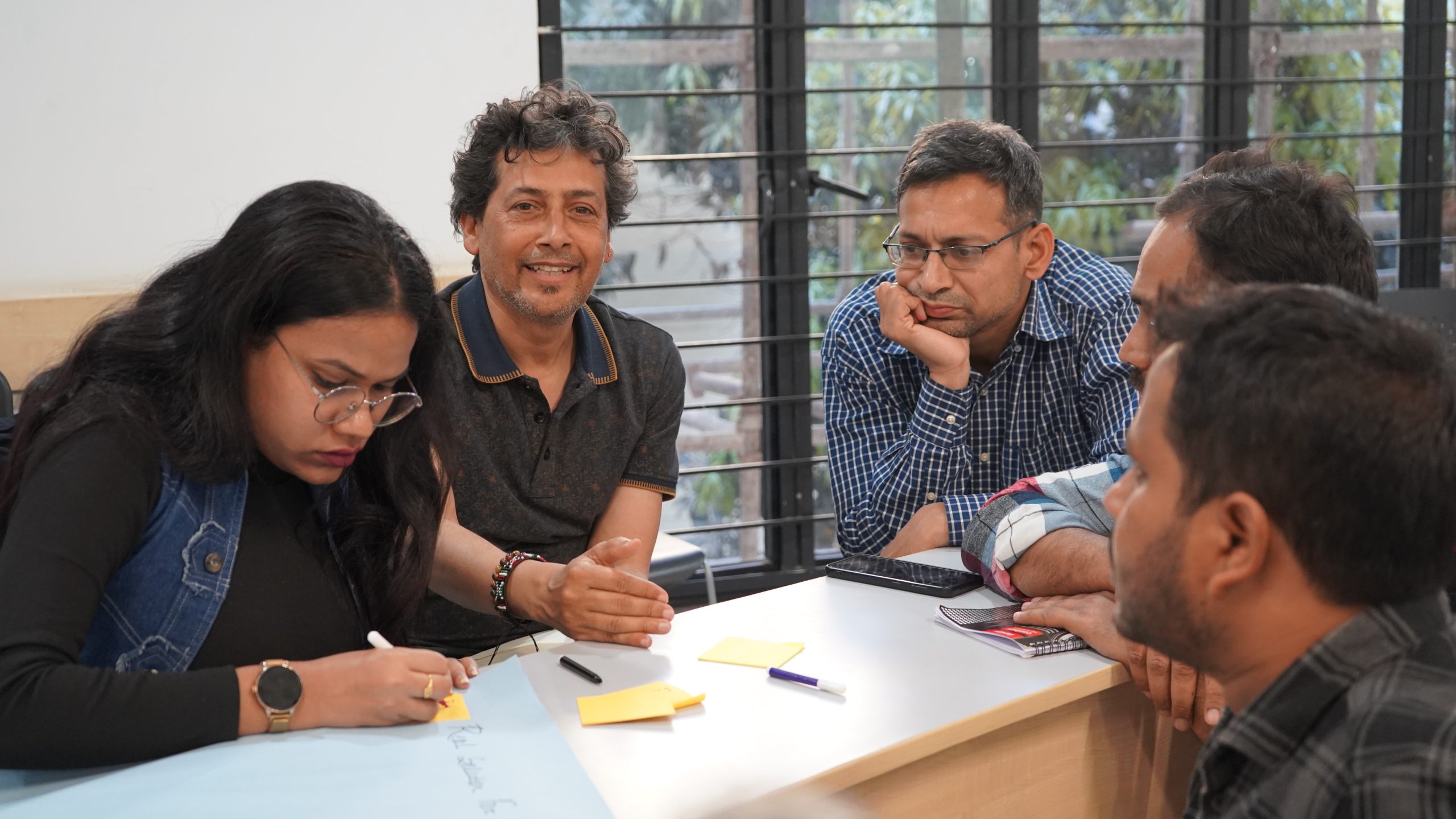
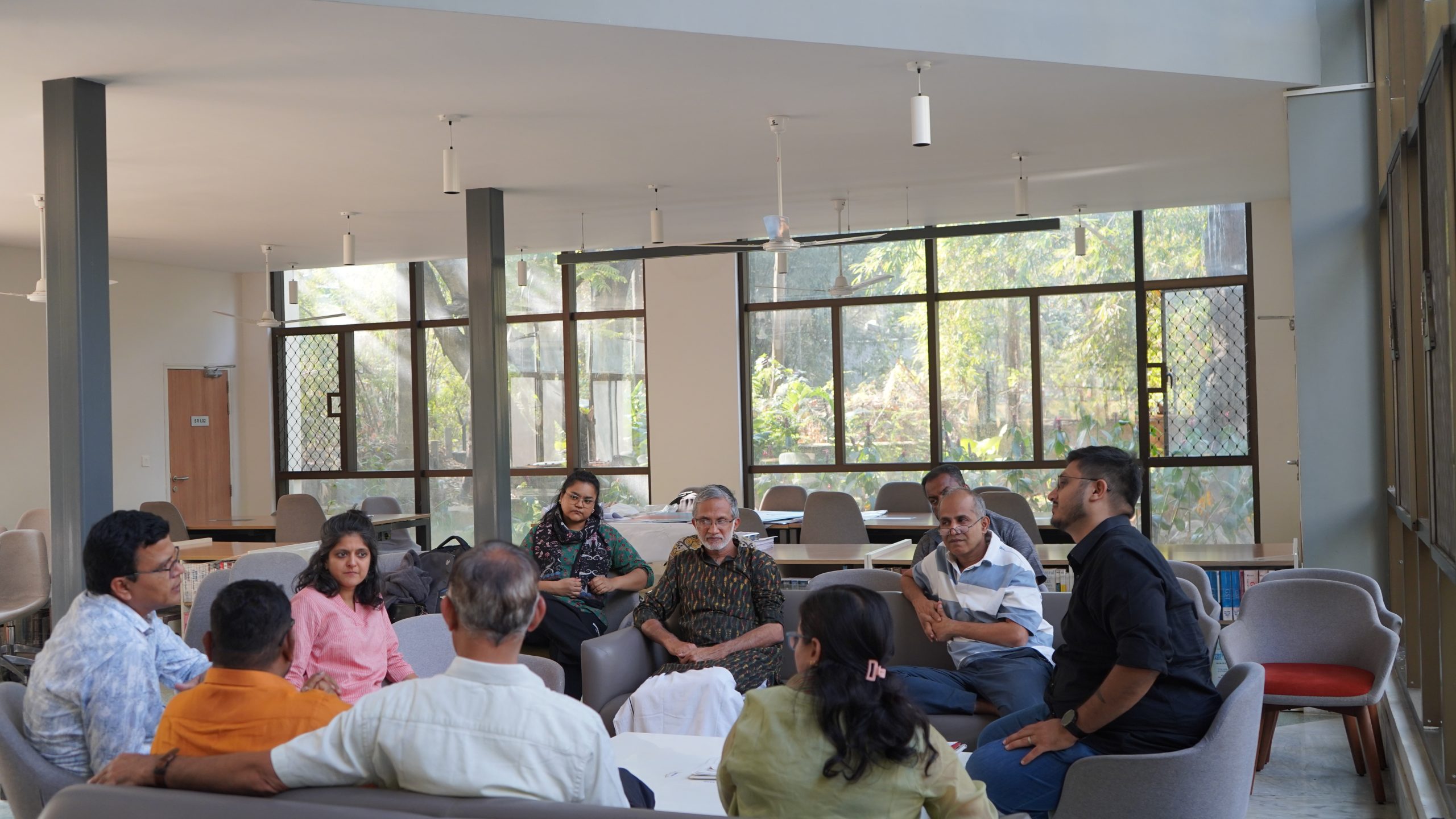
In between the sessions, people broke into little huddles to carry on the conversations. The afternoon featured four concurrent roundtable discussions:
- ‘Ecological Accountability: Who Decides, Who Benefits, Who Bears the Costs?’ (Organised by FES)
- ‘Financial Accountability: Reclaiming Oversight of Public Credit and Ethical Investment’ (Organised by CFA)
- ‘Judicial Accountability: How People Can Hold Judges and the Judiciary Accountable?’ (Organised by CJAR)
- ‘Grievance Redress Systems and The Right to Be Heard’ (Organised by SAFAR)
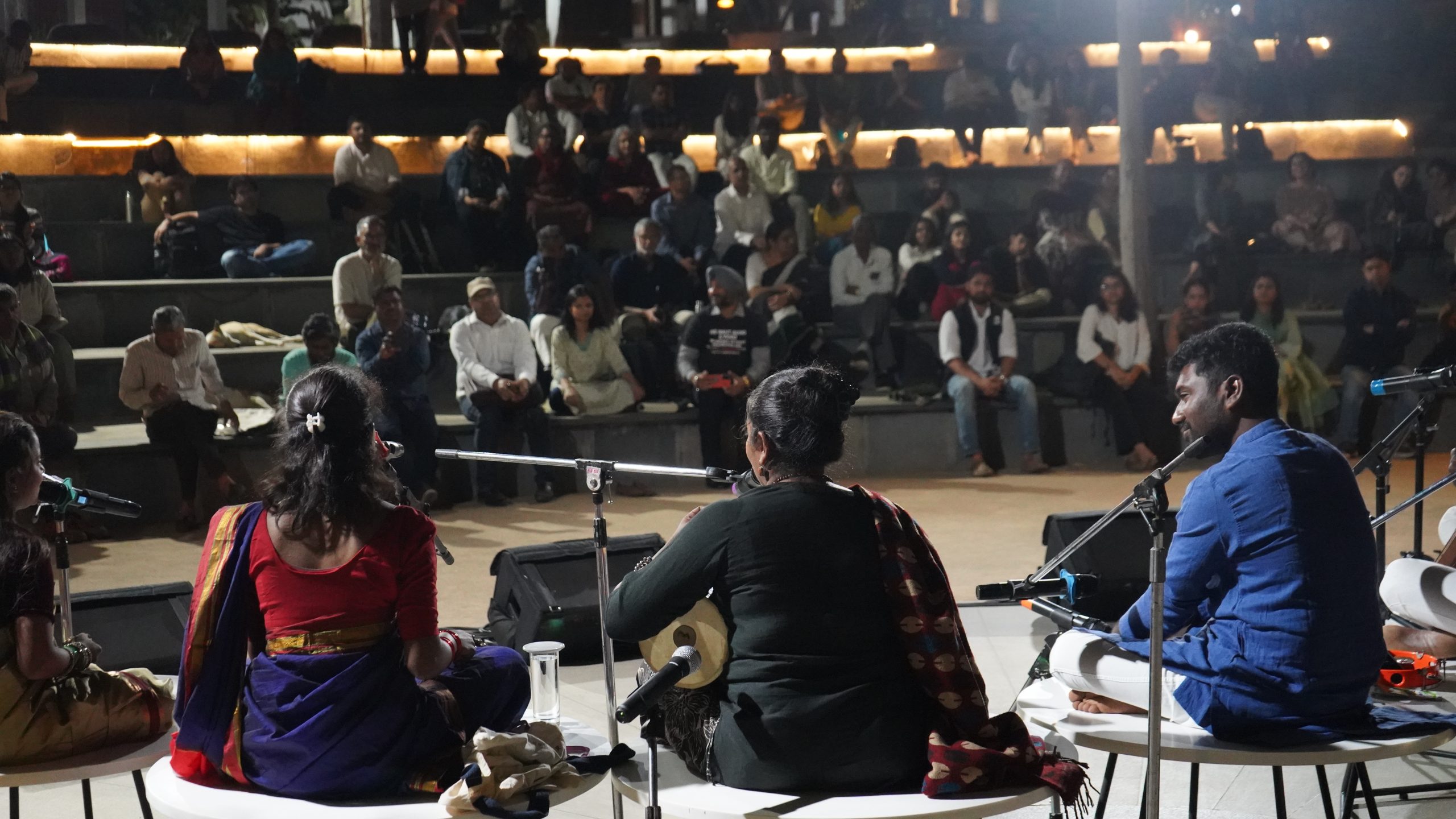
The overflowing lunch mess saw people discussing the roundtables late into the afternoon. Following each roundtable, 60-minute workshops were held to reflect on the discussions and develop common action plans. The day concluded with a moving musical performance at the NLSIU Amphitheatre by Shilpa Mudbi and Kalaburgi Kala Mandali.
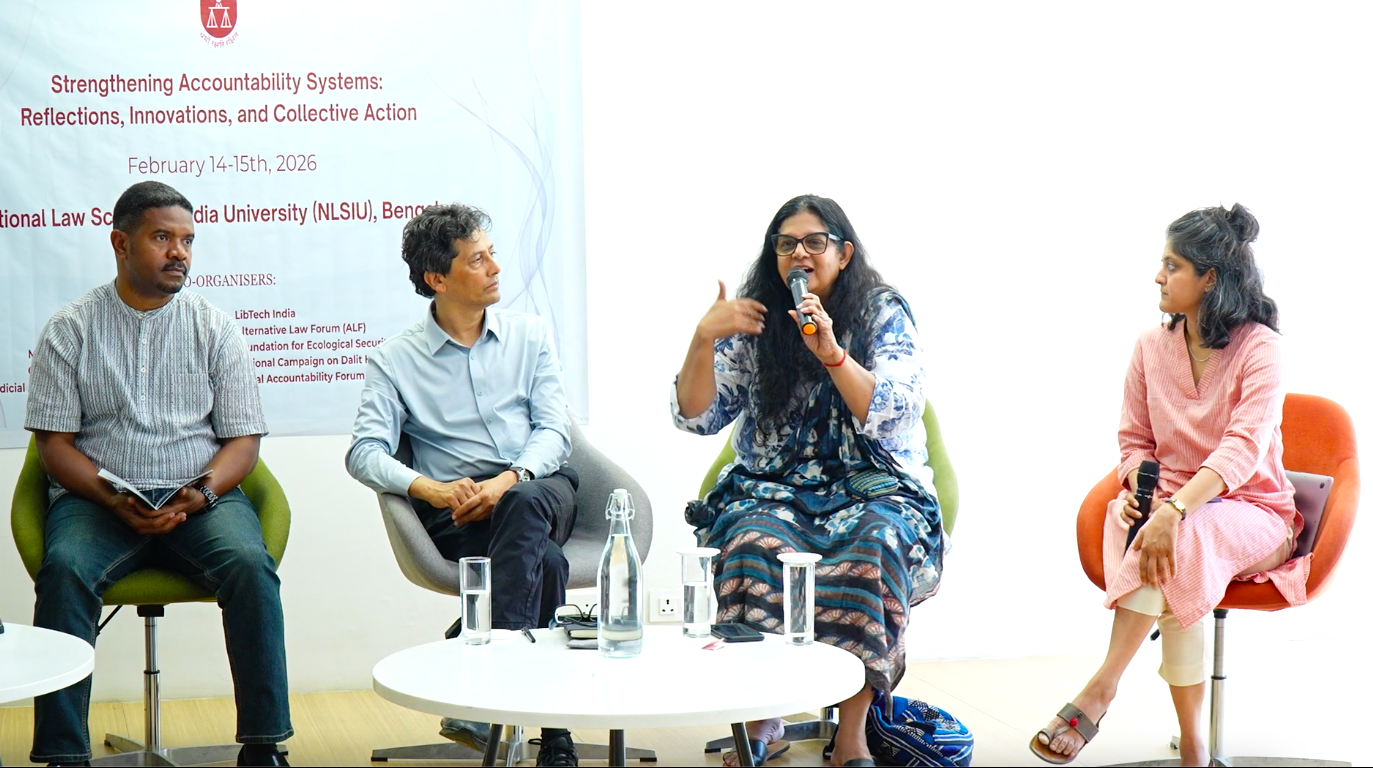
Day 2 saw over 100 participants arrive on Sunday morning, with several new faces joining the group to resume the dialogue. The day opened with a plenary on ‘International Experiences with Social Accountability,’ featuring Hussain Khaled (CEO, Vocal Africa, Kenya), Shireen (Director, The Social Architects, Sri Lanka), Narayan Adhikari (South Asia Representative, Accountability Lab, Nepal), and Nikhil Dey (MKSS, India). The panel was moderated by Dr. Anindita Adhikari (NLSIU).
Following the format of the previous day, the plenary was followed by a set of parallel roundtables:
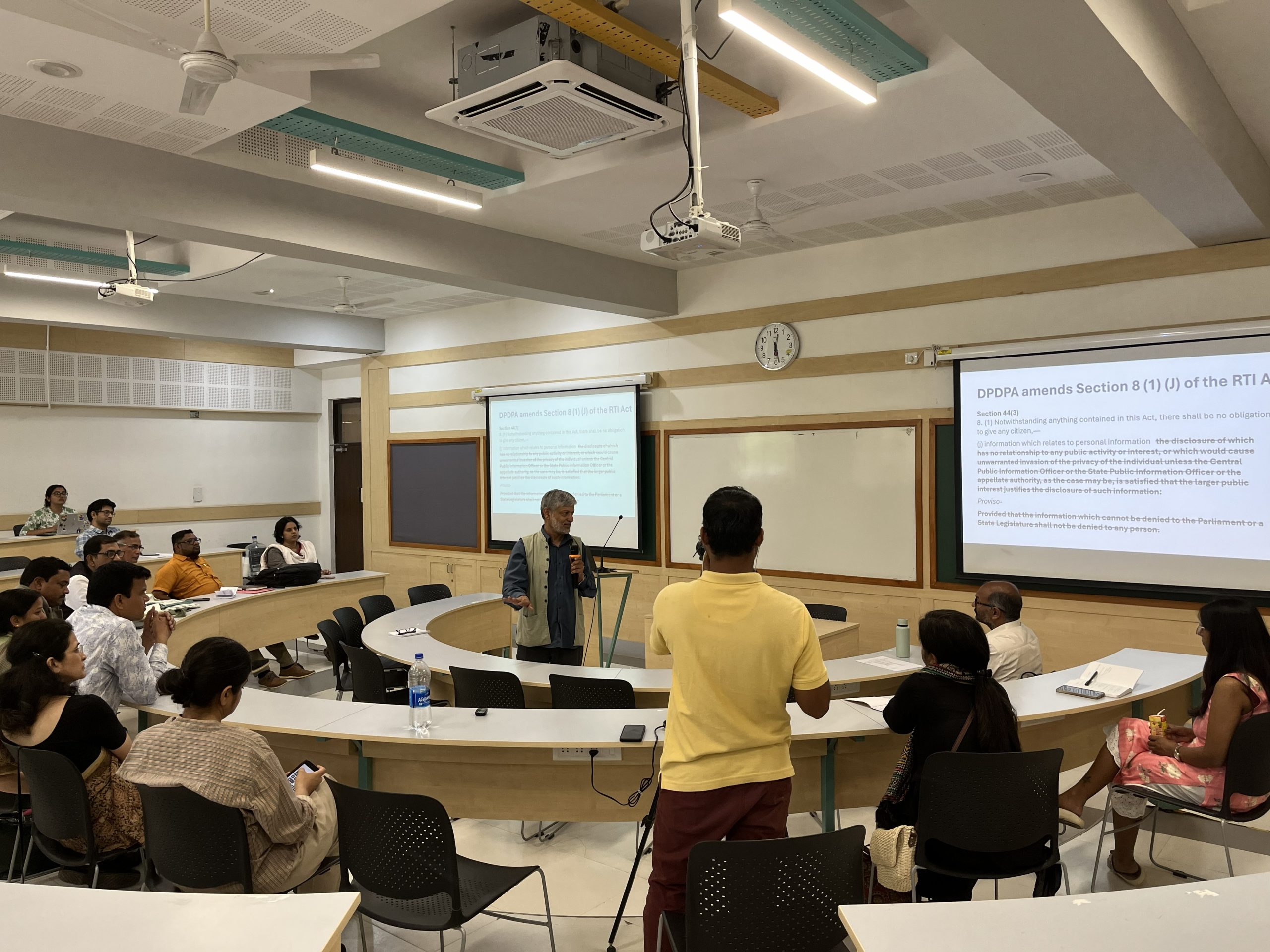
- RTI, DPDPA, and the Integrity of Public Data (Organised by SAFAR and MKSS)
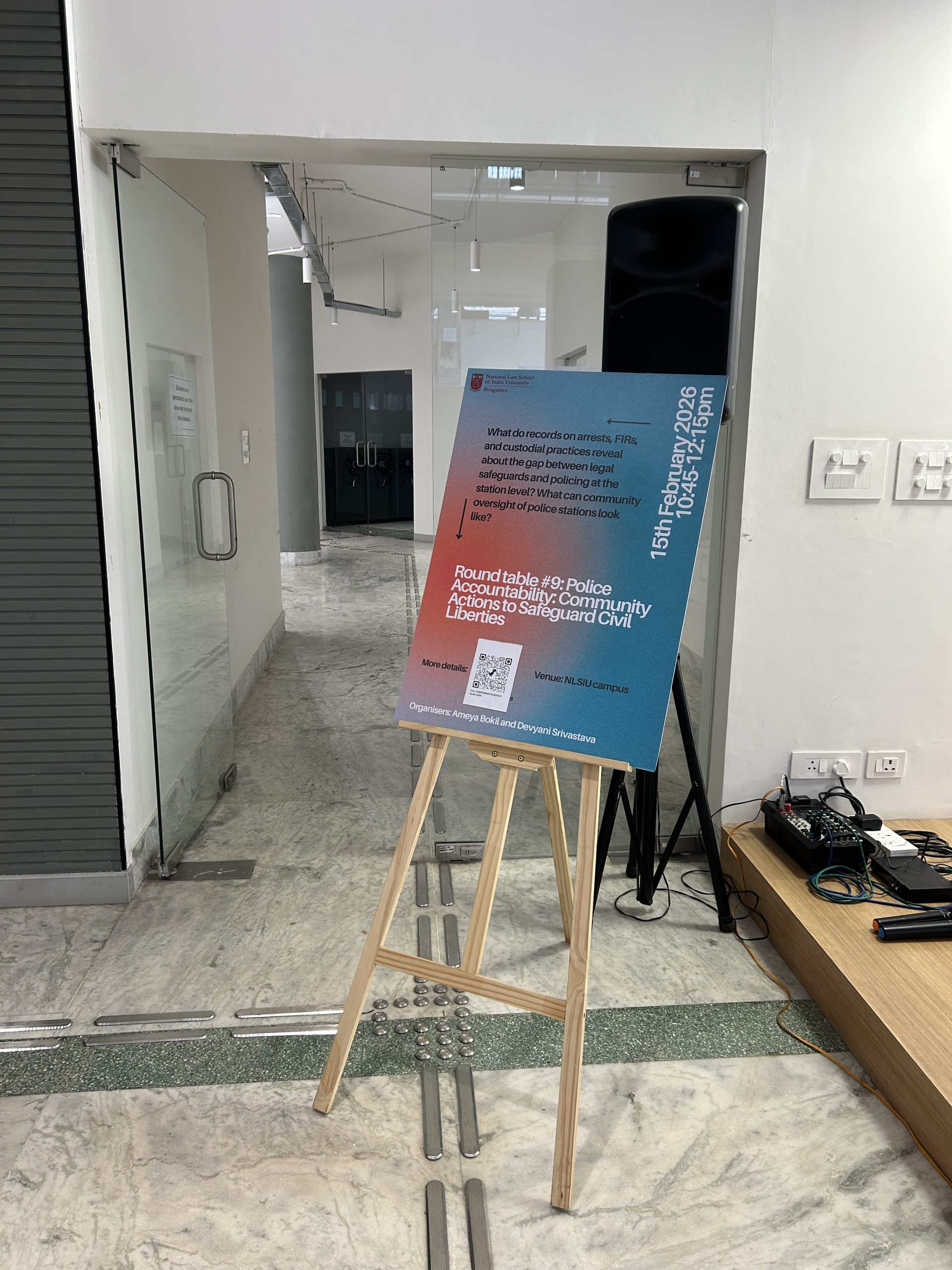
- Police Accountability: Community Action to Safeguard Civil Liberties (Organised by Ameya Bokil and Devyani Srivastava)
- Forest Rights Act and the Future of Democratic Forest Governance (Organised by Land Conflict Watch)
The second set of roundtables included:
- Governance and Technology Design Failures in Aadhaar: Legal and Welfare Implications (Organised by LibTech)
- Accountability for Nomadic and DNT Communities (Organised by Olakhaan)
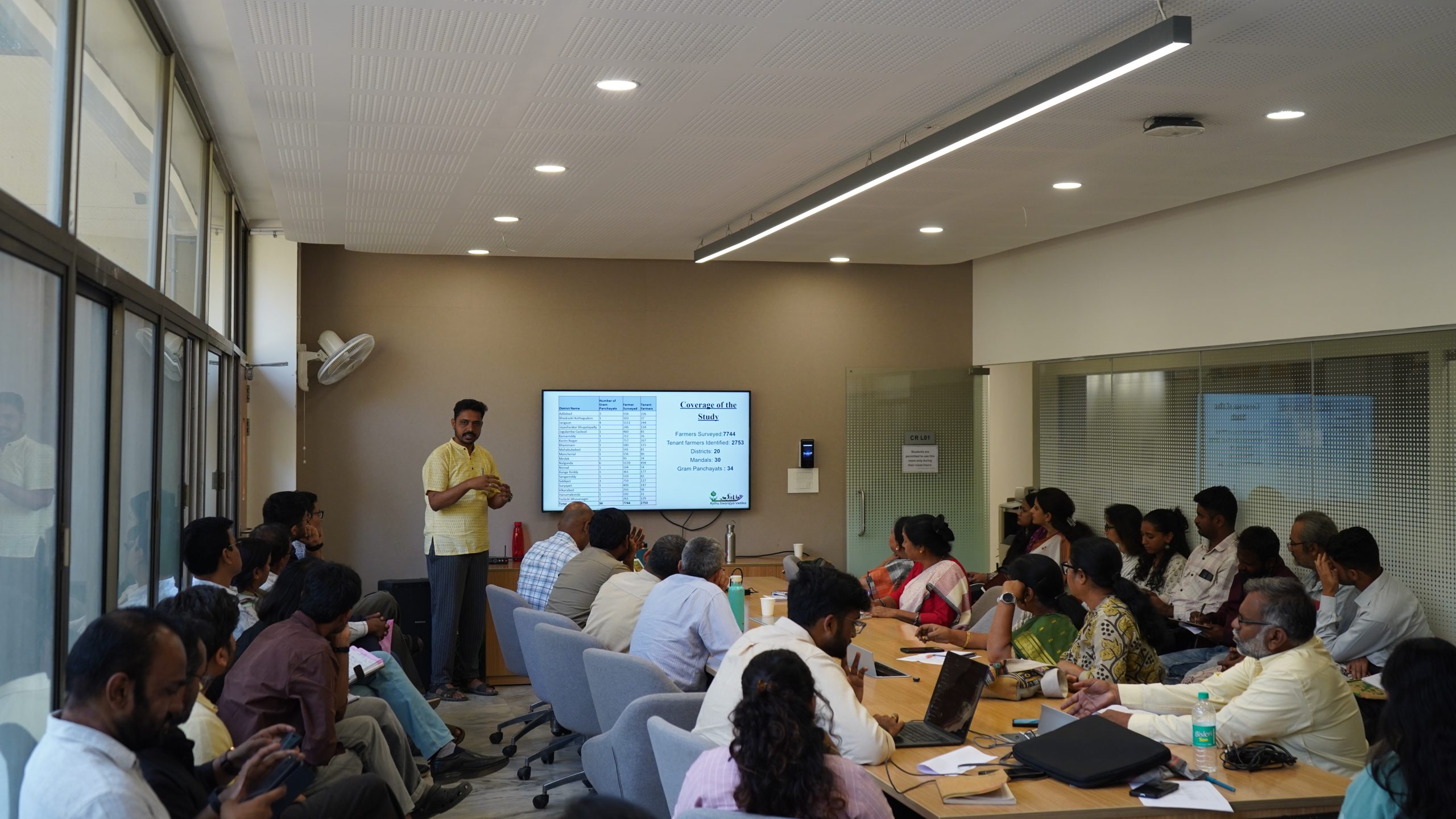
- Tenant and Women Farmers, Misplaced Benefits, and the Accountability Crisis in Agriculture (Organised by Rhythu Swarajya Vedika and Kisan Mitra)
Each roundtable was followed by an afternoon workshop to distill the discussions into actionable goals.
The diversity of the sessions was mirrored by the participants themselves. Alongside the co-organisers, the two-day consultation drew a wide spectrum of representatives from CSOs and academic institutions, as well as students and researchers. This included active participation from CIVIC Bangalore, IIHS, ISEC, APU, Indus Action, IT for Change, Agami, ATREE, Dakshin Foundation, Enfold, NAJAR, and GramVani, alongside members of the Gig Worker Union and Anganwadi Worker Union.
The two-day consultation concluded with a closing plenary where co-organisers and session leads shared takeaways from the workshops. This panel consisted of Rakshita Swamy (SAFAR), Kumar Sambhav (LCW), Paras Banjara (Olakhan), Sameet Kumar Panda (LibTech), Alok Prasanna (CJAR), Amitanshu (CFA), Harsha (RSV & Kisan Mitra), Devyani Srivastava (NLSIU), Bhaskar (FES), and Carina (SAFAR), moderated by Nikhil Dey.
As the closing plenary reflected on the range of themes covered over the two days, a participant remarked that the gathering had truly felt like an ‘accountability mela’—suggesting that such a space for dialogue should become an annual tradition to keep the momentum of collective reflection and action alive.
Know More About the Conference
Gallery