
Faculty Seminar | A World-Facing Sovereignty: Political Change and Minority Voices in Kabul’s Siraj ul-Akhbar, c. 1911-1918
Conference Hall, Ground Floor, Training Centre
Wednesday, December 10, 2025, 3:30 pm
Not open to the public
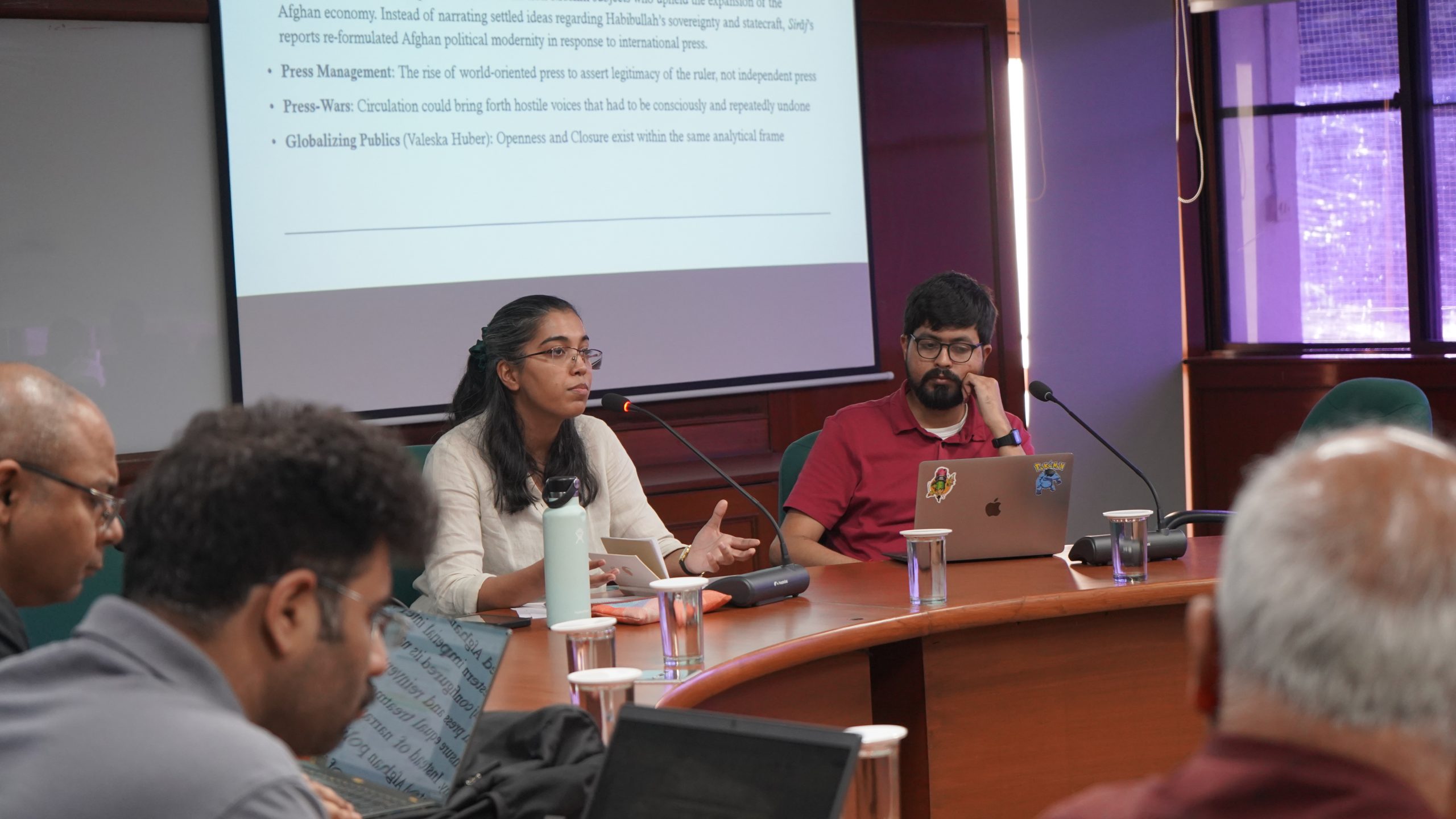
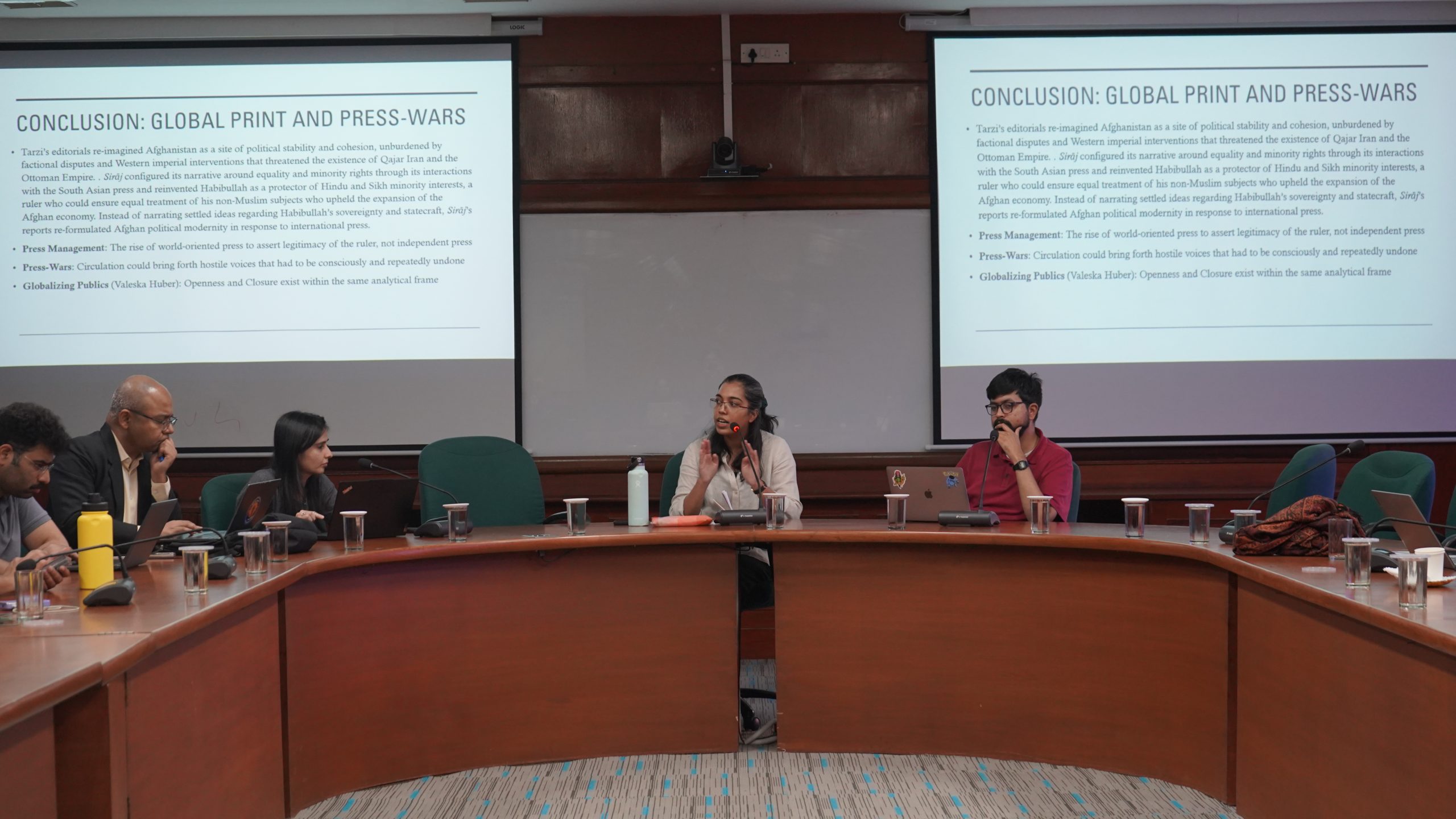
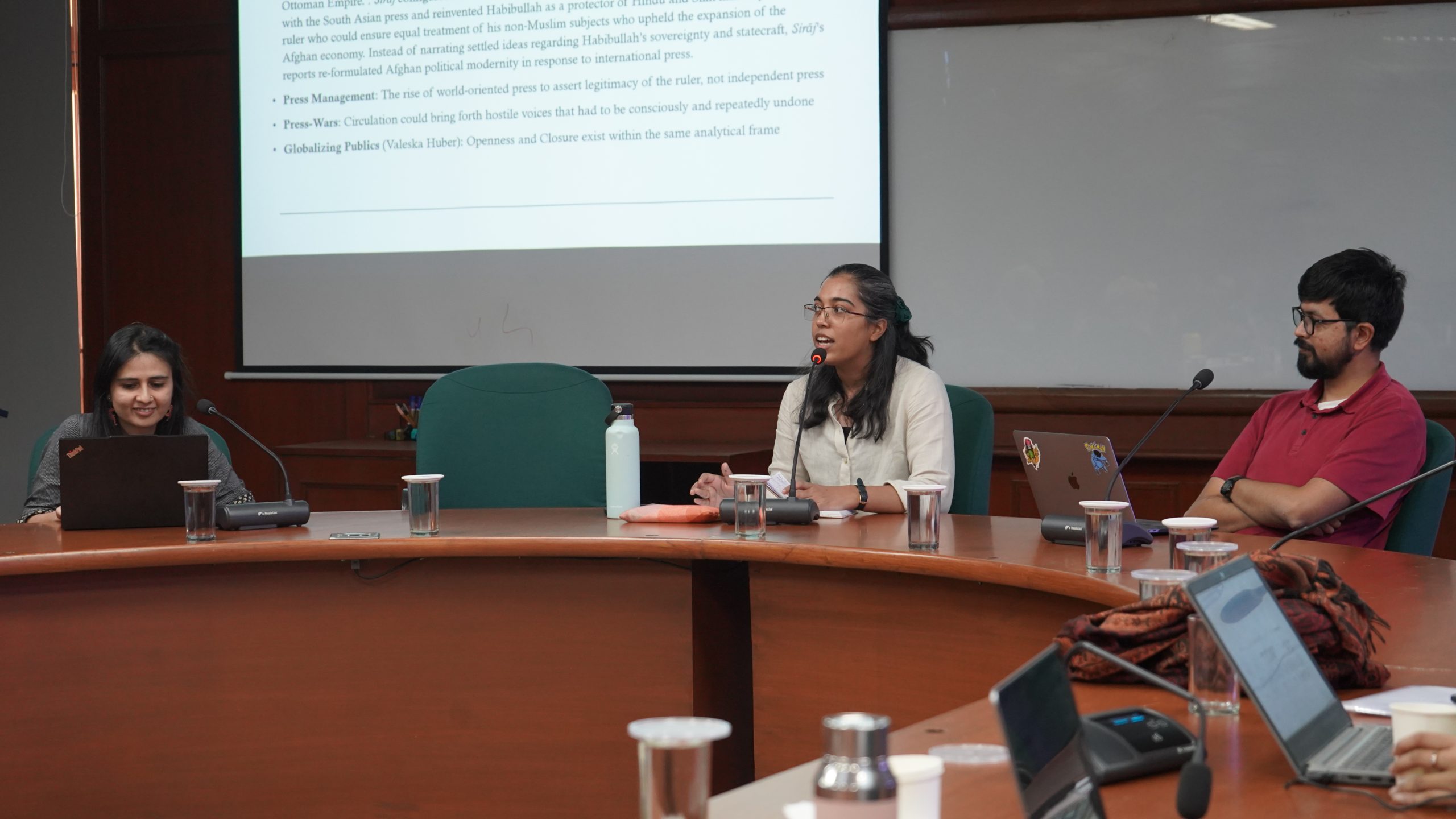
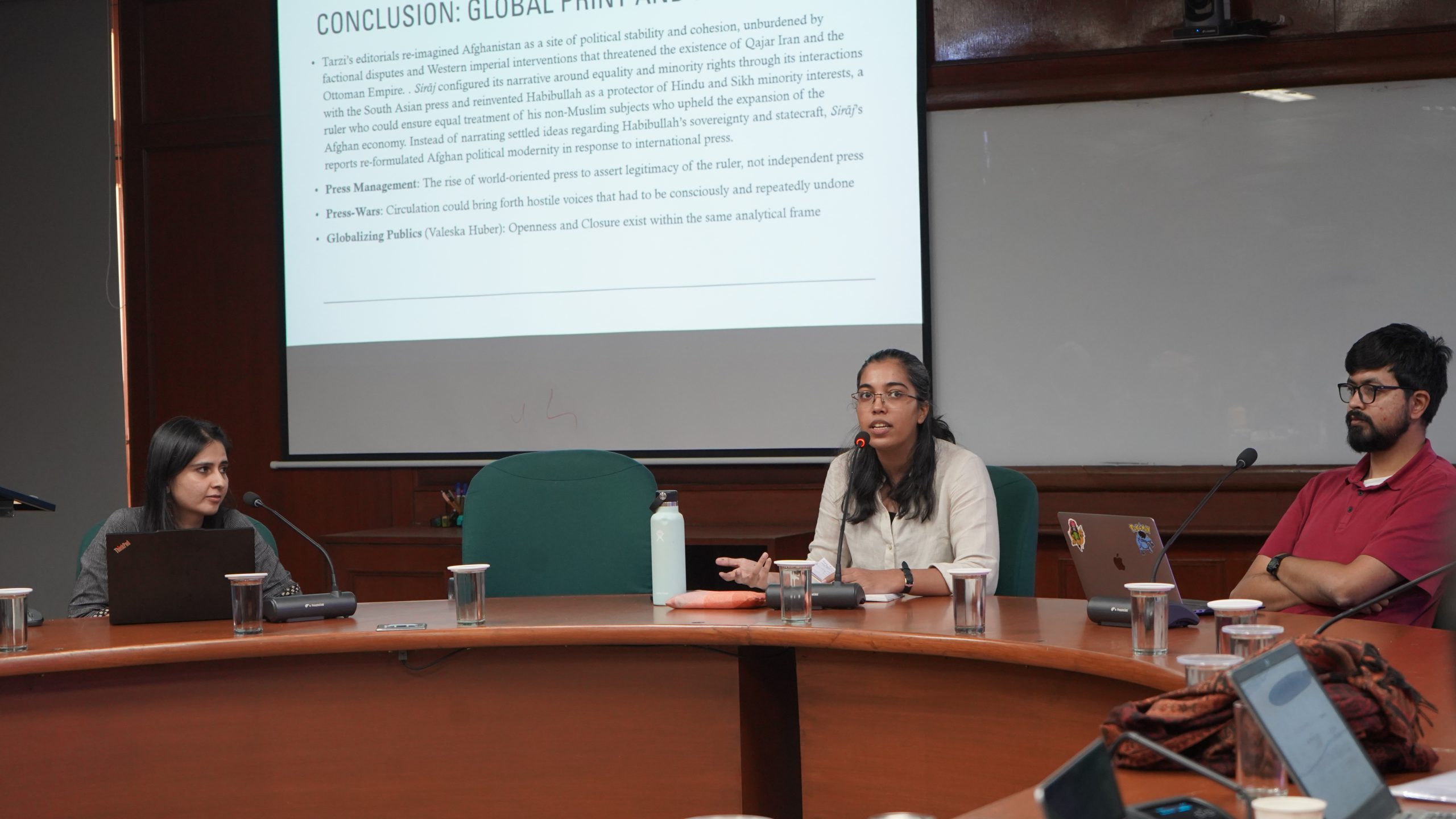
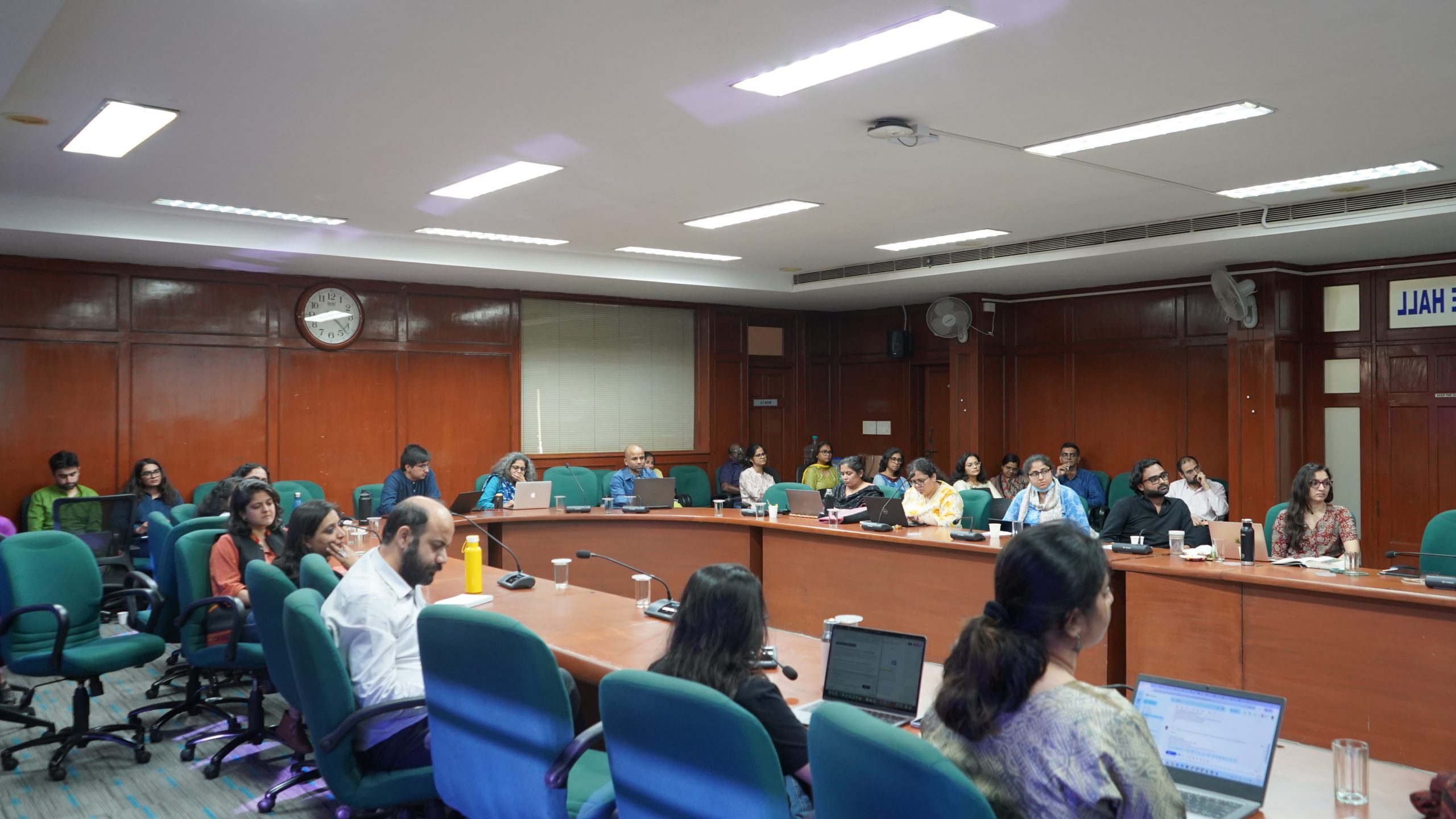
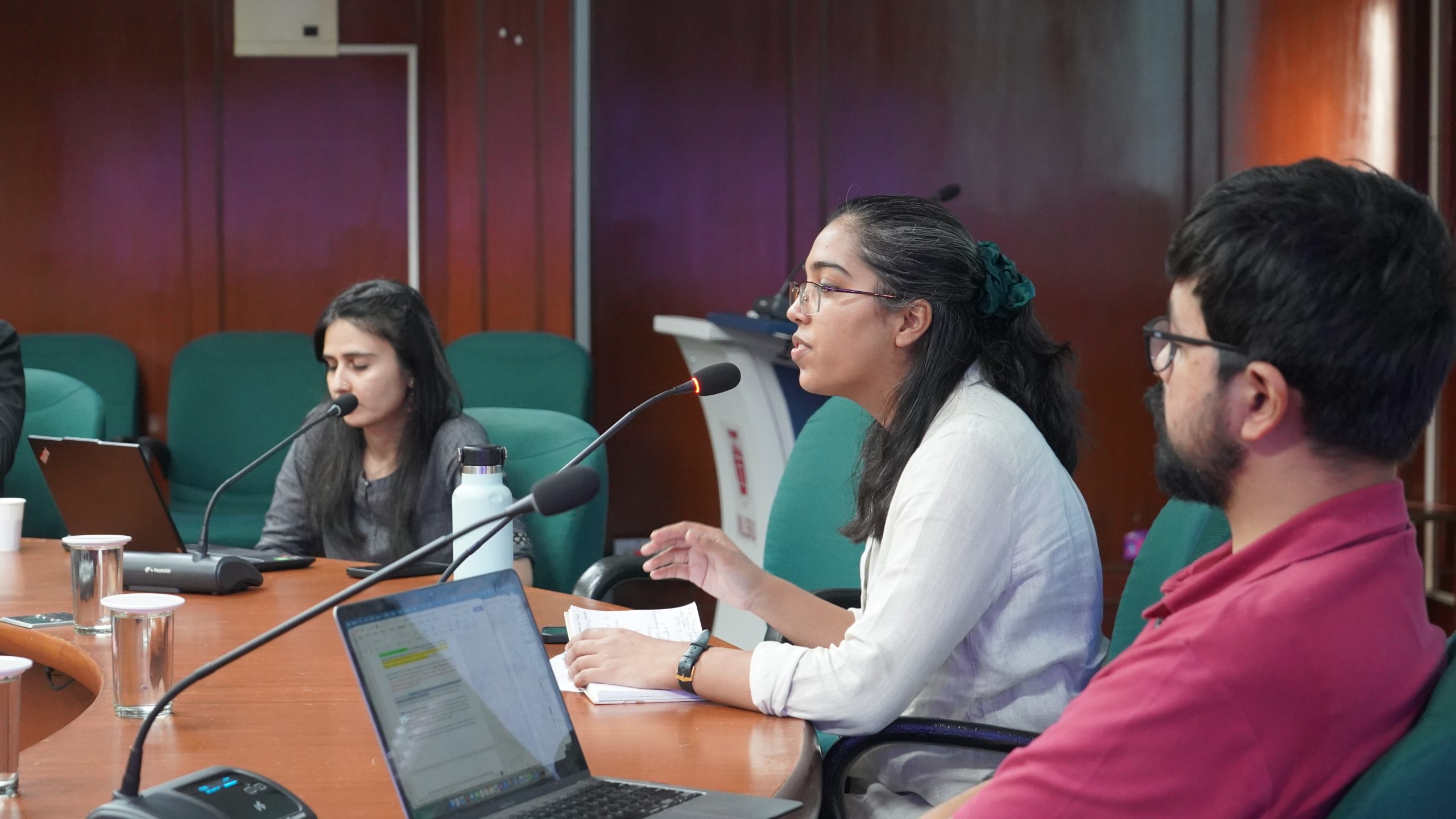
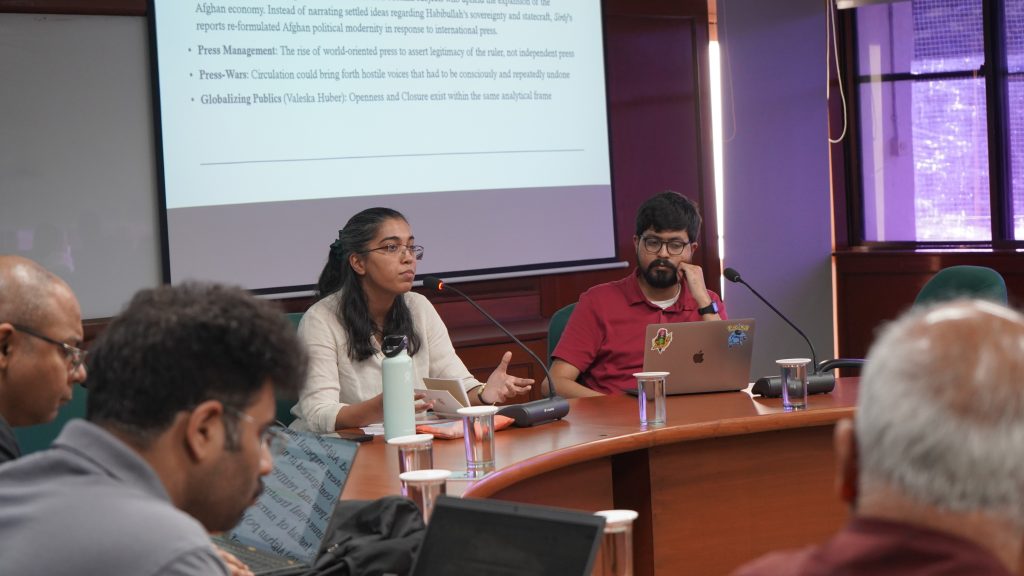 In this week’s faculty seminar, our visiting faculty Dr. Sumaira Nawaz presented a paper titled ‘A World-Facing Sovereignty: Political Change and Minority Voices in Kabul’s Siraj ul-Akhbar, c. 1911-1918’ on December 10, 2025. Dr. Kena Wani, Assistant Professor, Social Science, was the discussant.
About the Speaker
Sumaira Nawaz is a scholar of global intellectual history and received her PhD from the Institute of Islamic Studies at McGill University. Her work engages with print culture, migration and mobility, book history, and Muslim modernity. She has studied at SOAS and the University of Delhi.
Abstract
In the essay “A World-Facing Sovereignty,” I turn to Kabul’s foremost Persian-language newspaper Siraj ul-Akhbar (1911–1918) that strengthened Afghanistan’s image as a site of Islamic revival among readers within Afghan frontiers and beyond. To insert Afghanistan within the interconnected print-spheres of the Middle East and South Asia, the editor Mahmud Tarzi regularly translated news from the Ottoman Empire, Qajar Iran, and British India within Siraj. In the process, Tarzi wrote of the Ottoman and Qajar constitutional revolutions as moments of deep anxiety and caution that had caused political turmoil and civil strife in the region. As one of the last independent Muslim polities, Afghanistan, he reasoned, could not risk such upheavals within its borders, even though the Afghan state welcomed support from Young Turk technocrats to aid its burgeoning press and infrastructural development projects. Cross-border news from colonial South Asia too did not always hold a favorable tone towards Afghanistan, with the Hindu nationalist Arya Samaj Press accusing the Afghan state of discriminating against non-Muslim minority groups within the region. In the course of this essay, I investigate how these accusations became a site of interaction and exchange between Afghan and South Asian Urdu presses, pushing Tarzi to re-frame the legitimacy of the Afghan ruler Habibullah Khan’s reign through the language of minority protection and equality before law. The objective through this analysis is to illustrate that South-South textual exchanges did follow stable pathways to Pan-Islamic unity but in fact sharpened divisions among disparate Muslim readers.
Gallery