

Faculty Seminar | ‘Devolution after Empire’
Conference Hall, Ground Floor, Training Centre
Wednesday, January 7, 2026, 3:30 pm
We ended this term’s faculty seminars with a special lecture by Dr. Ewan Smith, Associate Professor of Public Law at UCL on the ‘Devolution after Empire.’
About the Article
This article questions the claim that the UK is a unitary state. It argues that the UK was, and perhaps is, an Empire. Empires are states in which questions of subsidiarity are inescapable and ongoing. Like unitary states, they have a supreme central government. Unlike unitary states, Empires are not governed as a single entity. The United Kingdom is not a state where all parts bear a singular relationship to the centre. Instead, it embraces a multiplicity of constitutional relationships, overlaid by sovereignty and the Crown. The nature of the UK territory was ambiguous under Empire. It still is, and the article explores how imperial structures continue to influence our devolution settlement. The British constitution ultimately managed to resolve very-large-scale questions of subsidiarity in a global Empire. It remains to be seen whether that same structure can resolve small-scale questions of subsidiarity in a supposedly unitary state.
About the Speaker
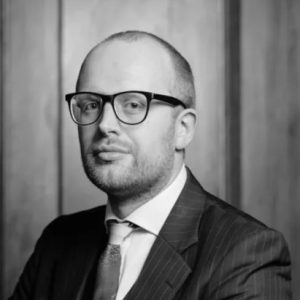 Dr. Ewan Smith joined UCL Laws as Associate Professor of Public Law in 2022. Prior to that he was a Fellow of Christ Church, Oxford, the Shaw Foundation Junior Research Fellow at Jesus College, Oxford, and an Early Career Fellow at the Bonavero Institute of Human Rights. Ewan read law at Oxford, at the University of Paris and at Harvard Law School. In 2023 Ewan was a Hauser Fellow at New York University Law School and in 2024 he was a Visiting Professor at Faculty of Law of the University of Bologna. In 2026 he will be a visiting professor at the National University of Singapore. He has previously worked at Peking, Tsinghua and Renmin Universities in China and between 2005 and 2015 he worked for the UK Foreign Office. Ewan’s work considers how political rules govern powerful institutions, how law shapes foreign relations, and compares the constitutional orders of China, the UK and the United States. He is admitted to practice in New York