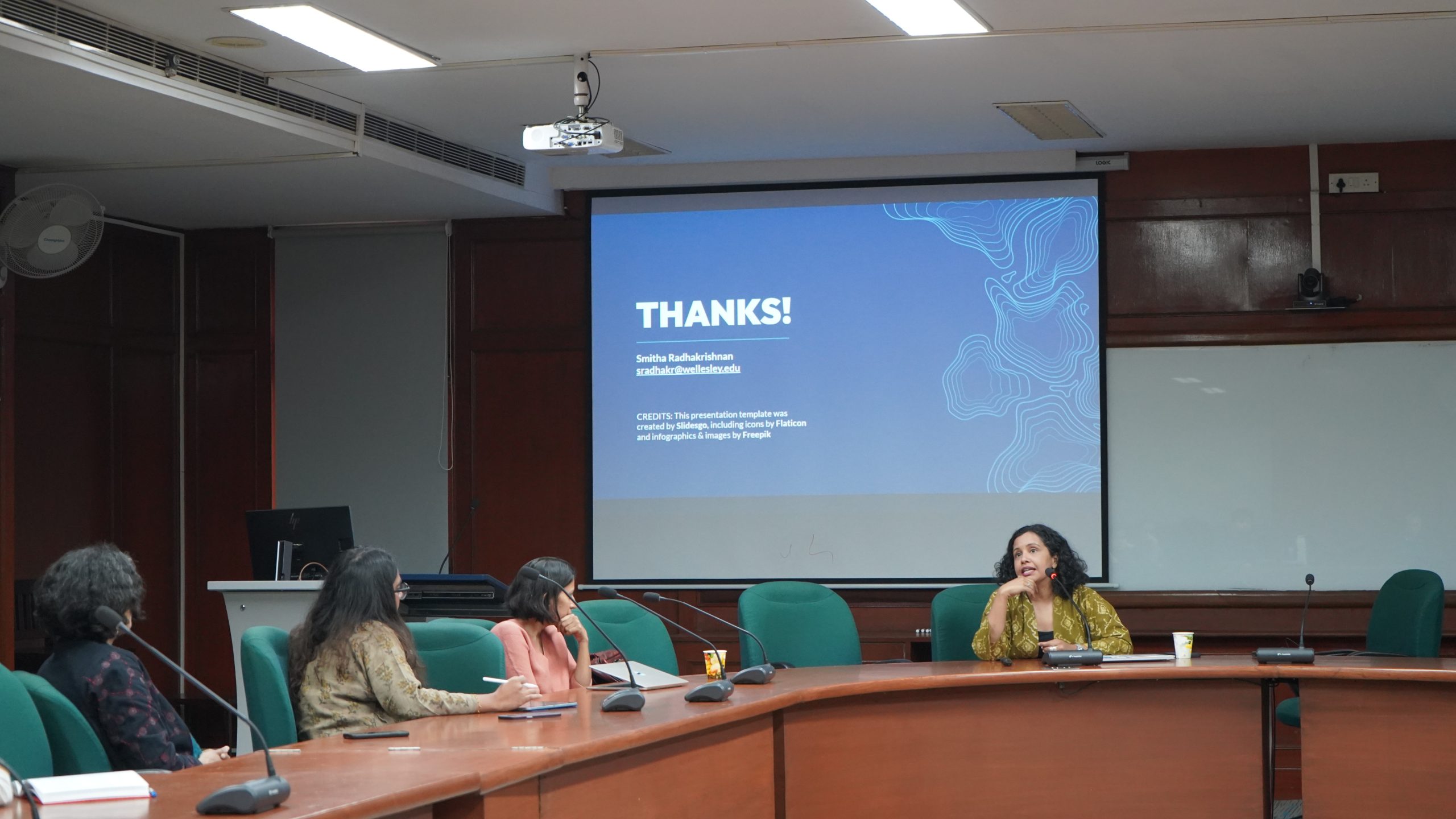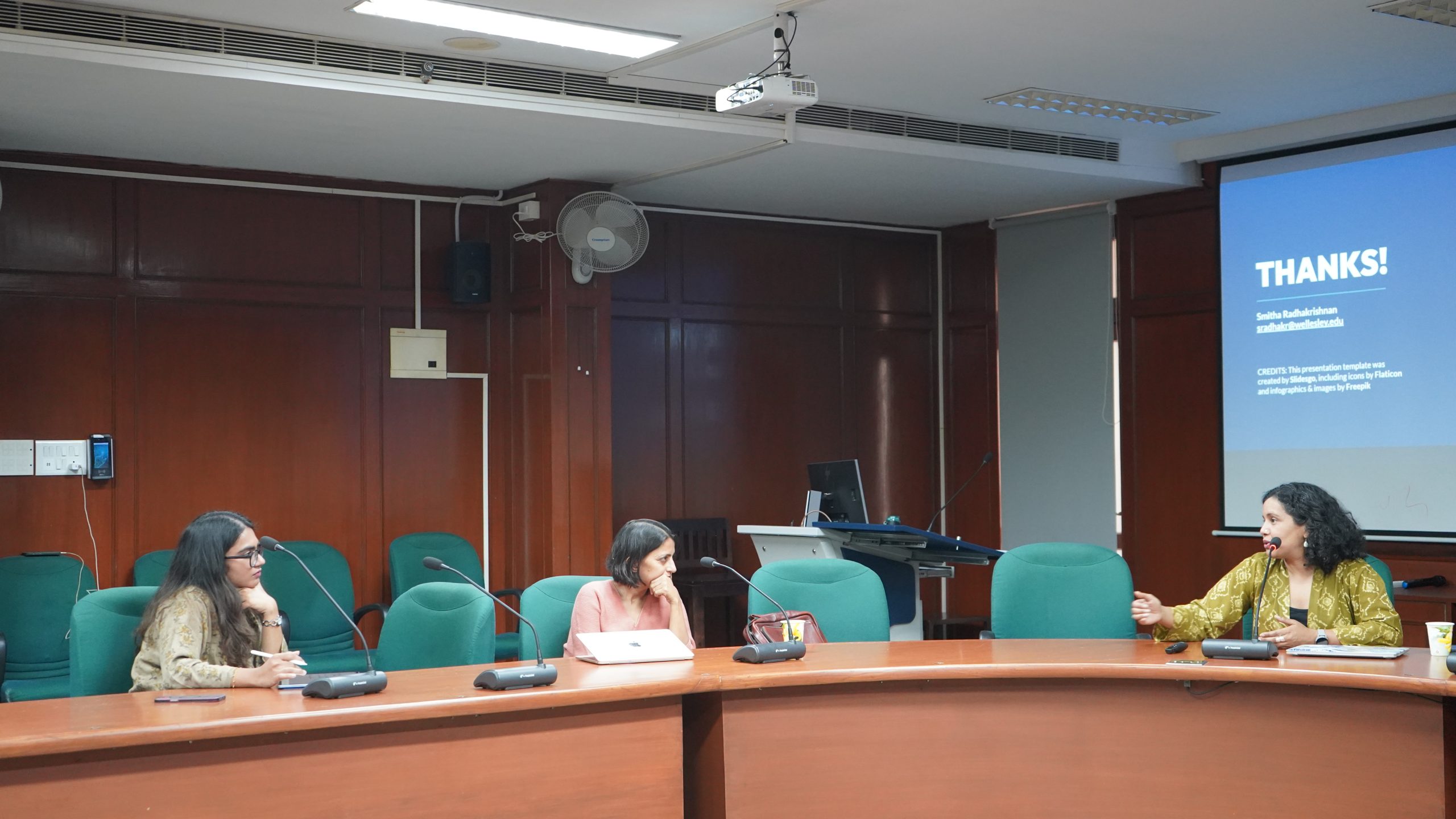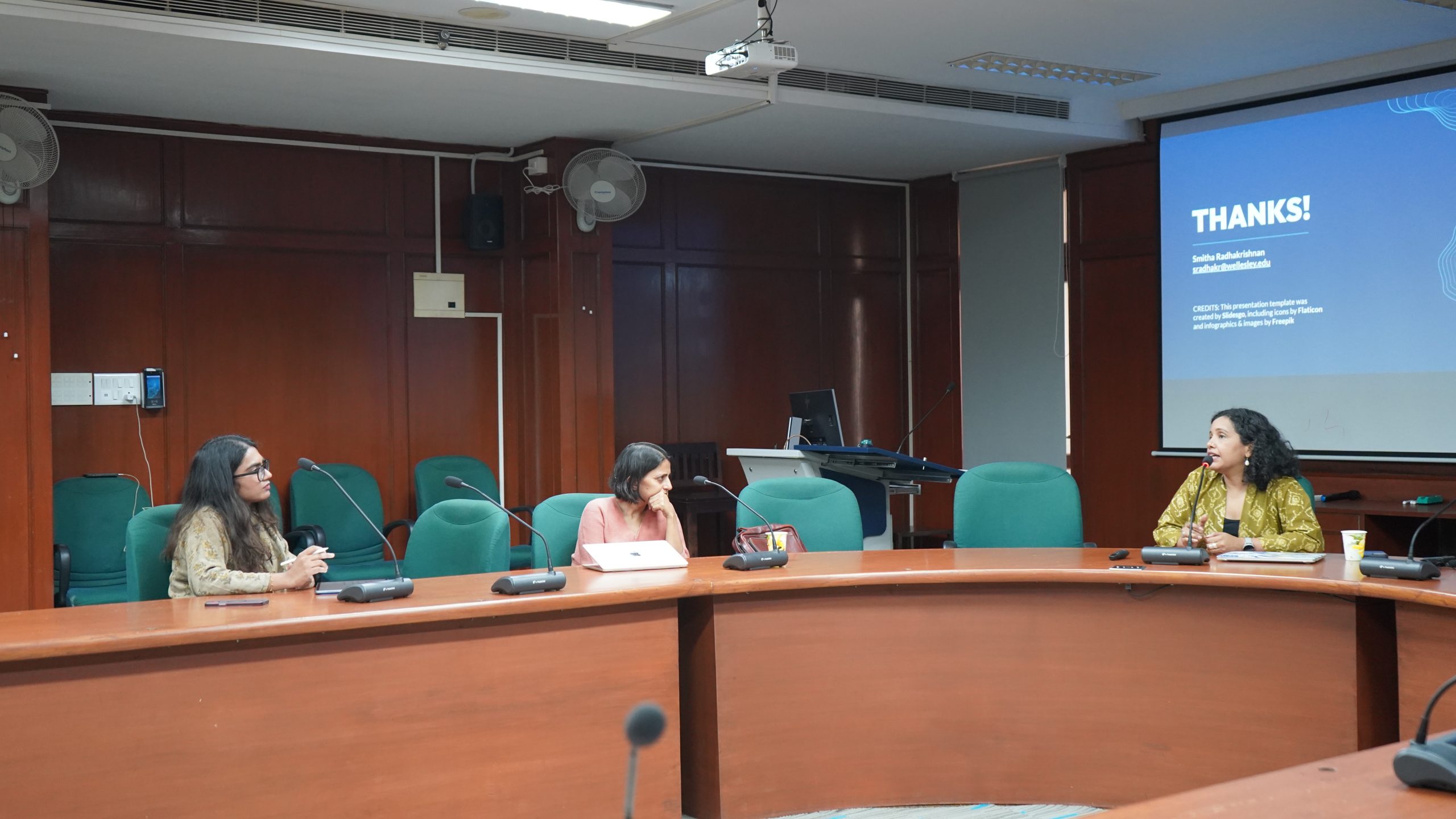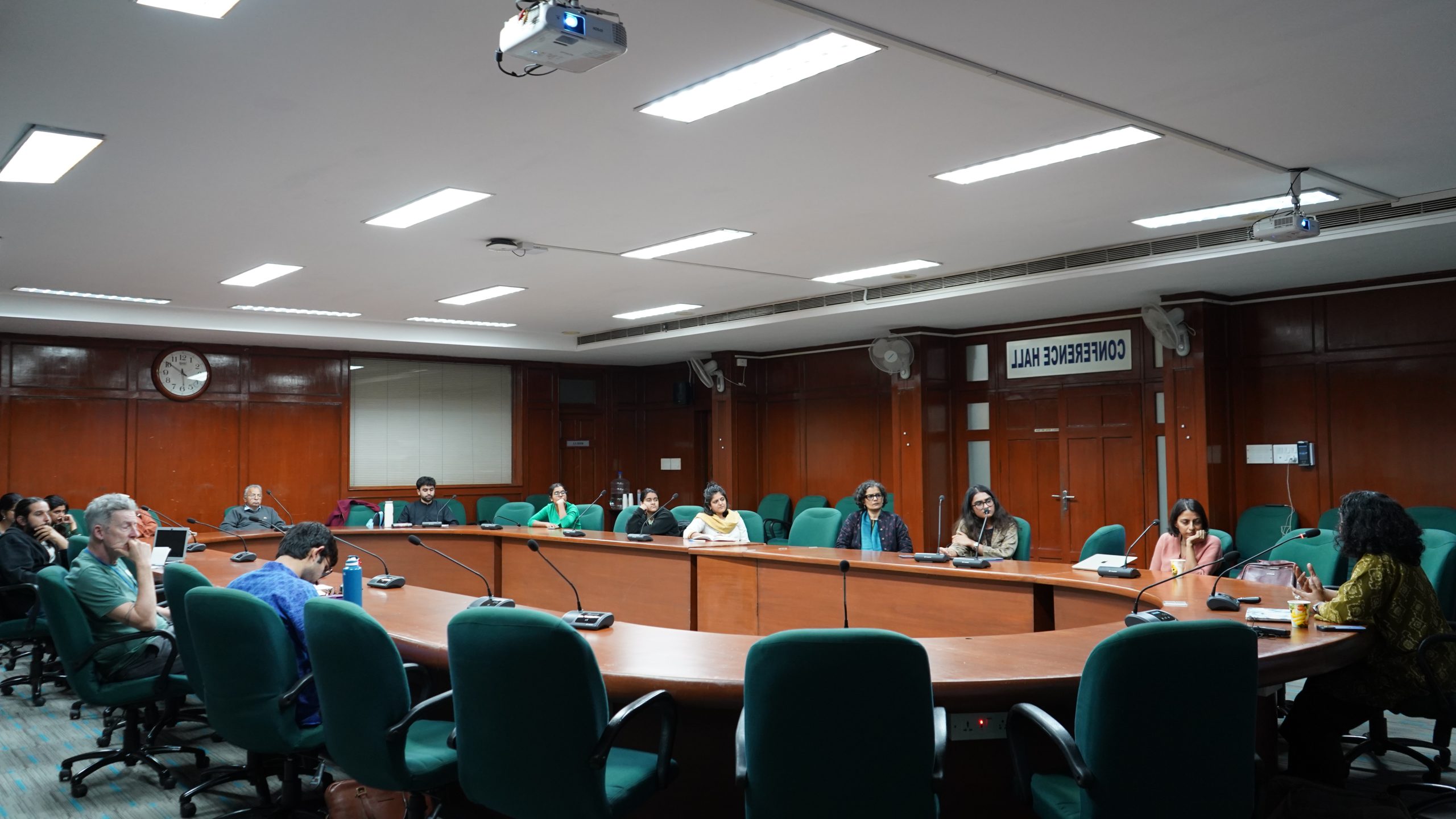

Guest Lecture | ‘Hidden Precarities: Debt and Embodied Risk in Urban Uttarakhand, India’ | By Dr. Smitha Radhakrishnan, Wellesley College
Ground Floor Conference Room, Training Centre
Thursday, January 8, 2026, 5:00 pm
Open to the public. RSVP mandatory for non-NLS community.
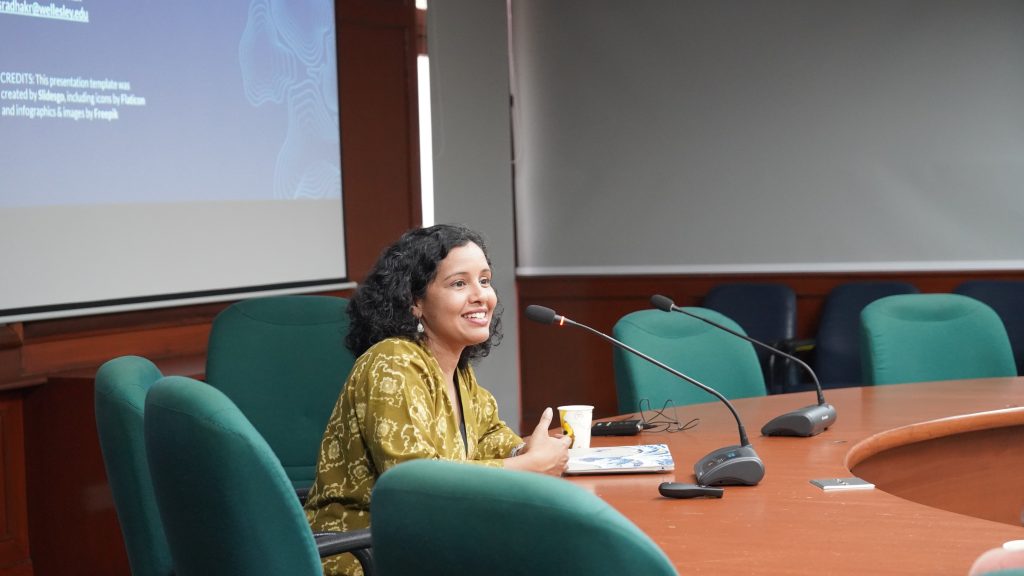 The HUPA Chair on Urban Poor and the Law at NLSIU organised a talk on ‘Hidden Precarities: Debt and Embodied Risk in Urban Uttarakhand, India’ by Dr. Smitha Radhakrishnan from Wellesley College, US, on January 8, 2026.
About the Speaker
Dr. Smitha Radhakrishnan is the Marion Butler McLean Professor in the History of Ideas and Professor of Sociology at Wellesley College in the United States. She is the author most recently of Making Women Pay: Microfinance in Urban India (2022) and The Gender Order of Neoliberalism (with Cinzia D. Solari, 2023). An award-winning feminist sociologist focussed on questions of finance, development, and labour, Dr. Radhakrishnan is currently studying household debt and moneylending in the contexts of India, South Africa, and the United States.
About the Talk
How might the experiences of low wage workers in contemporary India clarify conceptualisations of precarity developed primarily in global North contexts? This paper departs from an employment-oriented understanding of precarity to center the bodies and narratives of men and women workers who take loans in order to make ends meet. Drawing from 188 interviews with low-wage workers in the highly financialised state of Uttarakhand, India, we conceptualise precarity as embodied risk. We identify a continuum of embodied risk resulting from a combination of formal and informal loans, ranging from mental strain to the loss of belongings to ill health or premature death. Leveraging a social reproduction framework sensitive to caste and gender, we find that workers experience intensified embodied risk when taking high-interest loans from private moneylenders to meet pressing expenses, a phenomenon known as distress financing. Our analysis first examines how informal and formal loans accessible to low wage workers put the bodies of workers on the line in different ways. Then, through a close examination of a subset of workers, we explore the key mechanisms through which borrowing intensifies embodied risk for some workers and their families more than others. Caste, gender, household composition, and migrant status, all intersect to shape embodied risk. This intersectional understanding of precarity draws attention to the constitutive links between moneylending, financialisation, and social reproduction in contemporary India. We call for both state-led and community-led efforts to shore up diverse forms of social protection.
Gallery