
Play Reading | Draupadi by Mahasweta Devi | By The Green Room
New Academic Block 101
Wednesday, November 26, 2025, 5:00 pm
Open to the NLS community.
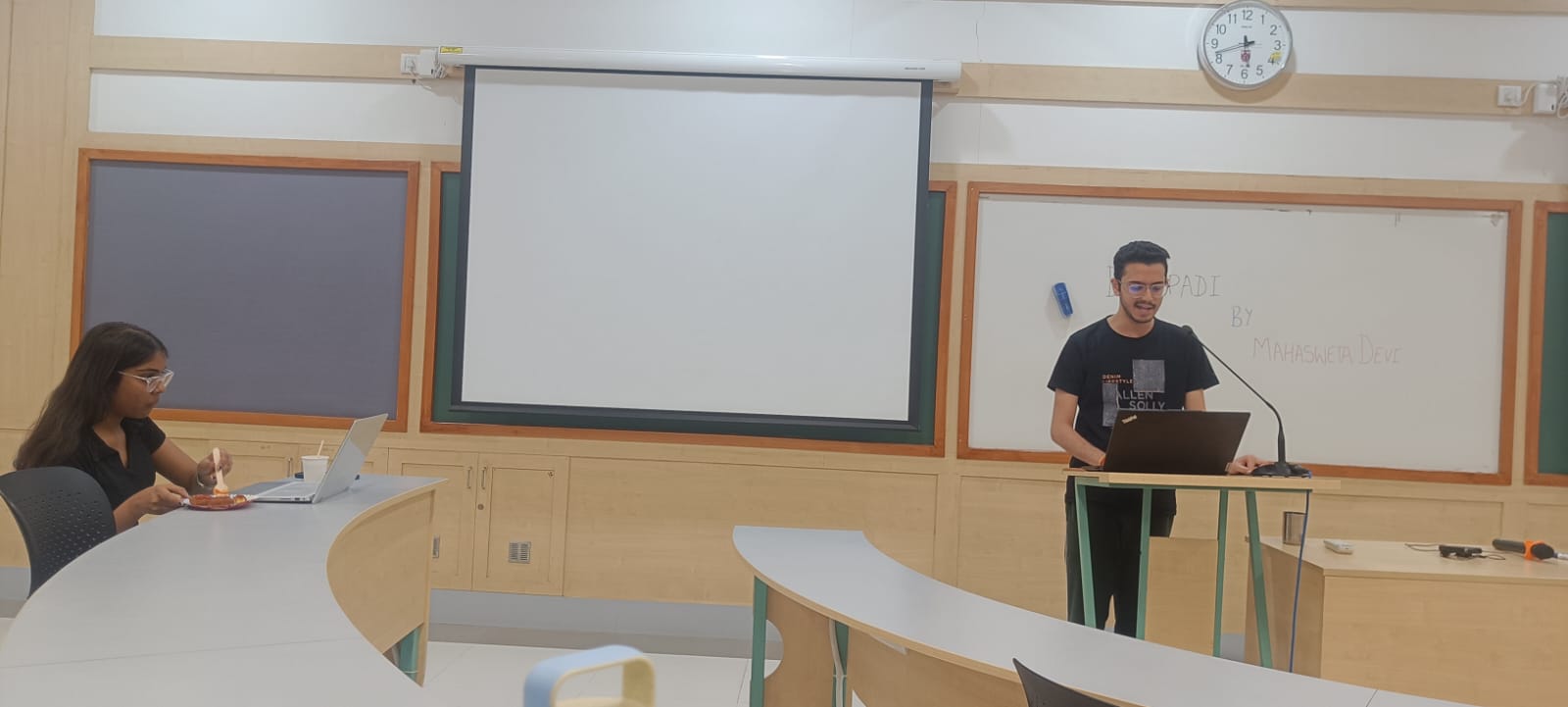
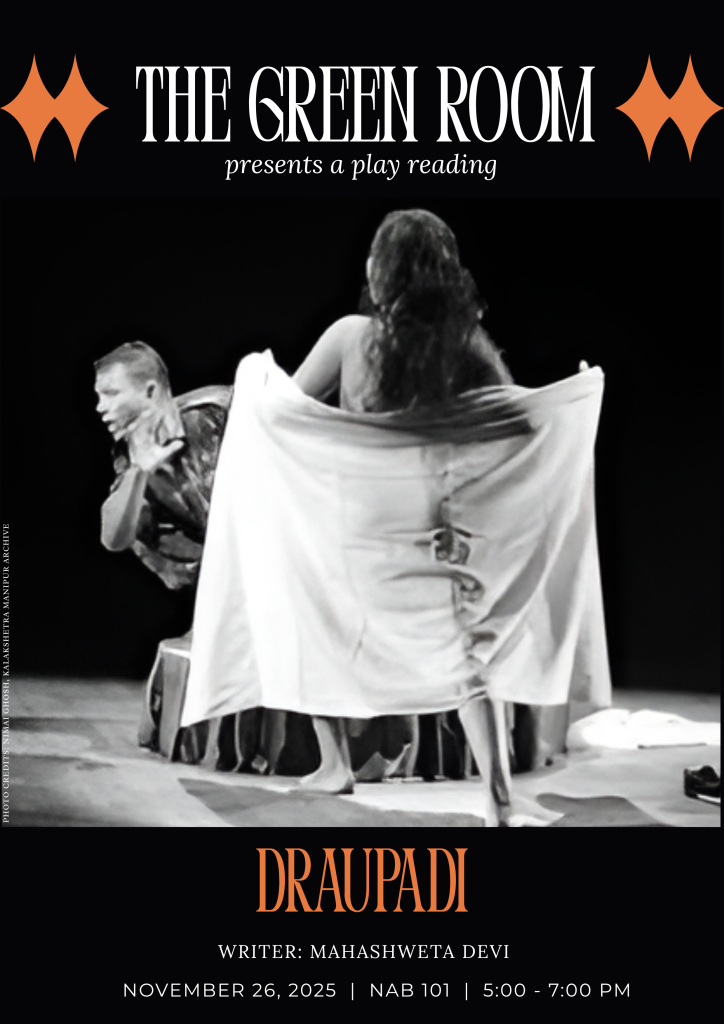 The Green Room held a reading of Mahasweta Devi’s Draupadi on November 26, 2025 (5 pm–7 pm) at NAB 101.
Draupadi (originally Dopdi, translated by Gayatri Chakravorty Spivak) is among her most iconic works. Reimagining the mythic figure of Draupadi within the harsh landscape of counterinsurgency operations in contemporary India, the story turns the epic heroine into a revolutionary tribal woman at war with state power.
Author and the Text
Mahasweta Devi (1926-2016) was one of India’s most powerful and influential literary voices — a writer whose work (foundational in subaltern and feminist literature) consistently cut through layers of state violence, gendered oppression, and the lived realities of marginalised communities, especially Adivasi groups. Her stories are unsparing, political, deeply humane, and often unsettling in the questions they force us to confront.
Reflections
This searing and politically charged short story, written against the backdrop of the Naxalite movement, confronts the machinery of state violence, the language of war, and the embodied resistance of a subaltern woman.
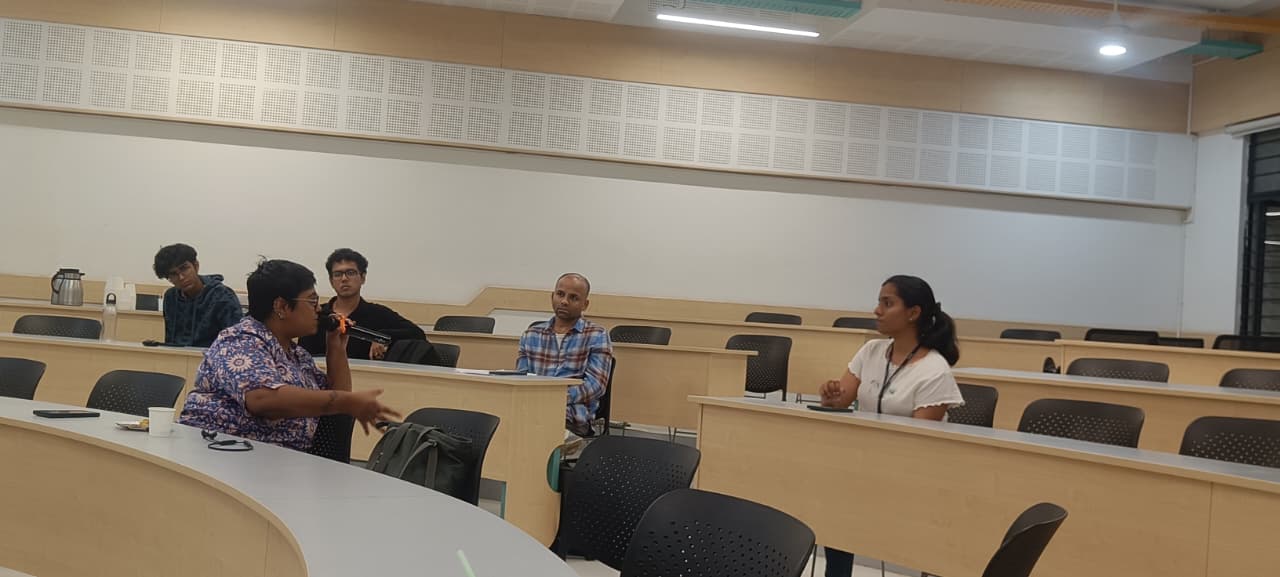
The session opened with a collective reading led by our volunteers, followed by an engaging and deeply thoughtful discussion on the text’s major concerns — the State’s transgression of its own legal order, the aesthetics through which violence is justified, the liberal subject’s complicity in oppressive structures, and the brutalisation of marginalised bodies under counterinsurgency regimes. Participants also reflected on the force of Dopdi’s final act of refusal, and how it reshapes questions of agency, vulnerability, and political defiance.
Director Samragni Dasgupta enriched the conversation with insights from theatrical practice, exploring how this intense narrative might be adapted for the stage through lighting, movement, spatial design, and the creative use of archival material. Her inputs opened up a wider conversation on the possibilities and challenges of translating politically dense prose into performance.
Gallery