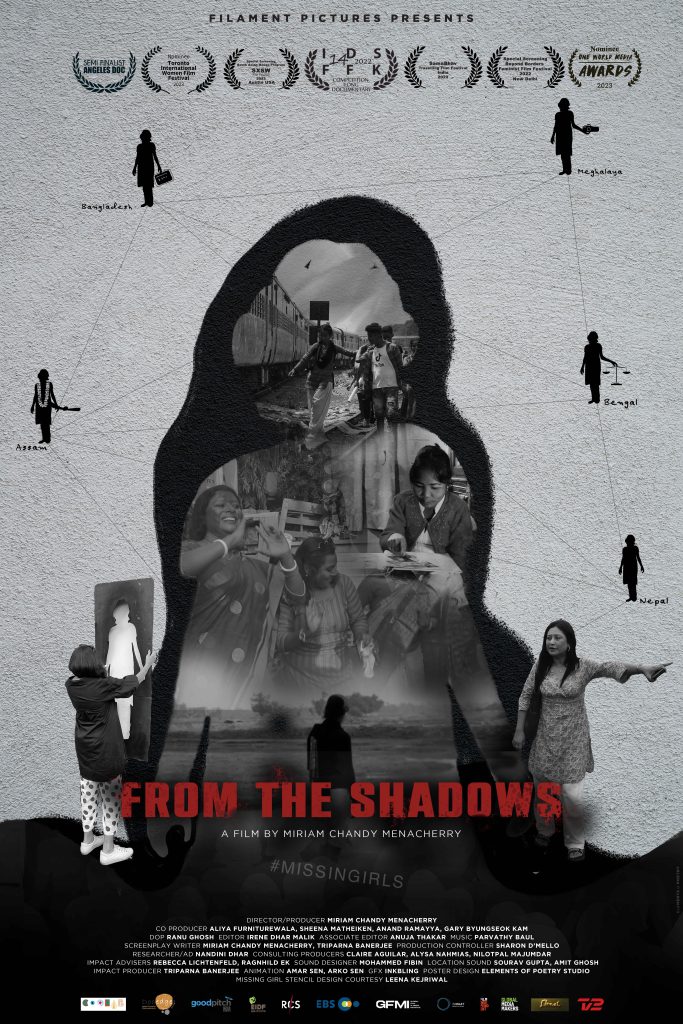
On 17th of January which marks Rohith Vemula’s seventh death anniversary, we are screening the film “WeHaveNotComeHere to Die” (2018) which chronicles the events leading up to Rohith’s death. We will be joined by the director Deepa Dhanraj for a session after the screening.
Deepa Dhanraj is a writer and an award winning film maker whose filmography covers topics such as population control policies, communal politics, women and customary law and civil liberties.
NLSIU is organising a lecture by noted Kannada writer, critic and teacher, Dr Rahamat Tarikere on Thursday January 19, 2023 at 5 PM.
The lecture titled “The Concept of Plurality: Some Notes” (ಬಹುತ್ವ: ಕೆಲವು ಟಿಪ್ಪಣಿಗಳು) will be held at the Allen & Overy Hall, Training Centre, NLSIU. He will be conducting the session in Kannada, Hindi and English.
About the speaker:
Dr Rahamat Tarikere recently retired as Professor from the Kannada University, Hampi. He is well known for his sharp insights and critical view on Kannada culture. Dr Tarikere is a three time winner of the Karnataka Sahitya Academy Award for his travelogue Andaman Kanasu and his research on Sufis in Karnataka, and the Sahitya Akademi Award for Kattiyanchina Daari, a collection of essays on the cultural history of Karnataka.
The central problem tackled within this project is the conflict between postcolonial theory and Marxism. This debate is approached through the subaltern scholars and Marxists such as Vivek Chibber who argue against this form of postcolonial theory, arguing in favor of a universalizing force of capital instead. Identifying the congruence of the two schools as forms of theory that seek to aid emancipatory politics, the thesis attempts to do a reparative reading of the two schools, in order to allow for a newer manner of thinking about these modes of resistance. Centrally, the thesis attempts to do this by locating the conflict between the two schools as being rooted in the problem of how history is viewed. Classical Marxism views history through dialectical and historical materialism which is teleological and universalizing, while subaltern historiography is rooted in attempting to write bottom-up histories (histories of the people) which causes, according to the critique, an inability to conceptualize universal emancipatory politics.
Walter Benjamin’s theory offers a unique way to approach the problem of classical dialectics by allowing for a shift away from its teleology and universalizing impulse. This is done by viewing dialectical contradictions of history as already present and using the idea of messianic time to offer a way in which the present is disrupted when the past is brought into the present in its fullness.This is read alongside Dipesh Chakraborty’s critique of linear (Eurocentric) time from a postcolonial perspective, and the idea of multiplicity in Hardt and Negri. This reading allows a newer understanding of dialectics to emerge, which acknowledges postcolonial specificities (in the conditions in which contradictions emerge), while retaining the dialectical progression of history as a process.
The thesis then illustrates that such contradictions are already seen in moments of the Global South’s artwork and movements, specifically looking at the ghazal ‘Hum Dekhenge’ and the movement of ‘Naxalbari’. Hum Dekhenge uses religion in a unique manner and embodies a contradiction which is made possible by the material conditions in which it was written, as well as the history of the ghazal form itself. Naxalbari, on the other hand, does not embody a similar effective strategy of mobilization owing to its failure to make religious appeals as Birsa Munda did. Drawing from these two examples, it is argued that an effective strategy for emancipatory politics must account for the material conditions in which contradictions emerge in specific ways.
We invite you to this week’s Public Lecture featuring guest speaker Prof. Mahesh Rangarajan who will be delivering a talk titled, “Nature in Balance? State, Society, and Ecology in Independent India”.
About the Speaker
Mahesh Rangarajan is Professor of Environmental Studies and History at Ashoka University, Sonipat, Haryana. Prior to this, he was Professor of Modern Indian History at the University of Delhi. He has also taught at Cornell University, Jadavpur University, and the National Center for Biological Sciences, Bengaluru. Prof. Rangarajan served as Director of the Nehru Memorial Museum and Library, New Delhi, from 2011 to 2015 and as the VC of Krea University in 2021- 22. He is the author of Nature and Nation (2015), Nature Without Borders (2014), and India’s Wildlife History (2001). He has also co- authored People, Parks and Wildlife: Towards Co-existence (2000). His coedited works are The Oxford Anthology of Indian Wildlife in 2 volumes (1999), Battles over Nature (2003), Making Conservation work (2007), Environmental History as if Nature Existed (2010), Shifting Ground (2014), Nature without Borders (2014) , At Nature’s Edge (2018). His new book, Nature Contested is currently in press. Mahesh did his BA from Delhi University; he holds an MA and DPhil from the University of Oxford where he was a Rhodes Scholar. In 2021 he was elected Foreign Member of the American Historical Association, the fourth Indian to be named so.
Abstract
We live in epochal times not only in political or economic but also ecological sense. 75 years after independence, India is a political democracy with an economy growing at 4.5 per cent for over four decades. But along with challenges of deprivation and inequality are environmental issues. The latter relate not only to species extinction or climate change , air, and water contamination or mangrove loss but to a larger question. It may be summarised as how far a peace with nature can underpin societal challenges. A safe, livable, and habitable ecosystem that includes not only humans but other life forms is as elusive as it is vital. India’s imperial legacy as well as specific development choices in the last century mean there is no clean slate to start on. Yet, as the talk hopes to show, there are ways to draw on past debates and initiatives to pose questions afresh.
The past cannot offer any easy cut and paste lessons. But it can help ask how and why we got here and inform us on where to go and how. A life of material and human dignity for all is much a question of ecological as of the human sciences. What better place to begin than an informed view of how nature’s pasts shaped the present?
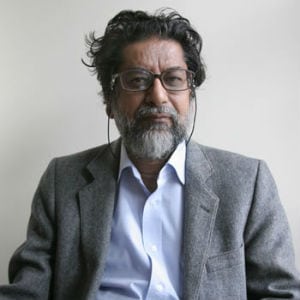
We invite you to a QAMRA Talks event on “Archiving Justice Movements of the Marginal: Lessons from Queer Emancipation & HIV Struggles” by Vivek Divan. The talk will be followed by a discussion by NLS faculty member Kunal Ambasta.
Vivek Divan, NLS BA LLB 1994, founded the Centre for Health Equity, Law & Policy at ILS Pune in 2019 after decades working at the intersections of health, sexuality and rights. His work as part of queer emancipation struggles and health justice movements has revealed the many ways in which the law – often outside the courtroom – is pivotal to the quotidian ways marginalised communities express courage, protect themselves, and demand emancipation. Vivek also acts as an advisor to QAMRA at NLSIU.
NLS faculty member Radhika Chitkara will discuss the paper titled “An Exceptionally Special Law: Constraints Over Emergency Powers under the Unlawful Activities (Prevention) Act.” Prof. Arun Thiruvengadam will be the discussant.
Abstract:
The Supreme Court judgment of 15 October 2022 in the Gadchiroli conspiracy case on the issue of sanction for prosecution, urgently overturning the High Court judgment of the day before, offers a fecund opportunity to review the nature of the Unlawful Activities (Prevention) Act as an ’emergency’ regime. This paper locates itself within the age-old and burgeoning literature on the relationship between emergency executive powers and the Rule of Law. In what manner, and to what extent, is the UAPA bound to the Rule of Law? What is the model of emergency regime at operation under the UAPA? Invoking sanction for prosecution as an example of review of emergency powers, I attempt to answer these questions by focusing on the nature of constraints on executive power designed into the architecture of the law.
This paper does not critically interrogate emergency jurisprudence under constitutional and common law. It also excludes justifications, necessity and functions of emergency laws, as well as the construction of terrorism as their legitimate object. Instead, it seeks to evaluate the UAPA on its own terms, as an emergency law with wide derogations from fundamental rights and established mechanisms of checks and balances.
The paper offers a brief background on the distinct ways in which jurisprudence and State practise characterises the relationship between emergencies and Rule of Law, in order to explain the choice of constraints as a relevant index for compliance with Rule of Law. It then surveys the nature and types of constraints that may be encoded in special emergency regimes, with appropriate examples from the Constitution of India and prior anti-terror laws. Finally, the paper turns to an evaluation of the architectural and political design under the UAPA.
I argue that models of emergency regimes are better understood not as binaries, but as a sliding-scale or spectrum in terms of their relationship with Rule of Law. I demonstrate that the UAPA represents not one, but four distinct emergency regimes, steadily tending towards “legal black holes” in light of existing legal and political constraints. The Supreme Court judgment in the Gadchiroli case is but one illustration of this tendency.
On 23 December (Friday), we are hosting a book event on “Acts of Media: Law and Media in Contemporary India”. We will have a panel comprising the book’s contributing authors who will introduce and briefly discuss the book. We also have a few faculty members come in as discussants. This will be followed by a Q & A session.
About the book: Acts of Media: Law and Media in Contemporary India, New Delhi: Sage, 2022
Acts of Media brings together contributions from leading academics, lawyers, researchers and policy experts about contemporary India and Sri Lanka. This book seeks to consolidate a field of multidisciplinary work around media technologies that intersects with legal scholarship The approaches to law and media taken in this volume challenge us to think outside of traditional disciplinary descriptions. Rather than approaching the law as being outside of, and constantly catching up with the media, the contributors of this book view law and media as being deeply intertwined.
The speakers have requested interested attendees to browse the book before attending the event.
Speakers:
Siddharth Narrain, Prof. Ravi Sundaram, and Prof. Jinee Lokaneeta.
Siddharth Narrain is a lawyer and legal scholar working in the field of public law and socio-legal studies. He is currently a Scientia PhD Candidate, Faculty of Law & Justice, University of New South Wales (UNSW), Sydney. Siddharth has a BA LLB (Hons) degree from NLSIU, a PG Diploma in journalism from ACJ, Chennai, and an LLM from Harvard Law School. He has also co-edited (with Dr. Mayur Suresh) The Shifting Scales of Justice: The Supreme Court in Neoliberal India (Orient BlackSwan, Hyderabad, 2014).
Prof. Ravi Sundaram co- founded the Sarai programme at the CSDS along with Ravi Vasudevan and the Raqs Media Collective. Sarai grew to become one of India’s best-known experimental and critical research sites on media. Along with colleagues, Sundaram co-edited the Sarai Reader series, The Public Domain (2001), The Cities of Everyday Life (2002), Shaping Technologies (2003), Crisis Media (2004). Sundaram wrote Pirate Modernity: Media Urbanism in Delhi (2010) and edited No Limits: Media Studies from India (Delhi, 2015). His recent book Technopharmacology (with Joshua Neves, Aleena China and Susanna Paasonen) came out from Minnesota and Meson Press (2022). He is currently finishing his next book project, Events and Affections: post-public media circulation. Sundaram’s essays have been translated into various languages in India, Asia, and Europe.
Prof. Jinee Lokaneeta is Professor of Political Science and International Relations at Drew University, New Jersey. Her areas of interest include law and violence, critical political and legal theory, human rights, and interdisciplinary legal studies. She is the author of The Truth Machines: Policing, Violence, and Scientific Interrogations in India (2020) and Transnational Torture: Law, Violence, and State Power in the United States and India ([2011] 2012) and the co-editor with Nivedita Menon and Sadhna Arya of Feminist Politics: Struggles and Issues (2001).
Discussants:
NLS faculty members Dr. Rinku Lamba, Srijoni Sen, and Kunal Ambasta
The event will involve panelists from across the spectrum of privacy law dealing with an extremely contemporary issue. E-Certificates will be provided to the attendees.
Panelists
Ms Malavika Raghavan: Ms Raghavan is a doctoral candidate at the London School of Economic’s Information Systems and Innovation Group and currently a Senior Fellow at the Future for Privacy Forum. Her work entails interdisciplinary research in India, focusing on the impacts of digitization on the lives of lower-income individuals. Her work since 2016 has focused on the regulation and use of personal data in service delivery by the Indian State and private sector actors, often enabled by expansive State-supported technical and regulatory architectures.
Mr Jaideep Reddy: Mr Reddy is currently Counsel in the Telecom, Media and Technology vertical of Trilegal and a visiting faculty at the National Law School of India. He has previously been part of Nishith Desai Associates in the capacity of the Leader in their TMT vertical. His practice focuses on disruptive technologies and their interaction with the law, including cryptocurrency and blockchain technology, payments, privacy and cybersecurity, and other technology-related issues (disputes, regulatory and public policy).
Mr Vivek Reddy: Mr Reddy is a Senior Advocate of the Andhra Pradesh High Court, and a partner at Vivek Reddy Law Chambers, dealing extensively with privacy matters. He is a graduate of NLSIU and Harvard Law School and a member of the Governing Council of National Law University, Delhi. He had also worked on the initial Joint Parliamentary Committee report on the Data Protection Bill.
Ms Sriya Sridhar: Ms Sridhar is currently a part of the in-house legal team at Setu, a fin-tech company (part of the Pine Labs group), prior to which she practiced at a law firm within the IP and Technology practice. Her practice focuses primarily on technology laws (currently with a focus on fin-tech) and contracting, privacy laws and regulatory compliance. She has worked on advising on the intersection between law and emerging technologies, including intermediary liability issues, blockchain technology and e-commerce. She also worked extensively with business and product teams to translate their needs into legal documentation, especially in a tech context. Apart from her practice, she researches and writes on topics such as fin-tech regulatory developments, privacy rights, digital governance, and open access policy.
Mr Divij Joshi: Mr Joshi is an independent lawyer and researcher. He graduated with a B.A., LL.B.(Hons.) degree from the National Law School of India University, Bangalore, in 2016. Subsequently, he joined a litigation practice in Bombay, and then as a research fellow, conducting legal and policy research on issues of technology, urban governance, and environmental laws. he was a Mozilla Technology Policy Fellow for 2019/20 during which he created the AI Observatory, interrogating government use of Automated Decision Making in India. He is also an editor at SpicyIp.
About L-Tech
The Law and Technology Society (‘L-Tech’) is one of Asia’s oldest student-run tech-law groups and is committed to exploring the boundless contours of the intriguing interface between law and technology. The main objective of the committee is to build up-to-date scholarship in this field by making research panels and by organizing a series of interesting events including seminars, conferences, policy-making competitions, essay competitions, etc. Our flagship event is Consilience, which is an annual multi-day conference. It was started in the year 2000 and holds the record to be the first of its kind in India. In the past, the society has had the privilege to host events with dignitaries such as Jacob Appelbaum, Anthony Taubman, Richard Stallman, Stephen Hobe, etc. It is one amongst the many societies at National Law School of India University, Bangalore.
Following up on the success of ‘Kumbalangi Nights’ movie screening, we will be screening the Oscar nominated and critically acclaimed Bosnian film Quo Vadis, Aida? (Where are you going, Aida?) this week. The screening will take place on December 16, 2022 at the Krishnappa Memorial Hall, OAB from 7 PM onwards.
Quo Vadis, Aida? is an intensely moving, compelling portrayal of the events that unfolded in Srebrenica during the Bosnian war. The film will be screened with subtitles. The 2020 Bosnian film is written, produced and directed by Jasmila Žbanić. It was nominated for Best International Feature Film at the 93rd Academy Awards and won the Award for Best Film at the 34th European Film Awards.
The National Law School of India University, Bengaluru, is pleased to invite you to the inaugural session of “Equalizing the Role of Women in Policing”, an online dialogue series featuring policies, programs and initiatives from India and around the world aimed at realizing women’s equitable growth and contribution to policing.
This is an initiative under the “Benchmarking and Strengthening the Role of Women in Karnataka Police” project of NLSIU. To know more about this project, click here.
Webinar 1 – Global Practices on Women in Police
The first session is on “Global Practices on Women in Police” and features Ms. Jane Townsley, Executive Director of the International Association of Women in Policing (IAWP) and a senior police officer (retired) with over 30 years’ policing experience in the United Kingdom. It will take place online on Tuesday, 20 December, from 5.30 pm – 7.30 pm IST.
Ms. Townsley will present global trends on women’s representation in law enforcement and highlight key lessons from ongoing reform initiatives aimed at achieving women’s equitable representation and participation in policing. The session will also include a presentation by Ms. Roshni Kapoor who worked with NLSIU to develop a compendium of good practices from around the world on women in policing. Ms. Kapoor will highlight specific measures including policies, programs and initiatives featured in the compendium on promoting women’s role in policing.
About the speaker:
Jane Townsley (UK) is a UN Women Senior Police Expert, as well as the co-author of the UN Women Handbook on Gender-responsive Policing Services for Women and Girls Subject to Violence. Jane is a senior police officer (retired) with over 30 years’ policing experience in the UK, retiring in 2013 at the rank of Chief Inspector. Since retirement, she has established her consultancy specializing in capacity building for gender-responsive policing and service delivery to local communities and a focus on the empowerment of women in policing. She is the Executive Director of the International Association of Women Police (IAWP), having previously serving as President between 2009 and 2015. She has helped to lead the IAWP with members in over 70 countries.
Agenda:
5.30pm – Welcome remarks
Dr. Mrinal Satish, Professor of Law, NLSIU
5.35pm – Introduction to the dialogue series
Devyani Srivastava, Principal Investigator, Women in Karnataka Police Project, NLSIU
5.40pm – Presentation on “Programs, Policies and Initiatives for Strengthening the Role of Women in Policing: A Compendium of Global Good Practices”
Roshni Kapoor, Consultant, NLSIU
6.00pm – Keynote Speech | “Women Policing across the Globe: Key Trends”
Ms. Jane Townsley, Executive Director, International Association of Women Police
6.45pm – Discussions
7.30pm – Concluding remarks
How do I register?
Register here for the session on 20 December.
*After registering, you will receive a confirmation email containing information about joining the meeting.
About the Dialogue Series
With state police services in India set to recruit more women, the dialogue series intends to bring together police leaders, practitioners, researchers and global experts in a collective dialogue on different issues surrounding women in policing. It will feature ongoing research and initiatives on themes such as gender mainstreaming tools, women police units, role of women police in driving reforms, women police leadership, and gender sensitization with a view to facilitate learning and critical reflection.
The series will continue through next year and will be open to all.
We look forward to your support and active participation in the series to enable insightful and relevant discussions.