
The ICICI Professorial Chair on Business Laws at NLSIU is hosting an expert on corporate law, Mr. Neeraj Vyas (NLS BA LLB 2014), Partner at Saga Legal, as a guest speaker on November 12, 2025.
Mr. Vyas will have an interactive session with 3rd to 5th year students of the BA LLB (Hons), final year students of the LLB (Hons), and students of the LLM programmes on the topic ‘The Importance of Legal Due Diligence’. The session will be held from 3 pm to 4:30 pm at NAB 101, and is being coordinated by NLS faculty Dr. Garima Gupta and Ms. Varsha Aithala.
About the Speaker
Mr. Vyas is a law graduate from the National Law School of India University, Bengaluru. He is a Partner at the law firm, Saga Legal, and is based out of their Bengaluru office. He comes with a professional experience of almost a decade of corporate transactional and advisory expertise in navigating intricate private equity and investment fund transactions, and includes general corporate advisory, M&A, and venture debt matters, and across various sectors such as technology (Edtech, Agritech), FnB, education, media and entertainment. He has been recognised as a ‘Key Lawyer’ within the ‘Private Equity and Investment Funds’ category by The Legal 500. Prior to joining Saga Legal, he worked with Samvād Partners, Indus Law, and ICICI Bank Limited.
About the Session
Legal due diligence (LDD) is one of the most foundational yet under-taught aspects of corporate legal practice. While students learn contract law, company law, and Mergers & Acquisitions (M&A) theory, the practical application of these concepts often begins with conducting due diligence. For most law firm associates, due diligence is the first major task assigned, and it sets the tone for how effectively they can operate in a transactional environment. This session aims to bridge the gap between law school learning and on-ground practice by demystifying what legal due diligence really involves, why it matters, and how young lawyers can add value through it.
Duration: 60 to 90 minutes
Format: Interactive talk with real examples and a sample red-flag exercise.
Q&A: Open discussion on how students can build skills relevant for transactional work.
Objectives
By the end of this session, students will:
- Understand what legal due diligence is and its relevance in corporate transactions.
- Learn how to approach a due diligence exercise methodically.
- Appreciate how due diligence findings influence deal negotiations and transaction documents.
- Gain insights into common mistakes and best practices for young associates.
Key Topics
1. What is Legal Due Diligence?
Definition and purpose: “trust but verify.”
Where LDD fits in the transaction lifecycle (pre-deal stage to closing).
How it supports decision-making in mergers, acquisitions, investments, and financings.
2. Types and Scope of Legal Due Diligence
Corporate due diligence: incorporation, shareholding, and capital structure.
Contractual due diligence: key commercial contracts, termination clauses, change of control.
Regulatory and compliance due diligence: licenses, approvals, ongoing obligations.
Litigation and dispute due diligence: material proceedings, risk assessment.
Employment and real estate due diligence: employee issues, property ownership, leases.
3. The Due Diligence Process
Understanding the data room and how information is provided.
Setting timelines and scoping the review (red flag vs. comprehensive review).
How to use a diligence checklist effectively.
Categorizing findings: critical, major, and minor.
Drafting the diligence report: structure, tone, and clarity.
4. Practical Insights from Law Firm Practice
What partners and clients expect from a good diligence memo.
How young associates can stand out while doing diligence work.
Real-life anecdotes: how a small finding changed a deal.
Technology and AI tools now reshaping due diligence.
Why it matters
Due diligence is often the first real opportunity for young lawyers to understand how law intersects with business. It builds analytical discipline, attention to detail, and commercial awareness. Strong due diligence skills:
- Make you more valuable in deal teams.
- Help you think beyond documents: to business strategy and risk.
- Form the foundation for later responsibilities like drafting and negotiations.
This session is intended to make due diligence not just a “law firm chore,” but an intellectually engaging exercise in understanding how law safeguards commercial intent.
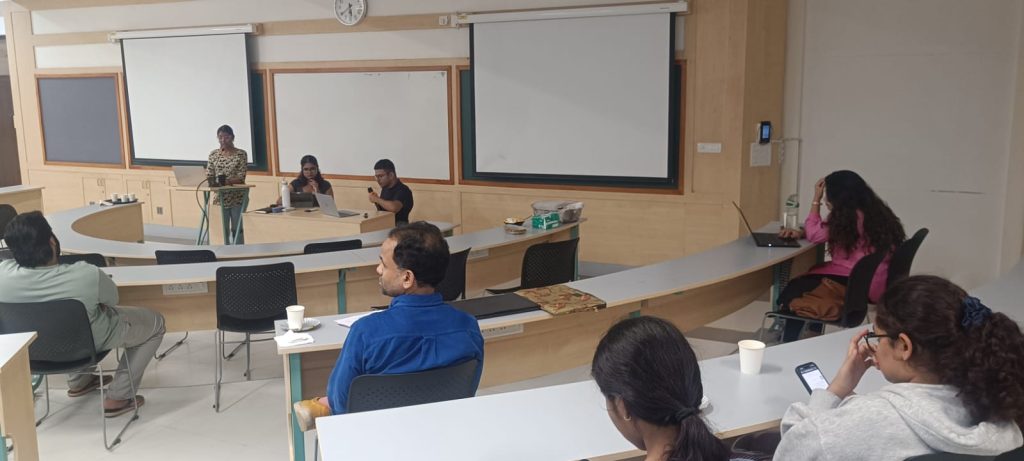 The student-led theatre effort at NLS, The Green Room, organised a reading of Poile Sengupta’s ‘
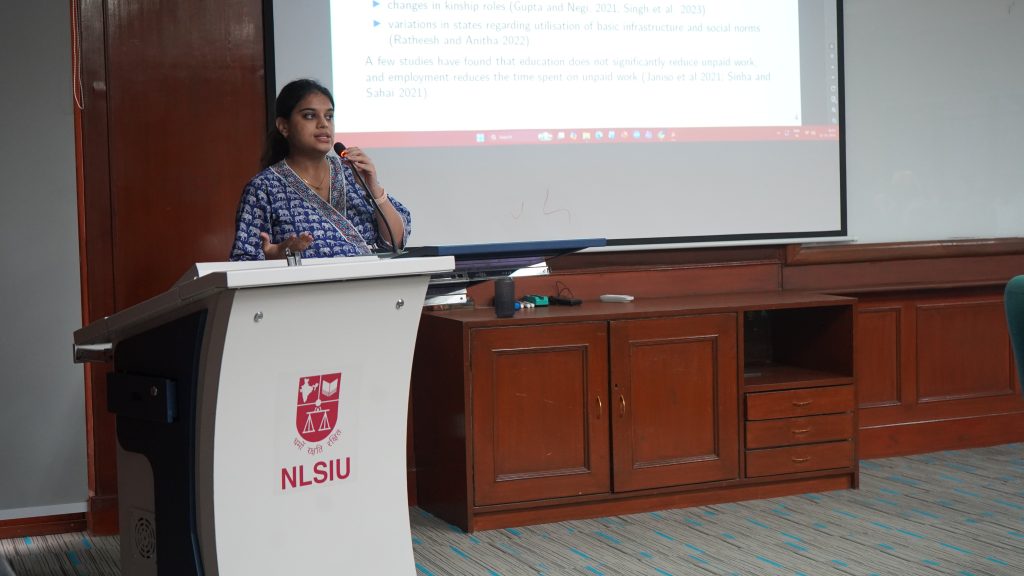 At this week’s faculty seminar,
  The
The 
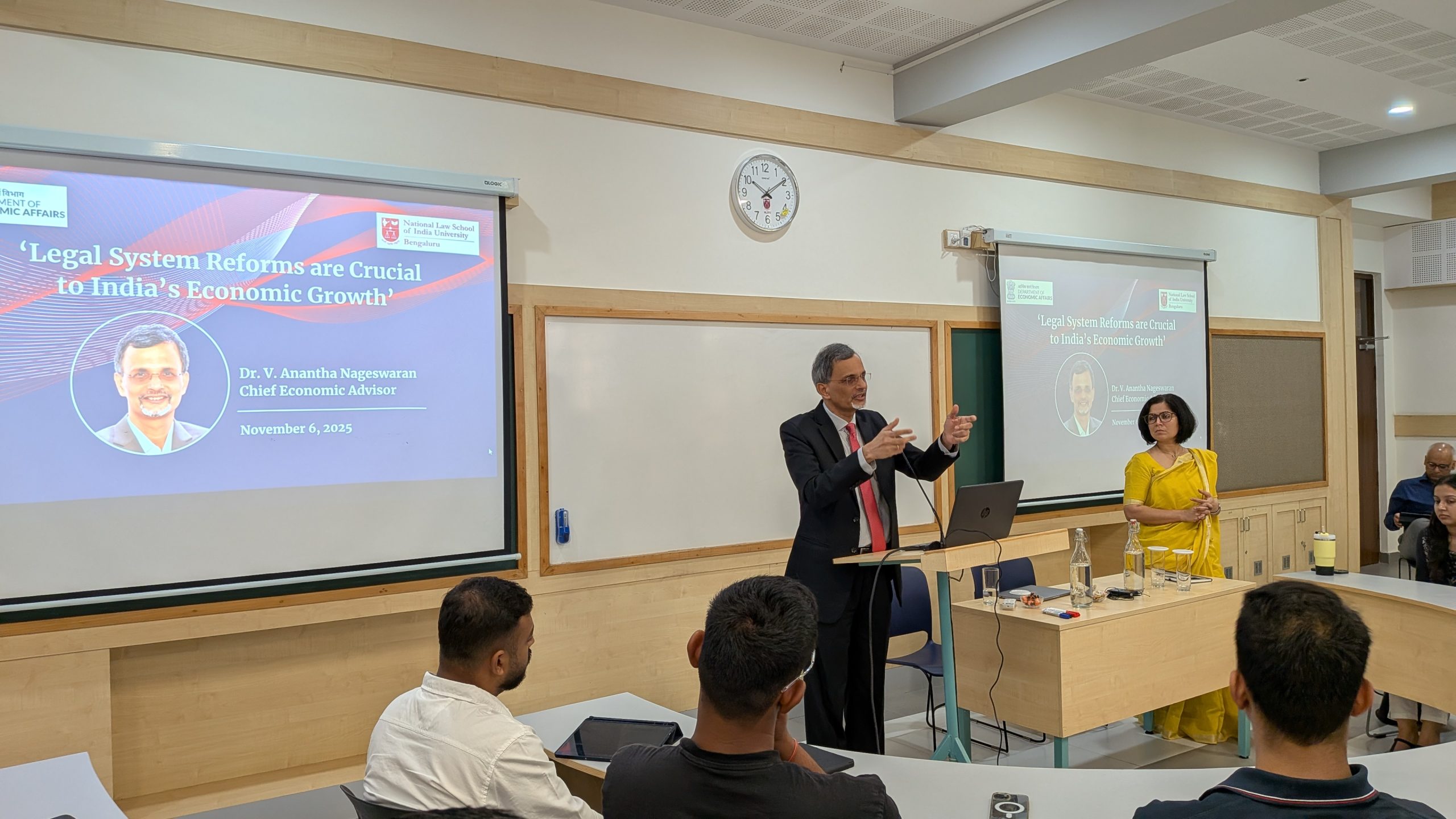


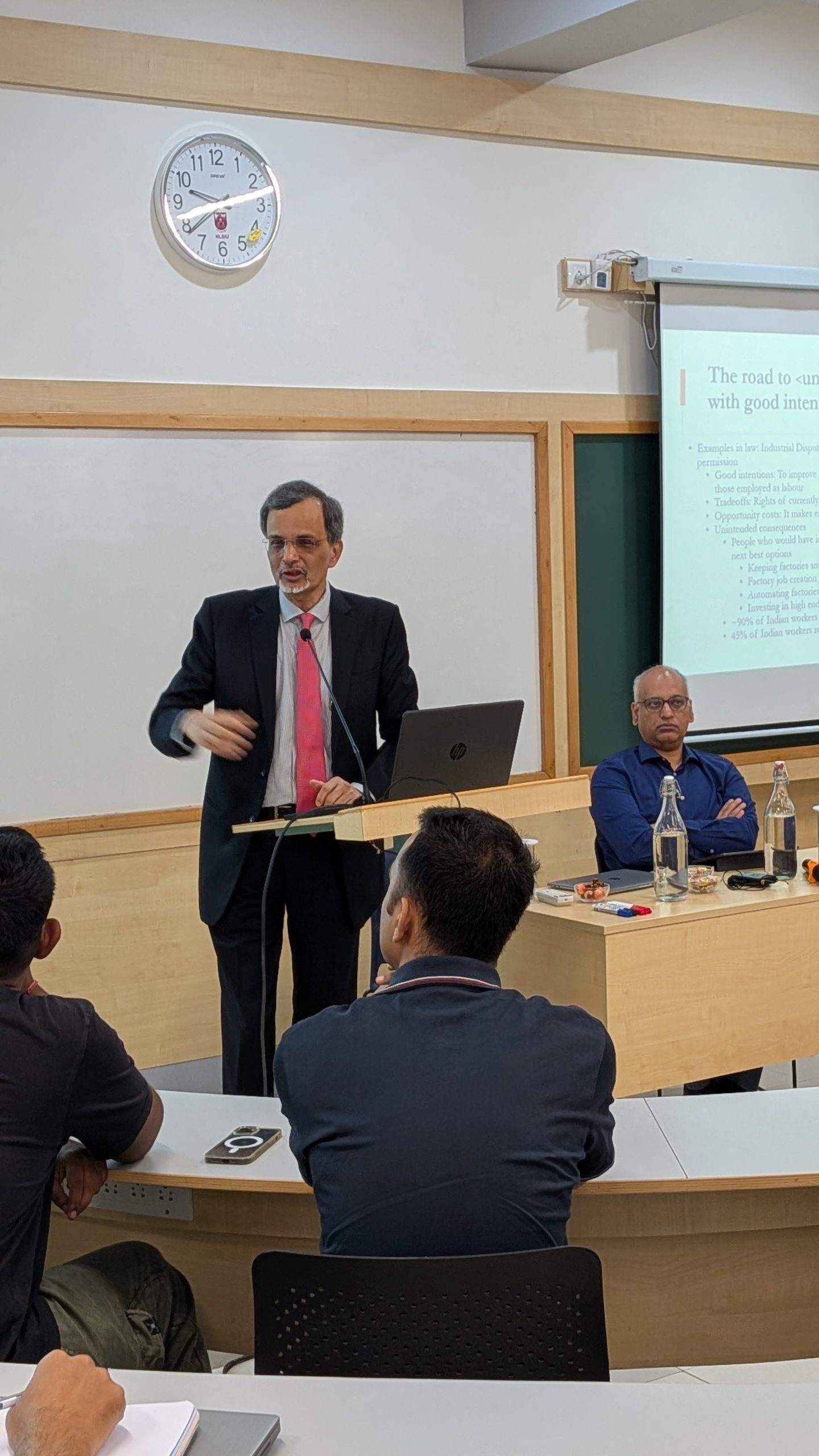




 The
The  The NLS Chapter of SPIC MACAY is organising a Carnatic Vocal Music Concert on November 9, 2025, at the NLSIU campus. The performance will feature Vidwan Abhishek Raghuram on Vocal, Vidwan Arjun Kumar on Mridangam and Vidwan Keshav Mohankumar on Violin.
 The National Law School of India University, Bengaluru and
  The
The