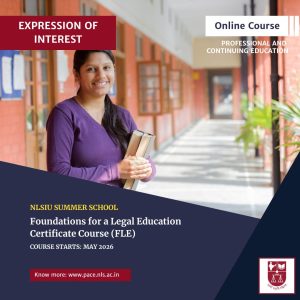
The National Law School of India University (NLSIU) invites expression of interest to the sixth edition of the Foundations for Legal Education (FLE) Certificate Course for 2026.
Moving from high school to law school is challenging for students – and NLSIU’s Foundations for a Legal Education can set you on the path to acquire the skills and intellectual abilities you need to make this journey easy and effective. In a dynamic four-week curriculum, the FLE Course will introduce you to:
Read critically and analyse complex materials;
Understand and analyse quantitative information in context;
Write persuasively;
Argue effectively; and
Think like a lawyer!
The study of law demands specialised skill sets that young individuals may not have exposure to, or training in, and the FLE aims to bridge this gap. This course is open to high-school students, graduates and professionals keen to improve their comprehension, articulation, and reasoning abilities.
If you’re in the tenth standard or above at high school, and are curious about studying law, this course, from NIRF-ranked #1 Law School is for you! The FLE will help you develop life-long skills that will:
Boost your ability to succeed at law school;
Enhance your comprehension, articulation, and reasoning abilities; and
Springboard your journey into the world of academia and the profession.
Applications for the FLE Course will be opening soon! To express your interest please fill this Google Form.
To know more visit our FLE Course page on the PACE website. The course will begin in May 2026. For for any queries write to us on .
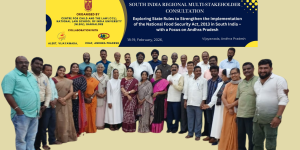
The Centre for Child and the Law (CCL), NLSIU in collaboration with ALERT and CRAF, Andhra Pradesh organised a two-day consultation on “Exploring State Rules to Strengthen the Implementation of the National Food Security Act, 2013 in South India – with a Focus on Andhra Pradesh” on February 18-19, 2026, at Vijayawada, Andhra Pradesh.
Over 35 civil society organisation (CSO) representatives from five southern states of Tamil Nadu, Kerala, Andhra Pradesh, Telangana and Karnataka participated in this consultation. The main purpose of the two-day consultation was conducting sessions on the present State Rules under the National Food Security Act (NFSA), 2013, initiating deliberations on the NFSA Model Rules developed by CCL through detailed analysis and comparison of the respective State Rules.
The consultation was a success as the CSOs actively participated in the group discussions and made further commitments to collaborate with CCL to carry forward the dialogue with respective stakeholders towards strengthening the NFSA State Rules through state specific strategic action plan. Representatives from Kerala proposed engaging in dialogue with Members of Parliament (MPs) and Members of Legislative Assembly (MLAs) to strengthen provisions for women empowerment and role of local authorities in the Kerala State Rules. Similarly, representatives from Andhra Pradesh CSOs plan to initiate interdepartmental convergence and dialogue with government stakeholders to strengthen the rules and increase government accountability and transparency in the grievance redressal mechanisms and social audit for all entitlements under NFSA. CSO members from Telangana committed to take forward a bottom-up evidence-based approach in their advocacy action plan to strengthen the State Rules. They aim towards formation of vigilance committees under NFSA provisions at select districts, then further document grassroots impact created by vigilance committees in ensuring right to food in those districts and present it to the government stakeholders to influence them to bolster the rules and implementation. Tamil Nadu plans to include Tamil Nadu Food Security Rules, 2017 specific recommendations in the collective CSO manifesto to engage with MPs and MLAs in light of the upcoming state elections this year.
zAs an outcome of the deliberations, way forward and continuing the momentum, CSOs proposed formation of a South India level network on Right to Food with State level Conveners. CSOs look forward to CCL’s support through technical expertise to conduct socio-legal research, policy analysis and establishing institutional linkages to vitalize the journey towards ensuring right to food for all and leave no one behind.
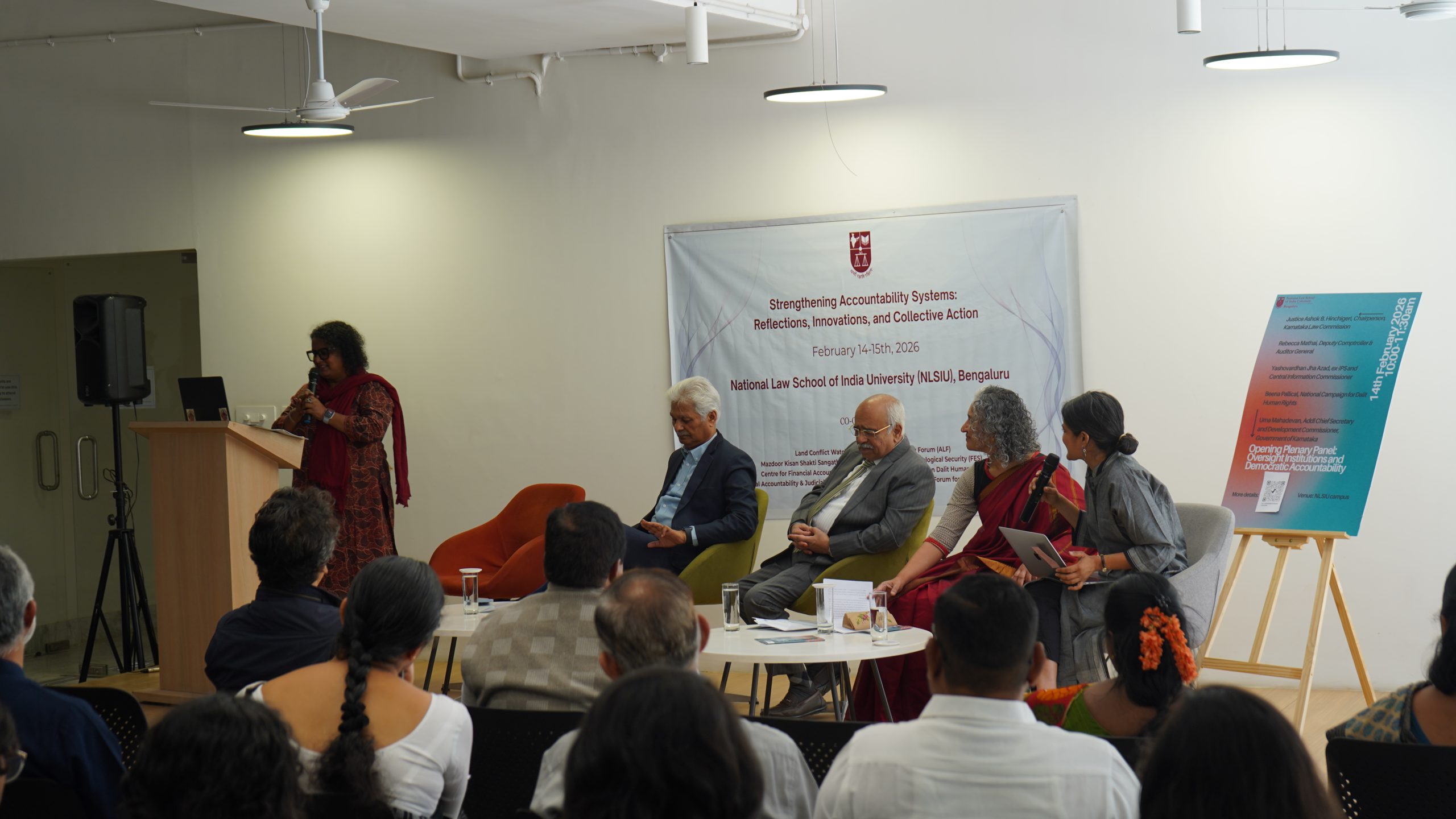
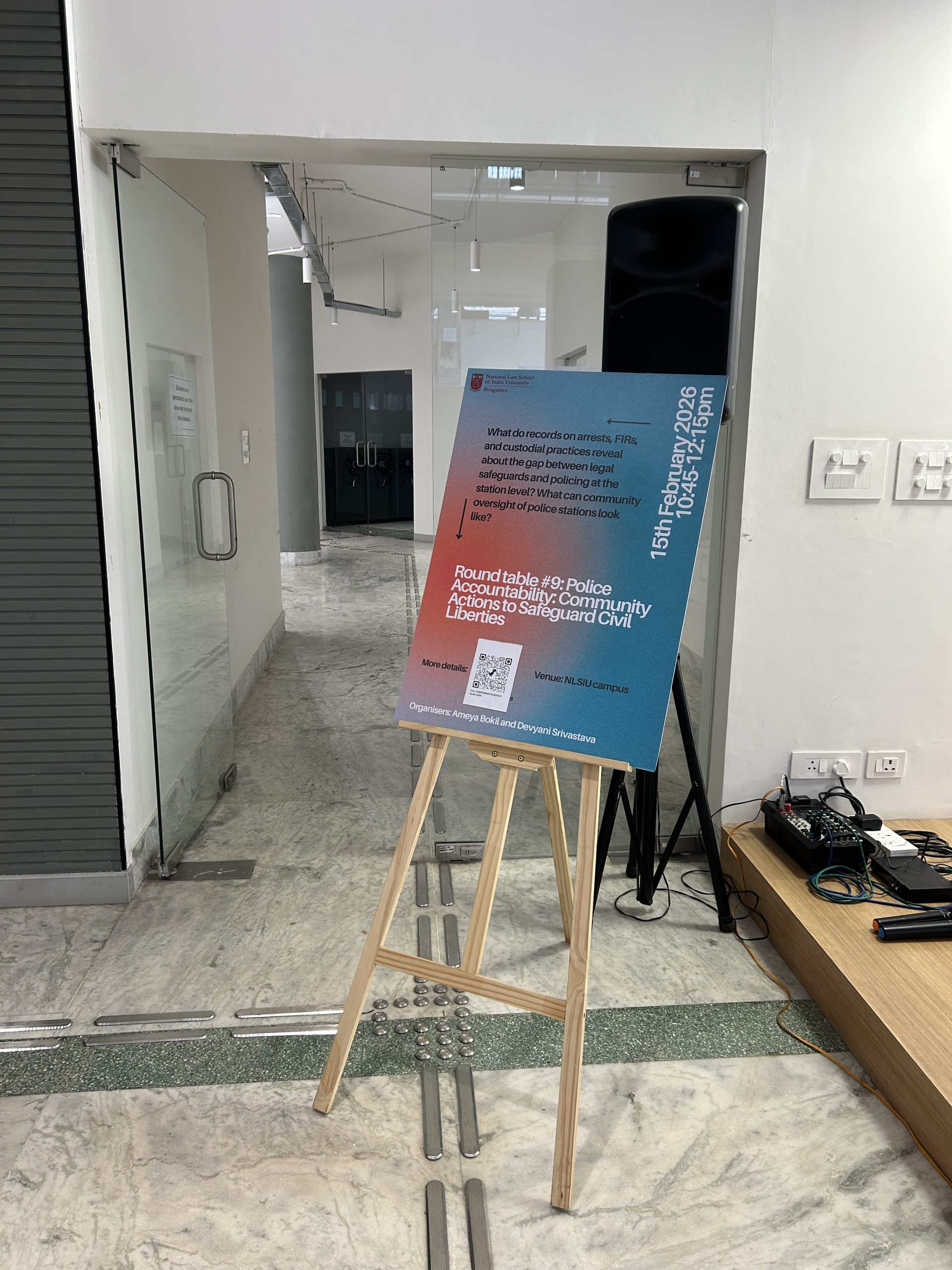
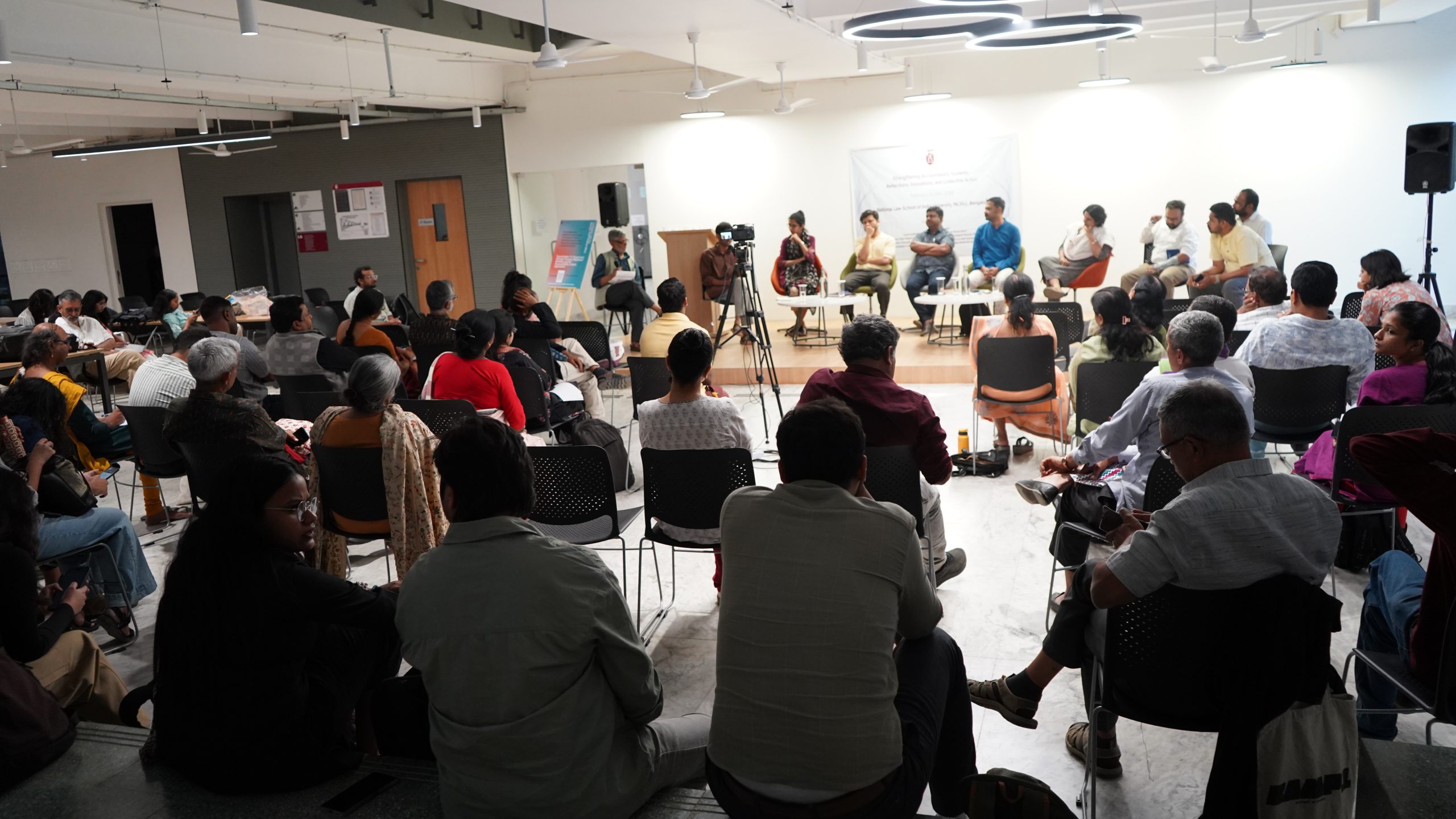
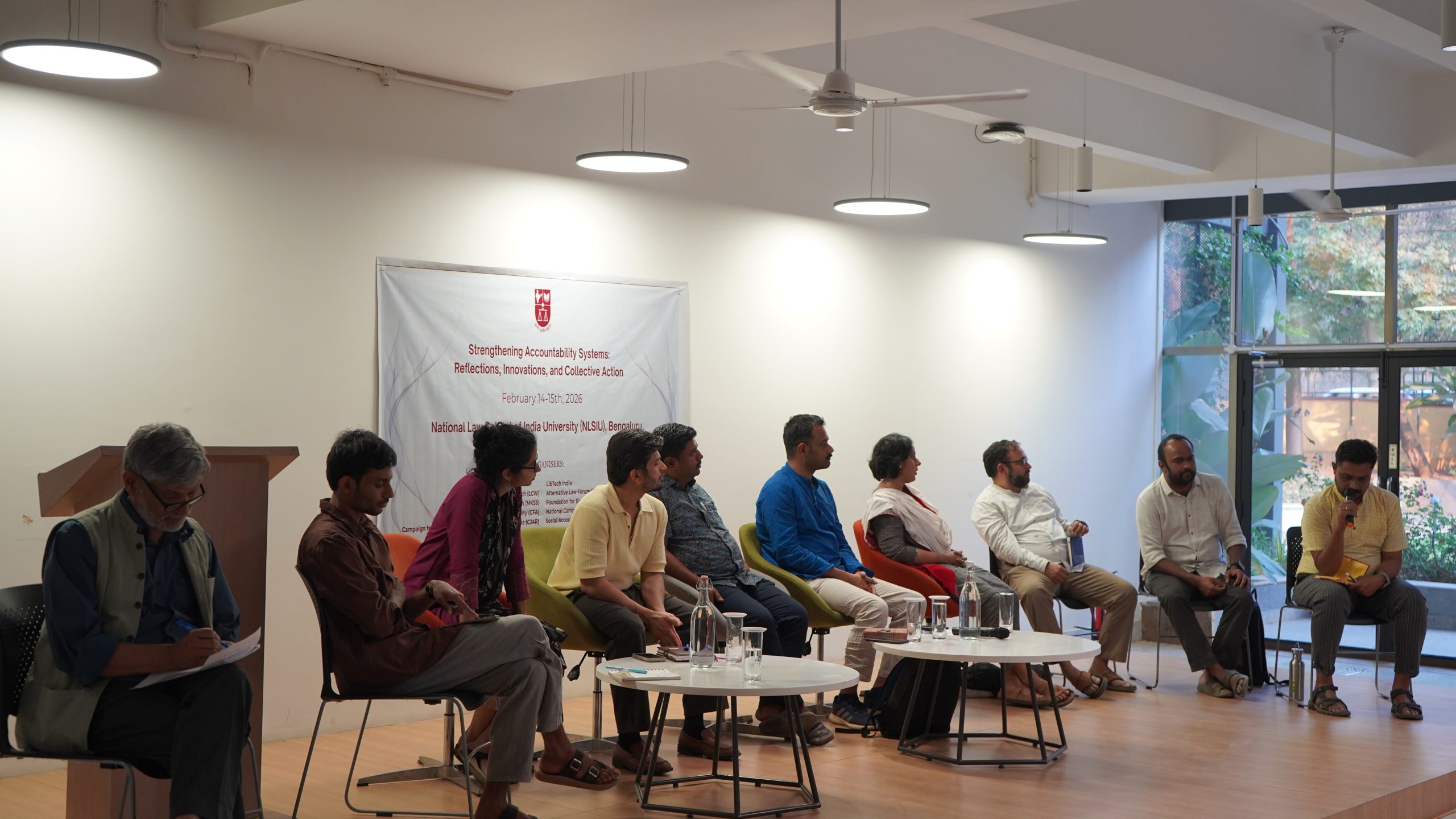
On February 14-15, 2026, the Theory & Practice of Social Accountability Project at NLSIU hosted a two-day consultation titled ‘Strengthening Accountability Systems: Reflections, Innovations, and Collective Action’ at the University campus. The event was jointly organised by nine civil society organisations:
Social Accountability Forum for Action and Research (SAFAR)
Mazdoor Kisan Shakti Sangathan (MKSS)
LibTech India
Foundation for Ecological Security (FES)
Centre for Financial Accountability (CFA)
Land Conflict Watch (LCW)
Alternative Law Forum (ALF)
Campaign for Judicial Accountability & Judicial Reforms (CJAR)
National Campaign on Dalit Human Rights (NCDHR)
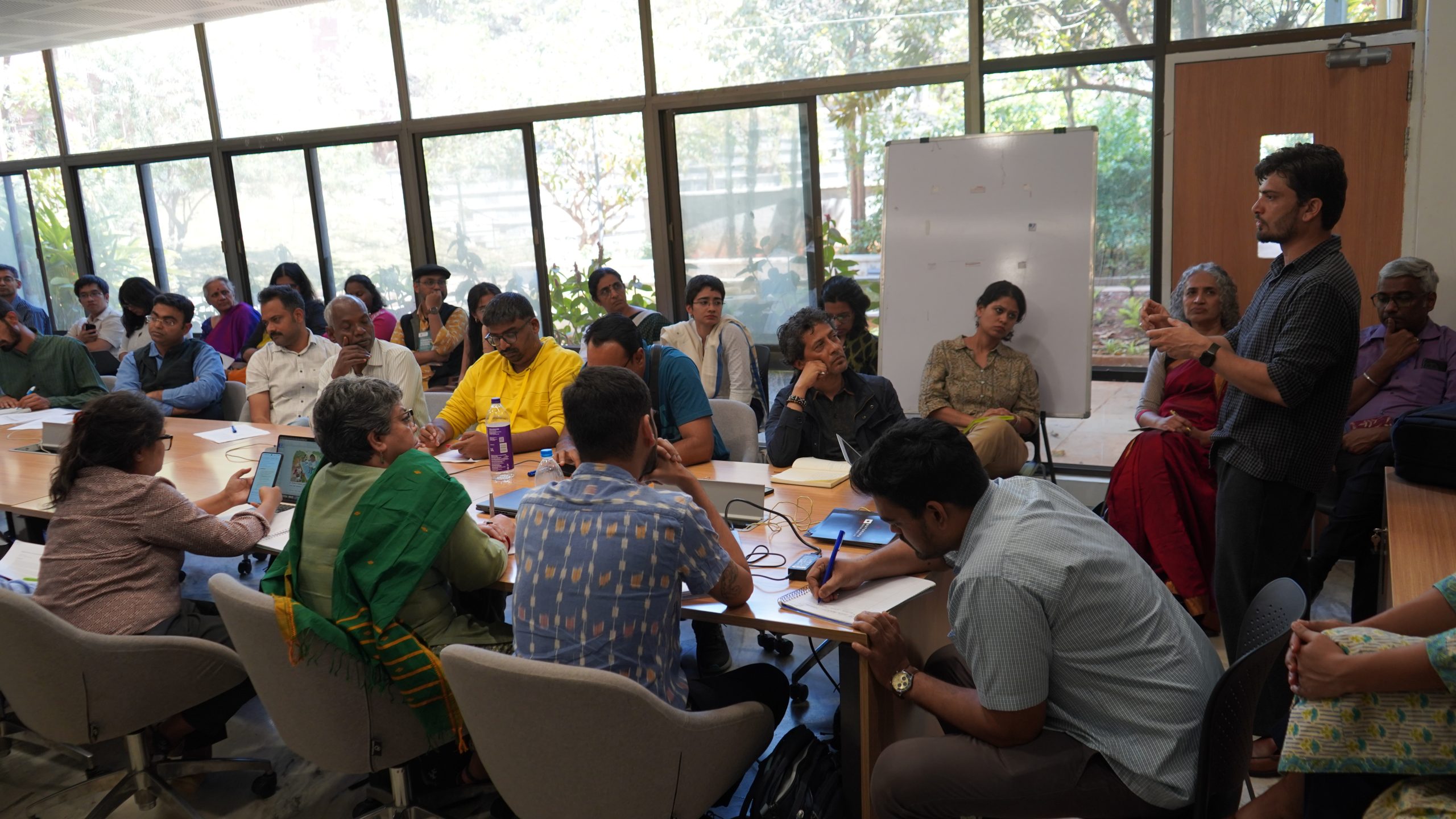
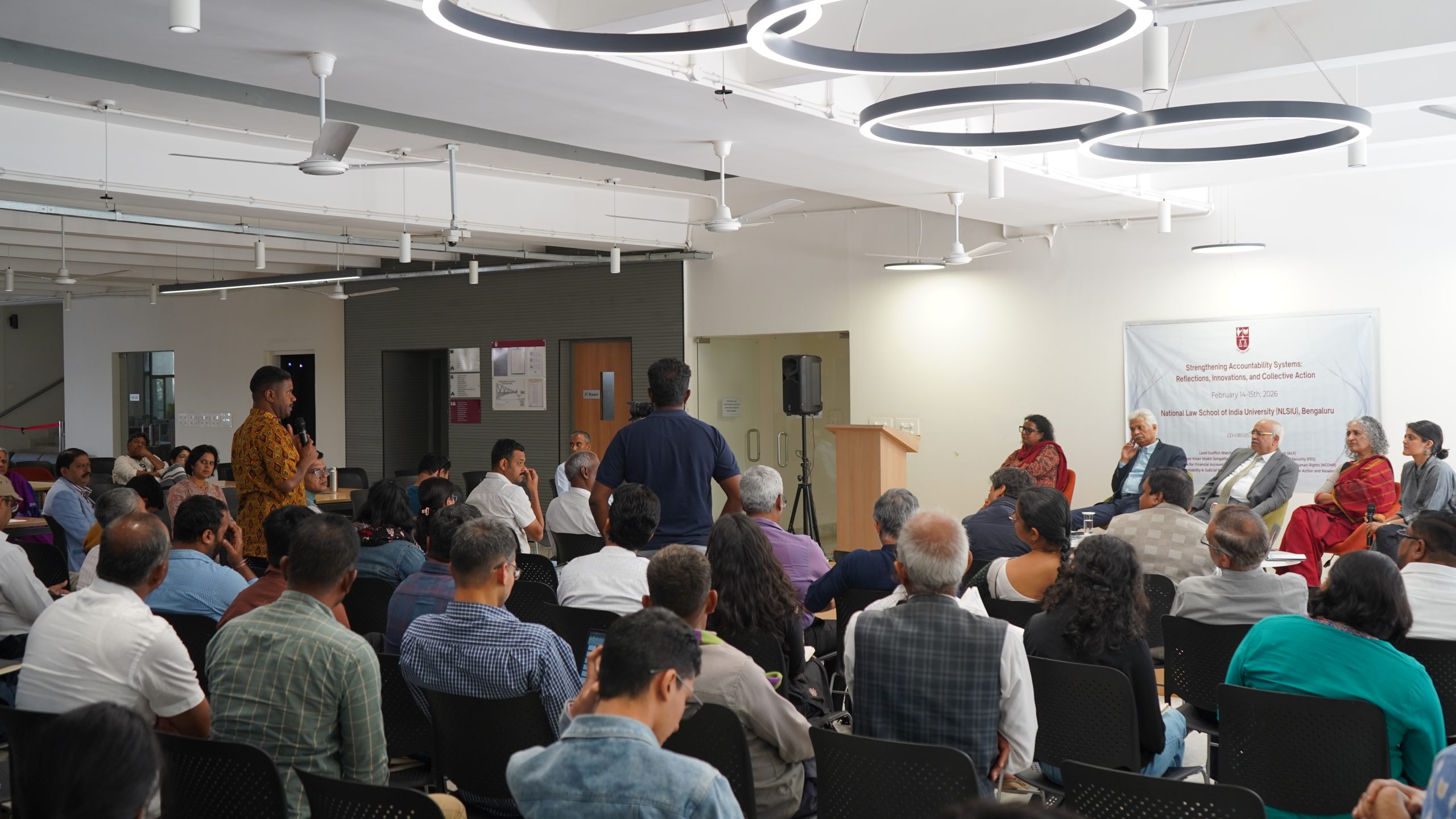
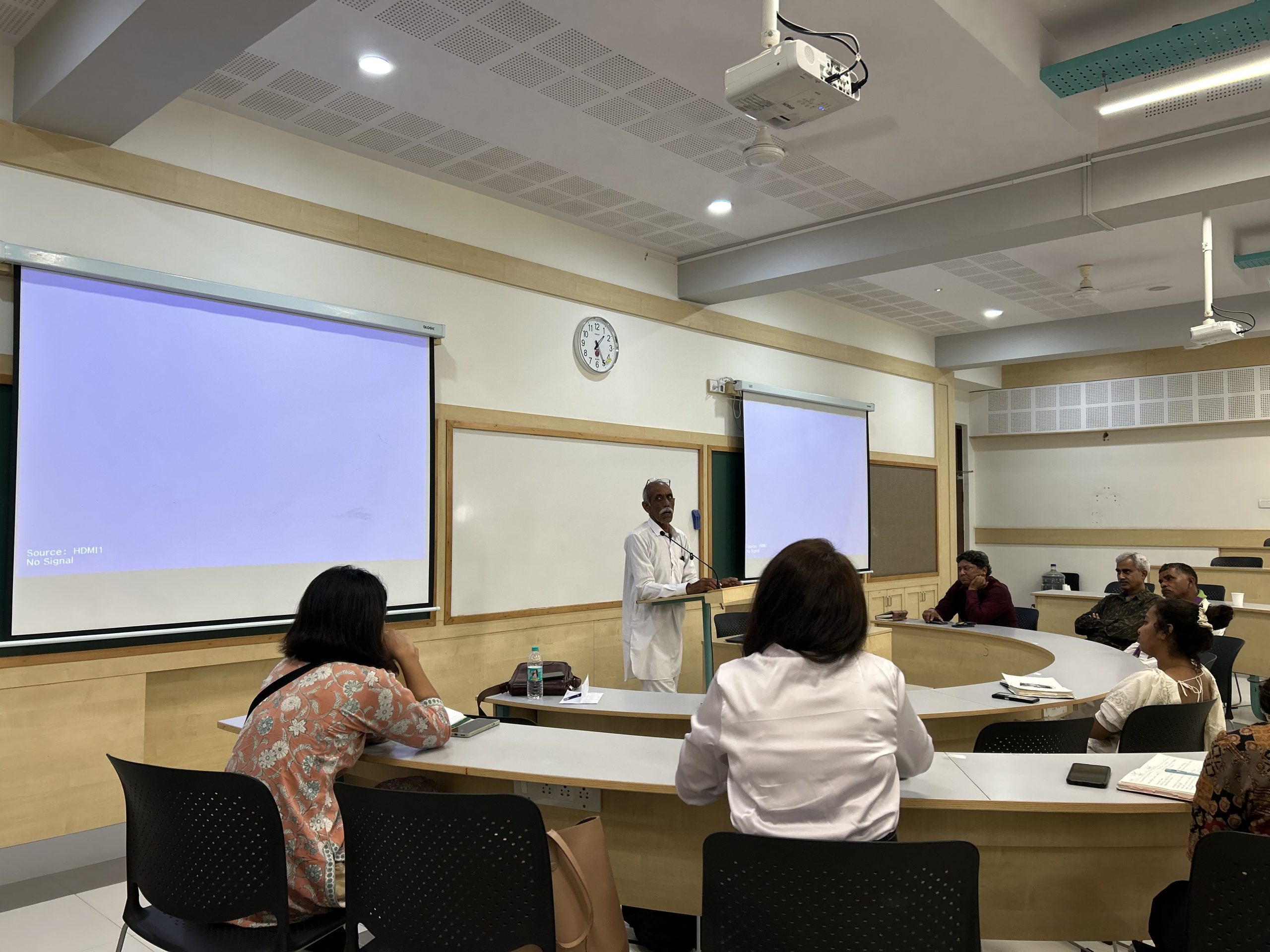
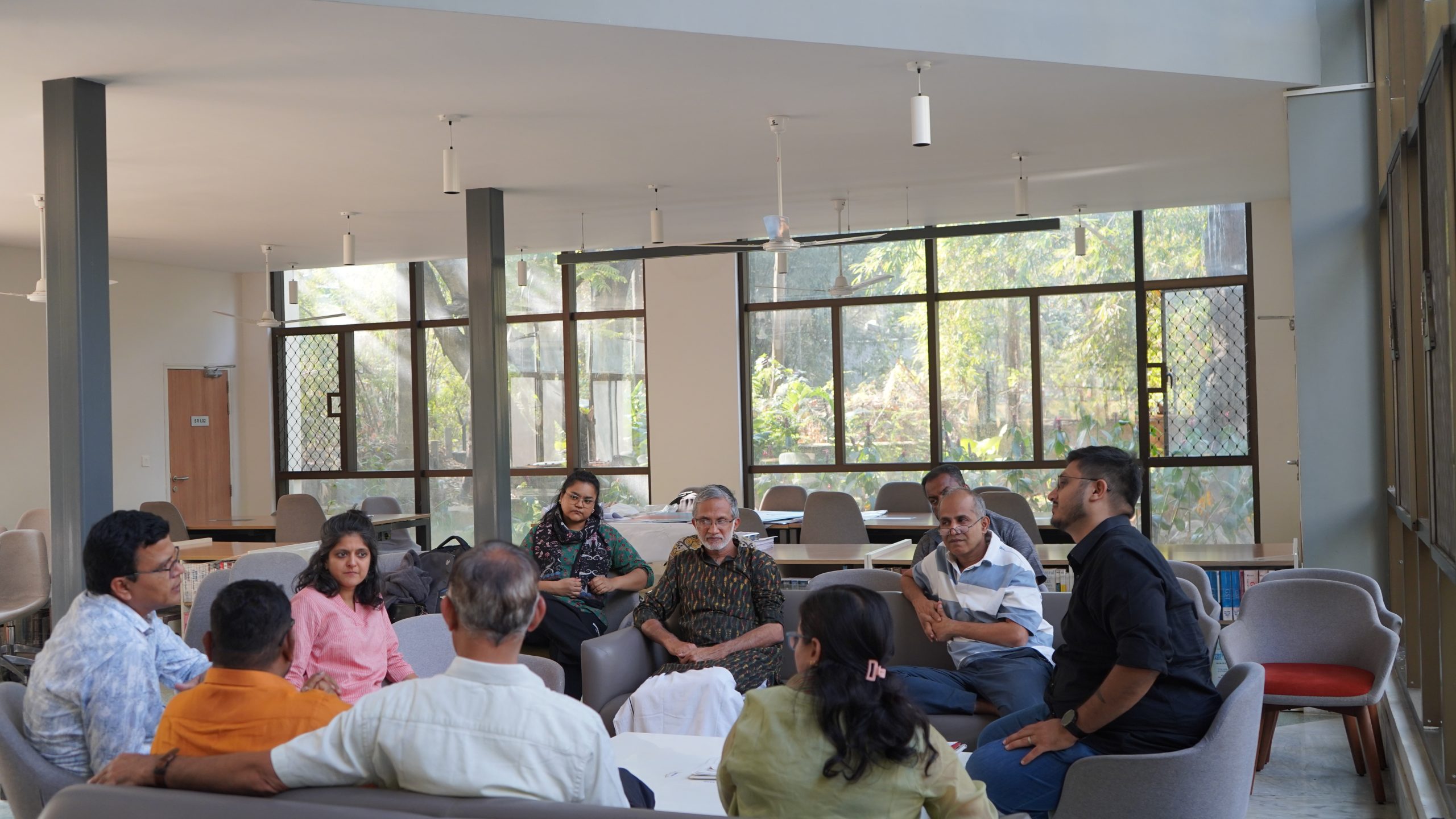
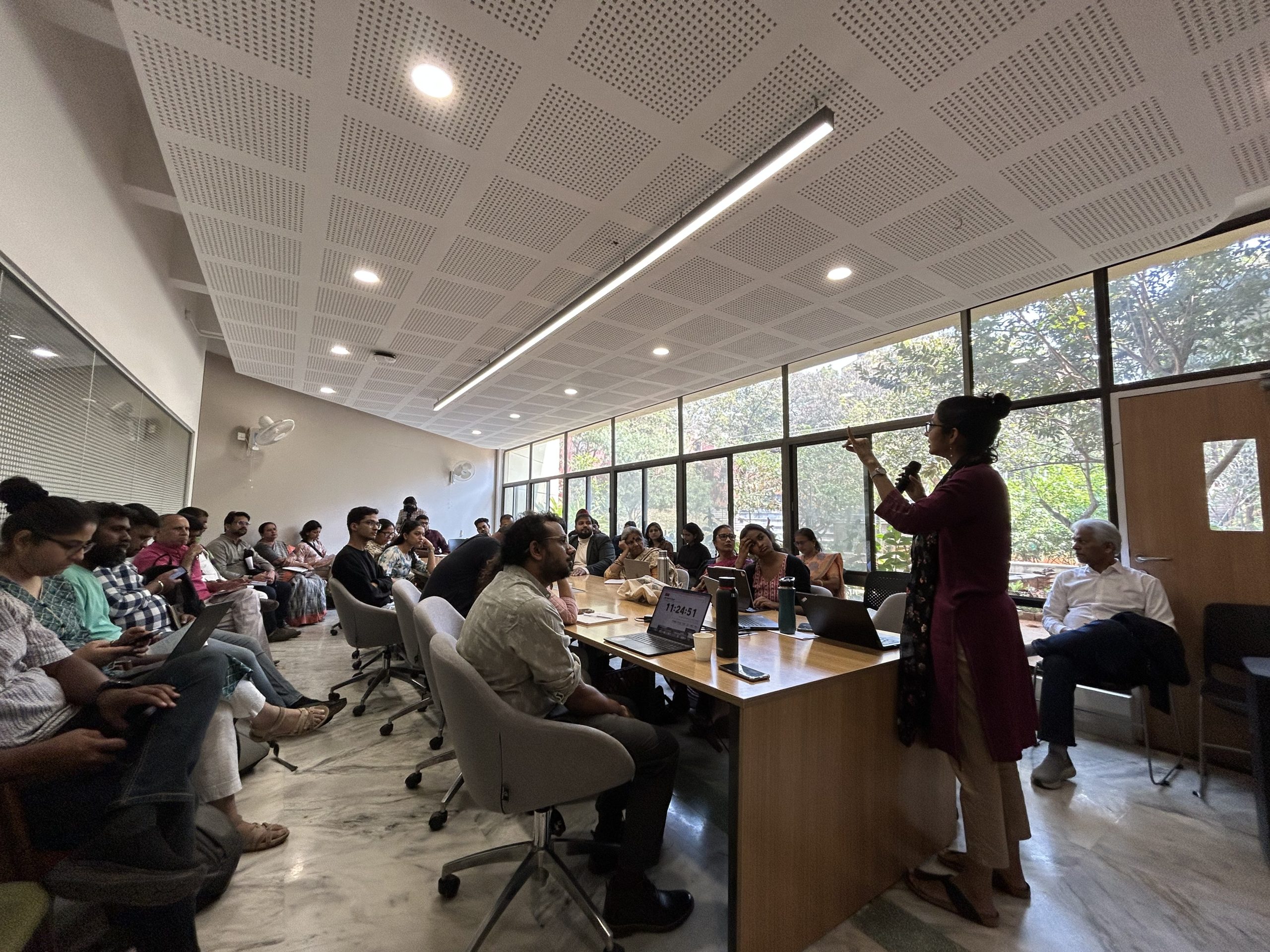
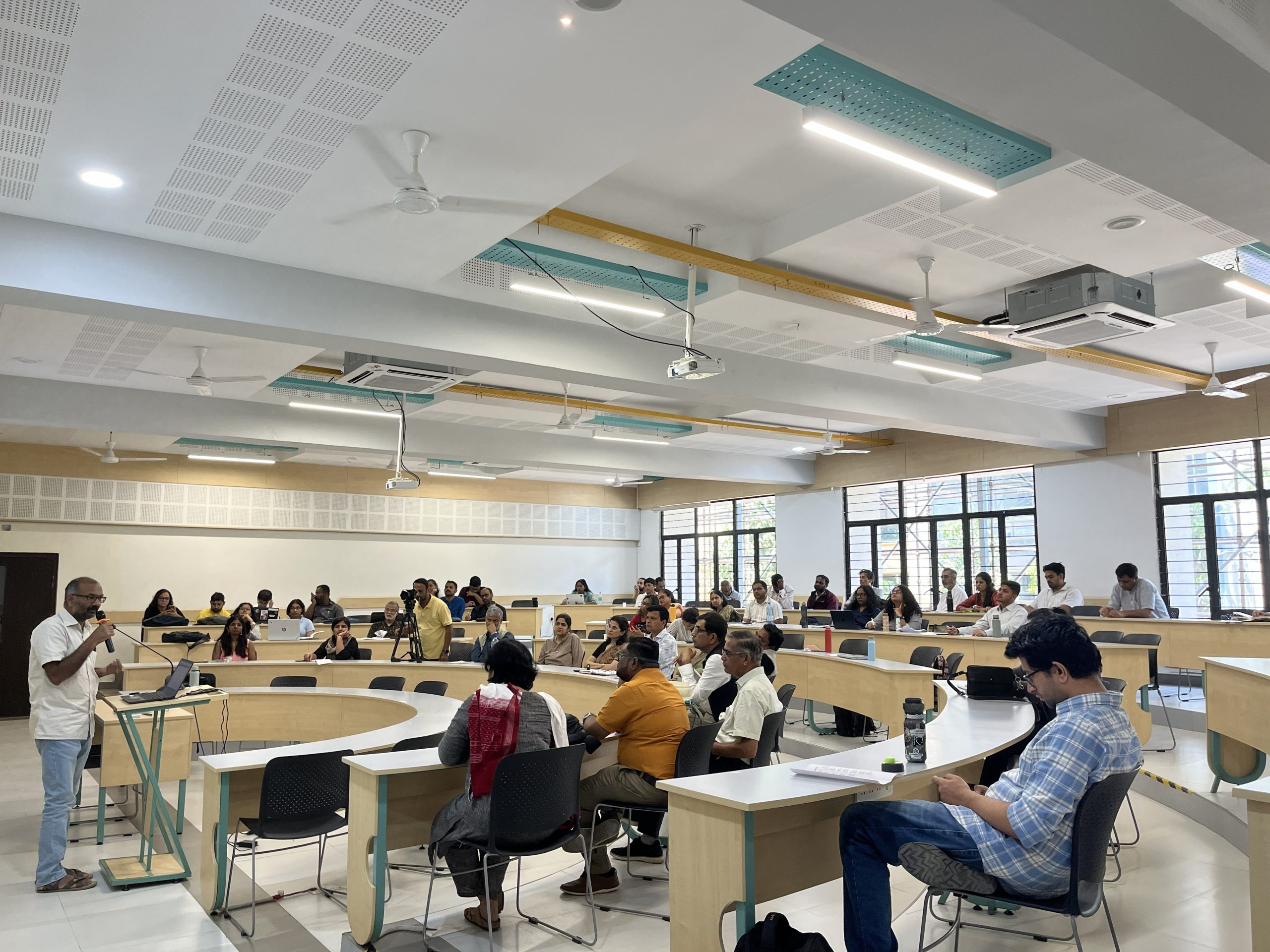
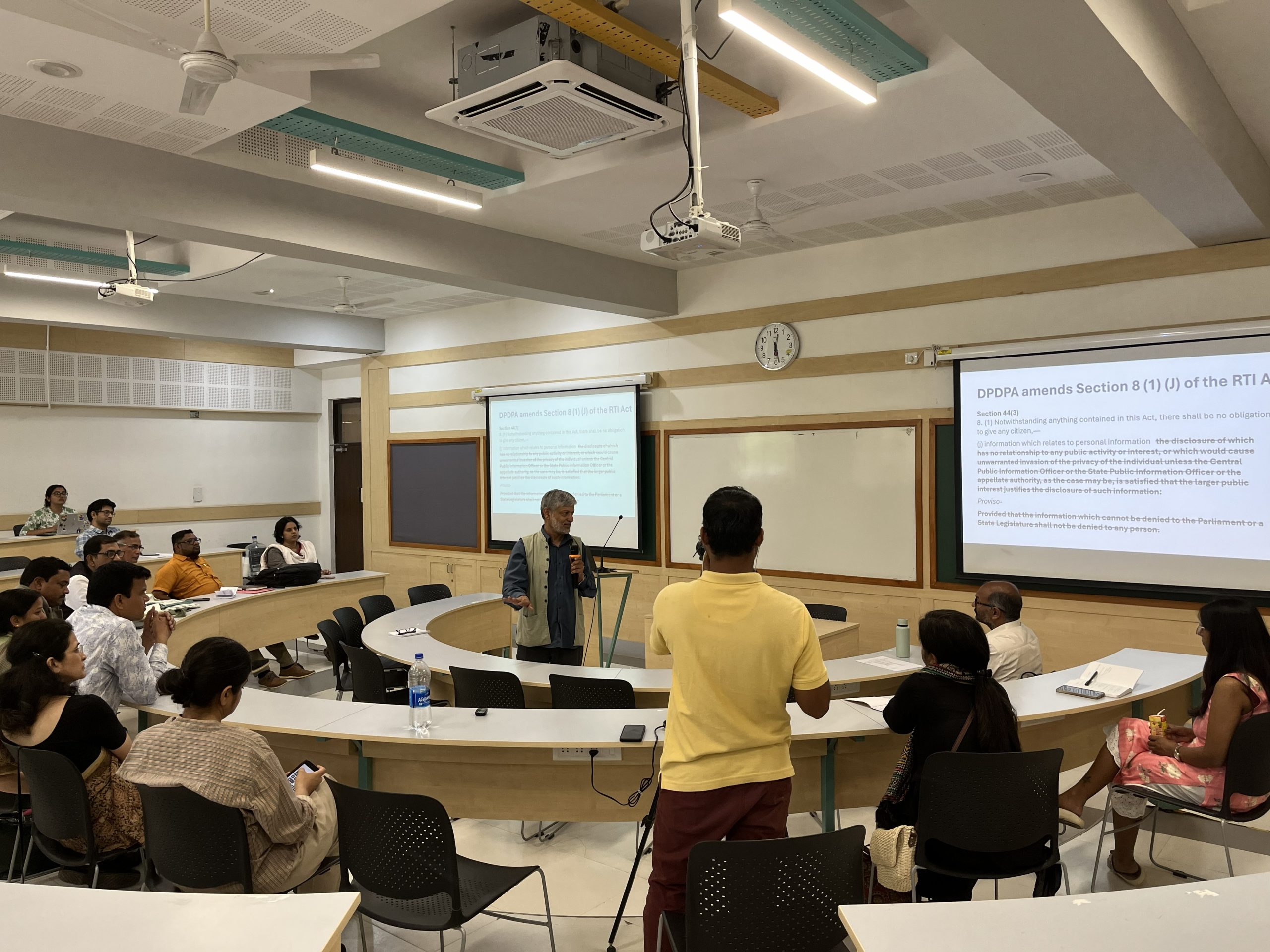
The trimester break, generally a quiet time on campus, became a lively space for civil society organisations, scholars, and practitioners to come together, reflect, and think out loud. The consultation reflected on practical interventions to strengthen public accountability—from social audits and grievance redress to proactive disclosure and transparency across a range of sectors from policing to technology for welfare to elections. It brought together nearly 200 practitioners, researchers, bureaucrats, frontline functionaries, and citizens to share experiences and develop a shared agenda for citizen oversight. The NLSIU library also saw exhibitions and stalls from the co-organisers and other civil society organisations.
The morning of Day 1 opened with a plenary session which set the tone for the two-day gathering. The panel had Hon’ble Justice Dr. Ashok B. Hinchigeri (Law Commission of Karnataka), Rebecca Mathai (Deputy CAG), Yashovardhan Jha Azad (former CIC), and Beena Pallical (NCDHR). The session included remarks from Prof. (Dr.) Sudhir Krishnaswamy,Vice-Chancellor, NLSIU who called for a focus on accountability of markets and capital alongside the state. The session was moderated by Dr. Anindita Adhikari (Assistant Professor, Social Science, NLSIU).
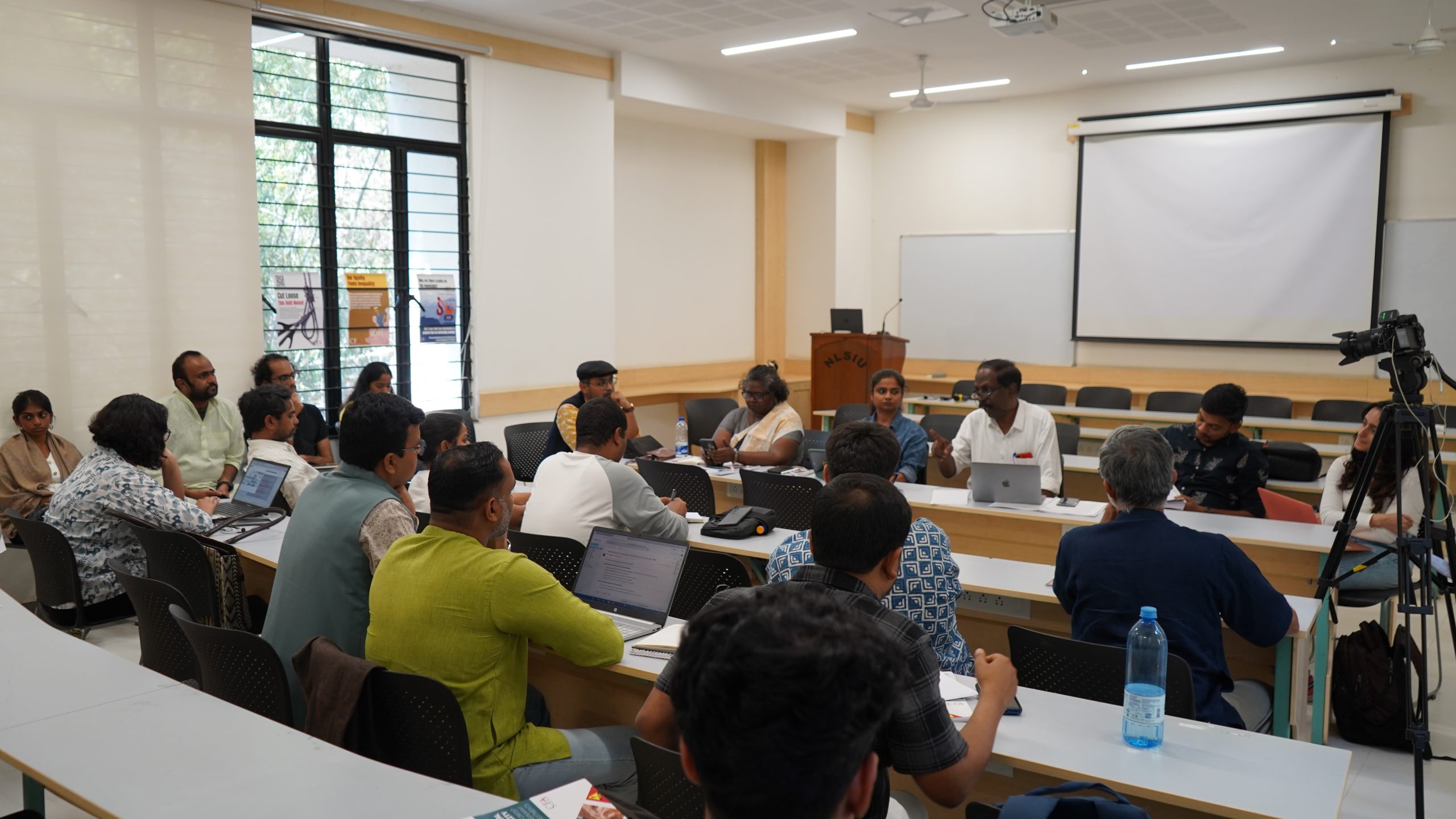
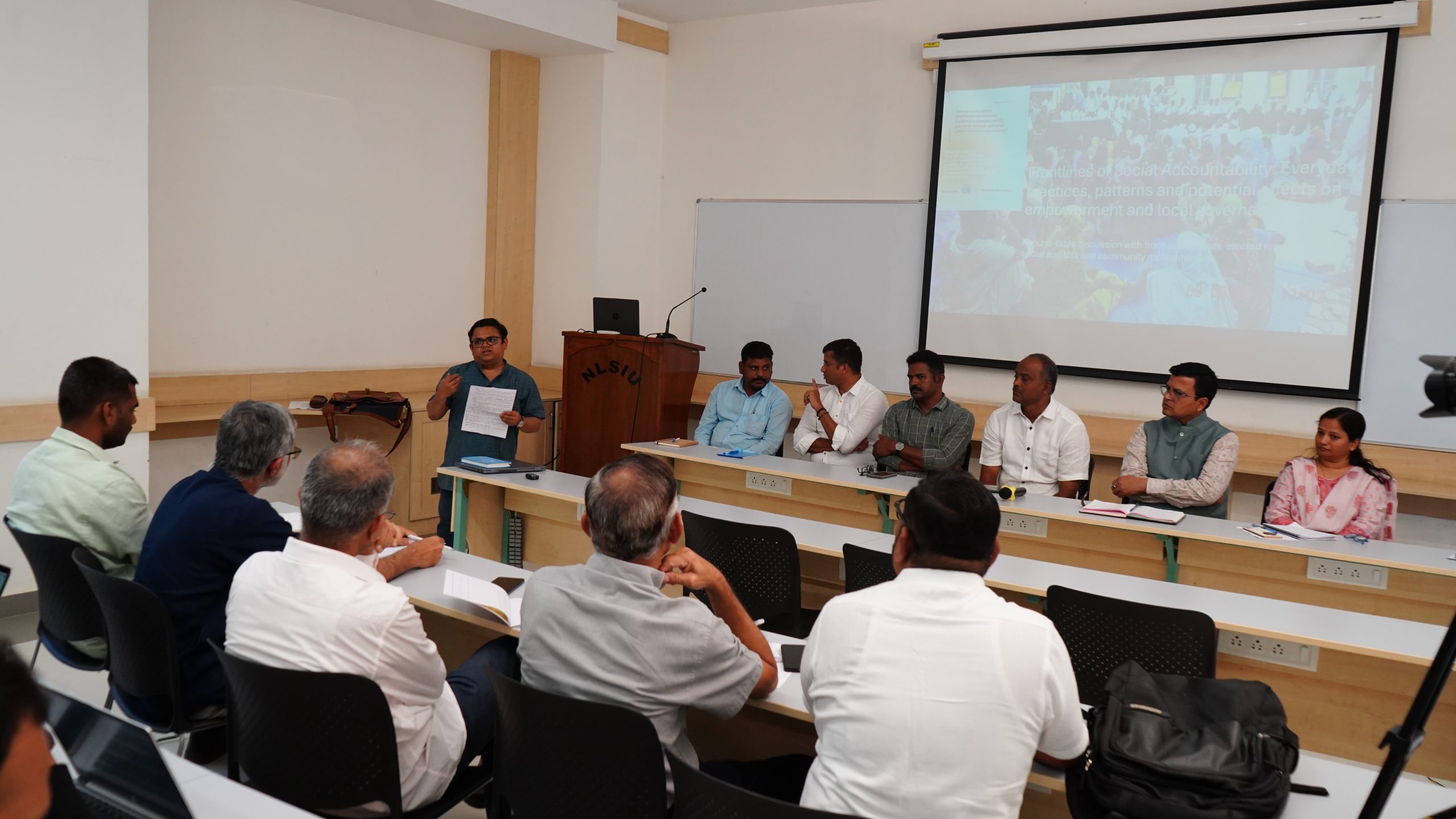
Following a break, participants transitioned between classrooms & conference rooms for three parallel roundtables: ‘Algorithmic Accountability in Welfare and Identity Systems’, ‘Electoral Accountability: Social Audit of Electoral Rolls and Protecting Voter Rights’, and ‘Frontlines of Social Accountability: Everyday Practices, Patterns, and Potential Effects on Empowerment and Local Governance.’ Despite the parallel tracks, some sessions were overflowing, with extra chairs being pulled in to accommodate the turnout. These sessions were respectively led by Nutgraph Social Data Lab, the Alternative Law Forum (ALF), and Sham Kashyap (Azim Premji University).
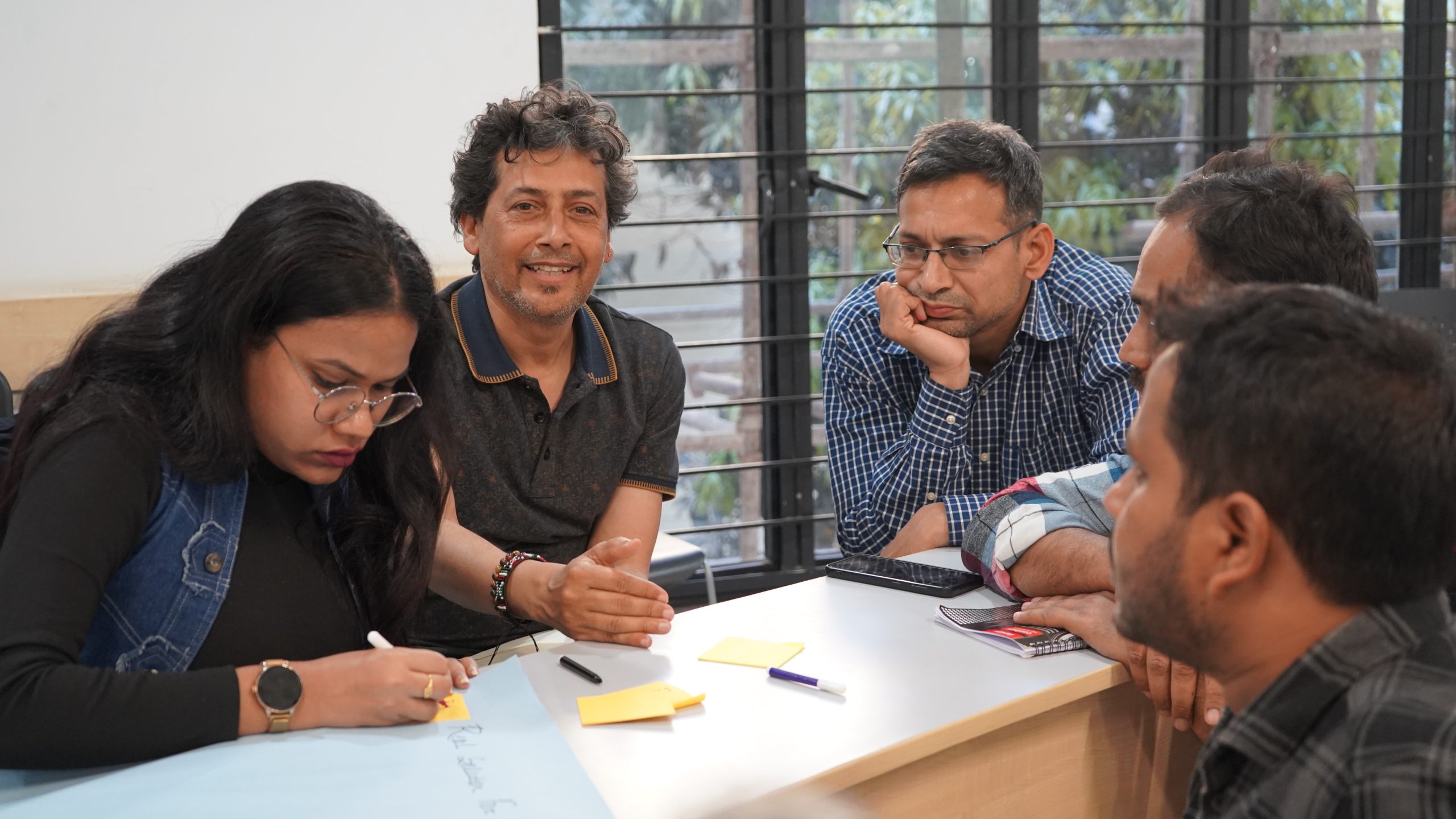
In between the sessions, people broke into little huddles to carry on the conversations. The afternoon featured four concurrent roundtable discussions:
‘Ecological Accountability: Who Decides, Who Benefits, Who Bears the Costs?’ (Organised by FES)
‘Financial Accountability: Reclaiming Oversight of Public Credit and Ethical Investment’ (Organised by CFA)
‘Judicial Accountability: How People Can Hold Judges and the Judiciary Accountable?’ (Organised by CJAR)
‘Grievance Redress Systems and The Right to Be Heard’ (Organised by SAFAR)
The overflowing lunch mess saw people discussing the roundtables late into the afternoon. Following each roundtable, 60-minute workshops were held to reflect on the discussions and develop common action plans. The day concluded with a moving musical performance at the NLSIU Amphitheatre by Shilpa Mudbi and Kalaburgi Kala Mandali.
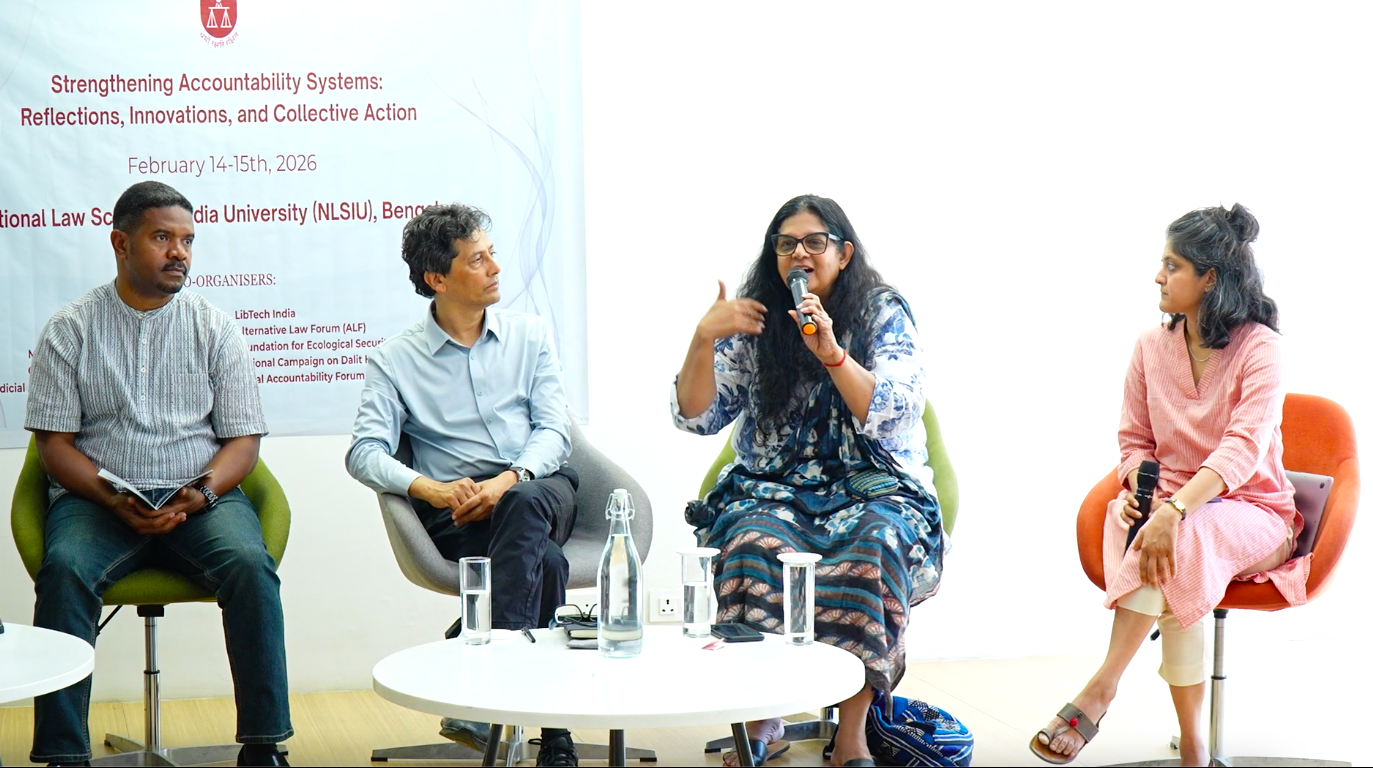
Day 2 saw over 100 participants arrive on Sunday morning, with several new faces joining the group to resume the dialogue. The day opened with a plenary on ‘International Experiences with Social Accountability,’ featuring Hussain Khaled (CEO, Vocal Africa, Kenya), Shireen (Director, The Social Architects, Sri Lanka), Narayan Adhikari (South Asia Representative, Accountability Lab, Nepal), and Nikhil Dey (MKSS, India). The panel was moderated by Dr. Anindita Adhikari (NLSIU).
Following the format of the previous day, the plenary was followed by a set of parallel roundtables:
RTI, DPDPA, and the Integrity of Public Data (Organised by SAFAR and MKSS)
Police Accountability: Community Action to Safeguard Civil Liberties (Organised by Ameya Bokil and Devyani Srivastava)
Forest Rights Act and the Future of Democratic Forest Governance (Organised by Land Conflict Watch)
The second set of roundtables included:
Governance and Technology Design Failures in Aadhaar: Legal and Welfare Implications (Organised by LibTech)
Accountability for Nomadic and DNT Communities (Organised by Olakhaan)
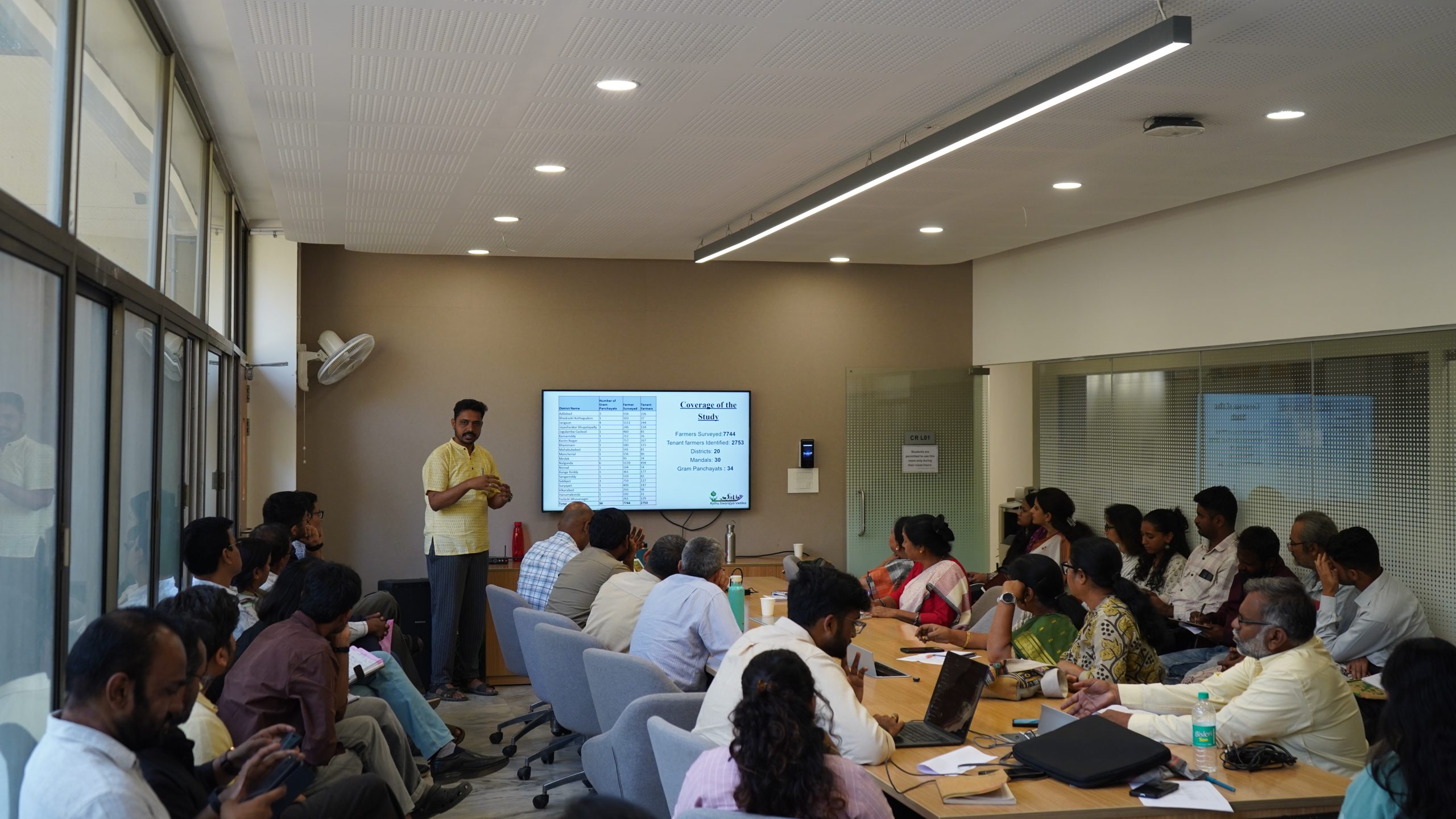
Tenant and Women Farmers, Misplaced Benefits, and the Accountability Crisis in Agriculture (Organised by Rhythu Swarajya Vedika and Kisan Mitra)
Each roundtable was followed by an afternoon workshop to distill the discussions into actionable goals.
The diversity of the sessions was mirrored by the participants themselves. Alongside the co-organisers, the two-day consultation drew a wide spectrum of representatives from CSOs and academic institutions, as well as students and researchers. This included active participation from CIVIC Bangalore, IIHS, ISEC, APU, Indus Action, IT for Change, Agami, ATREE, Dakshin Foundation, Enfold, NAJAR, and GramVani, alongside members of the Gig Worker Union and Anganwadi Worker Union.
The two-day consultation concluded with a closing plenary where co-organisers and session leads shared takeaways from the workshops. This panel consisted of Rakshita Swamy (SAFAR), Kumar Sambhav (LCW), Paras Banjara (Olakhan), Sameet Kumar Panda (LibTech), Alok Prasanna (CJAR), Amitanshu (CFA), Harsha (RSV & Kisan Mitra), Devyani Srivastava (NLSIU), Bhaskar (FES), and Carina (SAFAR), moderated by Nikhil Dey.
As the closing plenary reflected on the range of themes covered over the two days, a participant remarked that the gathering had truly felt like an ‘accountability mela’—suggesting that such a space for dialogue should become an annual tradition to keep the momentum of collective reflection and action alive.
The National Law School of India University (NLSIU) was established in 1987 to be a pioneer in legal education. Over the last three decades, the University has evolved as an innovative leader in law, social sciences, humanities, and public policy education and research in India. It has also been ranked first among the law universities in the National Institute Ranking Framework (NIRF) for the last eight years.
The Communications Office plays a key role in strengthening the University’s visibility, digital presence, stakeholder outreach, and internal communication.
About the Role
The Graphic Designer (1 vacancy) will support the planning, creation, and execution of communication design across digital, print, and on-ground channels. The role involves collaboration with internal teams, coverage of campus activities, and ensuring consistent, high-quality communication outputs.
This is a full-time, campus-based contractual role for one-year (extendable) role suited for candidates with strong writing, visual communication, and coordination skills.
Responsibilities
Design & Visual Communication
Design and layout multi-page publications such as brochures, reports, and other learning materials using Adobe InDesign
Social Media and website creatives for internal stakeholders, external audience and campaigns
Manage styles, grids, master pages, and document consistency
Incorporate editorial feedback accurately and efficiently
Prepare print-ready and digital-ready files within tight timelines
Social Media & Digital Communication
Support digital campaigns, student engagement activities, and event-based social assets
Maintain content calendars and track deliverables
Create basic design assets such as posters, social media creatives, brochures, banners, and presentations
Work with templates to maintain brand identity and visual consistency
Coordinate with external designers/agencies when required
Support photography, short-form video shooting, and basic editing
Design & Visual Communication
Create basic design assets such as posters, social media creatives, brochures, banners, and presentations
Work with templates to maintain brand identity and visual consistency
Coordinate with external designers/agencies when required
Support photography, short-form video shooting, and basic editing
Event Support & Coverage
Provide on-ground support for University events, seminars, conferences, and student activities
Capture event updates, gather content, and create web/social media coverage
Coordinate with organisers for communication requirements
Internal Coordination & Operations
Liaise with academic and administrative teams to gather inputs
Maintain documentation, repositories, and content archives
Support web updates
Track requests, deadlines, and workflows to ensure timely delivery
Who Should Apply?
Required Qualifications & Skills
Bachelor’s degree in communications, Journalism, English, Media Studies, Design, or related fields
1-3 years of experience in communications, content creation, design, or related roles
Strong design skills using Canva/Adobe tools (for design-leaning candidates)
Experience with Adobe Creative Suite (Photoshop, Illustrator, InDesign, Premiere Pro)
Basic video editing or photography skills
Familiarity with social media platforms and digital communication trends
Ability to multitask, meet quick deadlines, and work in a fast-paced environment
Strong interpersonal and coordination abilities
Attention to detail and commitment to high-quality output
Desired Skills
Prior experience in an academic or nonprofit environment Familiarity with print production workflows
Web content management familiarity (WordPress or similar)
Work Mode & Expectations
Full-time, on-campus role at NLSIU Bengaluru
May require occasional work outside regular hours for events or urgent communication needs
Collaborative mindset and willingness to contribute to a growing communications team
How to Apply?
Please use the Google form available here, and include the following documents:
CV
A short writing sample
Design portfolio or sample work
Statement of Purpose
Compensation
Salary will be commensurate with qualification and experience and will be in the range of Rs. 50,000 to 70,000 per month.
Deadline
The last date for submission of applications has been extended till March 20, 2026, at 5 pm (IST)
Note: Candidates shortlisted for interview will be intimated through email.
The National Law School of India University (NLSIU) was established in 1987 to be a pioneer in legal education. Over the last three decades, the University has evolved as an innovative leader in law, social sciences, humanities, and public policy education and research in India. It has also been ranked first among the law universities in the National Institute Ranking Framework (NIRF) for the last eight years.
The Communications Office plays a key role in strengthening the University’s visibility, digital presence, stakeholder outreach, and internal communication.
About the Role
The Communications Associate (2 vacancies) will support the planning, creation, and execution of communication materials across digital, print, and on-ground channels. The role involves collaboration with internal teams, coverage of campus activities, and ensuring consistent, high- quality communication outputs.
This is a full-time, campus-based contractual role for one-year (extendable) suited for candidates with strong writing, visual communication, and coordination skills.
Responsibilities
Content Creation
Draft articles, newsletters, web content, social media posts, event reports, and announcements
Develop communication materials for academic programmes, events, research centres, and administrative units
Conduct basic interviews with faculty, students, or guests to generate stories and updates Assist with scriptwriting or copywriting for campaigns and short videos
Social Media & Digital Communication
Create and schedule posts across University social media platforms
Monitor engagement and identify opportunities for improving reach
Support digital campaigns, student engagement activities, and event-based social assets Maintain content calendars and track deliverables
Design & Visual Communication
Create basic design assets such as posters, social media creatives, brochures, banners, and presentations
Work with templates to maintain brand identity and visual consistency
Coordinate with external designers/agencies when required
Support photography, short-form video shooting, and basic editing
Event Support & Coverage
Provide on-ground support for University events, seminars, conferences, and student activities
Capture event updates, gather content, and create web/social media coverage
Coordinate with organisers for communication requirements
Internal Coordination & Operations
Liaise with academic and administrative teams to gather inputs
Maintain documentation, repositories, and content archives
Support web updates
Track requests, deadlines, and workflows to ensure timely delivery
Who Should Apply?
Qualifications
Bachelor’s degree in communications, journalism, English, media studies, design, or related fields
1-3 years of experience in communications, content creation, design, or related roles
Strong writing and editing skills
Basic design skills using Canva/Adobe tools (for design-leaning candidates)
Familiarity with social media platforms and digital communication trends
Ability to multitask, meet quick deadlines, and work in a fast-paced environment
Strong interpersonal and coordination abilities
Attention to detail and commitment to high-quality output
Desired Skills
Experience with Adobe Creative Suite (Photoshop, Illustrator, InDesign, Premiere Pro)
Basic video editing or photography skills
Prior experience in an academic or nonprofit environment
Web content management familiarity (WordPress or similar)
Work Mode & Expectations
Full-time, on-campus role at NLSIU Bengaluru
May require occasional work outside regular hours for events or urgent communication needs
Collaborative mindset and willingness to contribute to a growing communications team
How to Apply?
Please use the Google form available here, and include the following documents:
CV
A short writing sample
Design portfolio or sample work (if applicable)
Statement of Purpose
Compensation
Salary will be commensurate with qualification and experience and will be in the range of Rs. 50,000 to 70,000 per month.
Deadline
The last date for submission of applications has been extended till March 20, 2026, at 5 pm (IST).
Note: Candidates shortlisted for interview will be intimated through email.
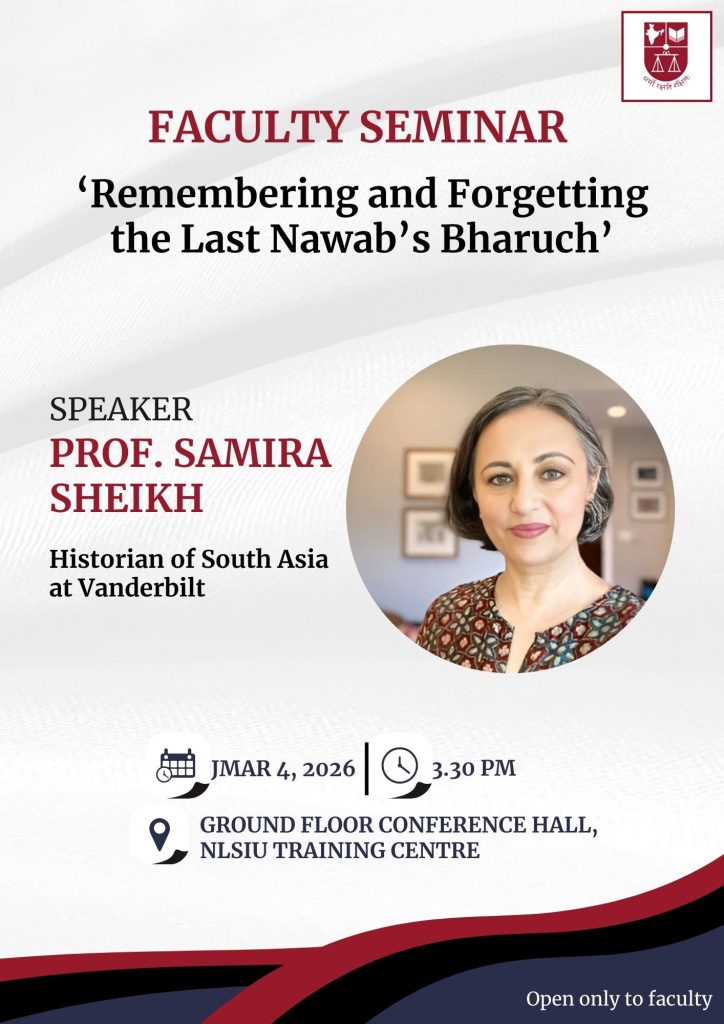
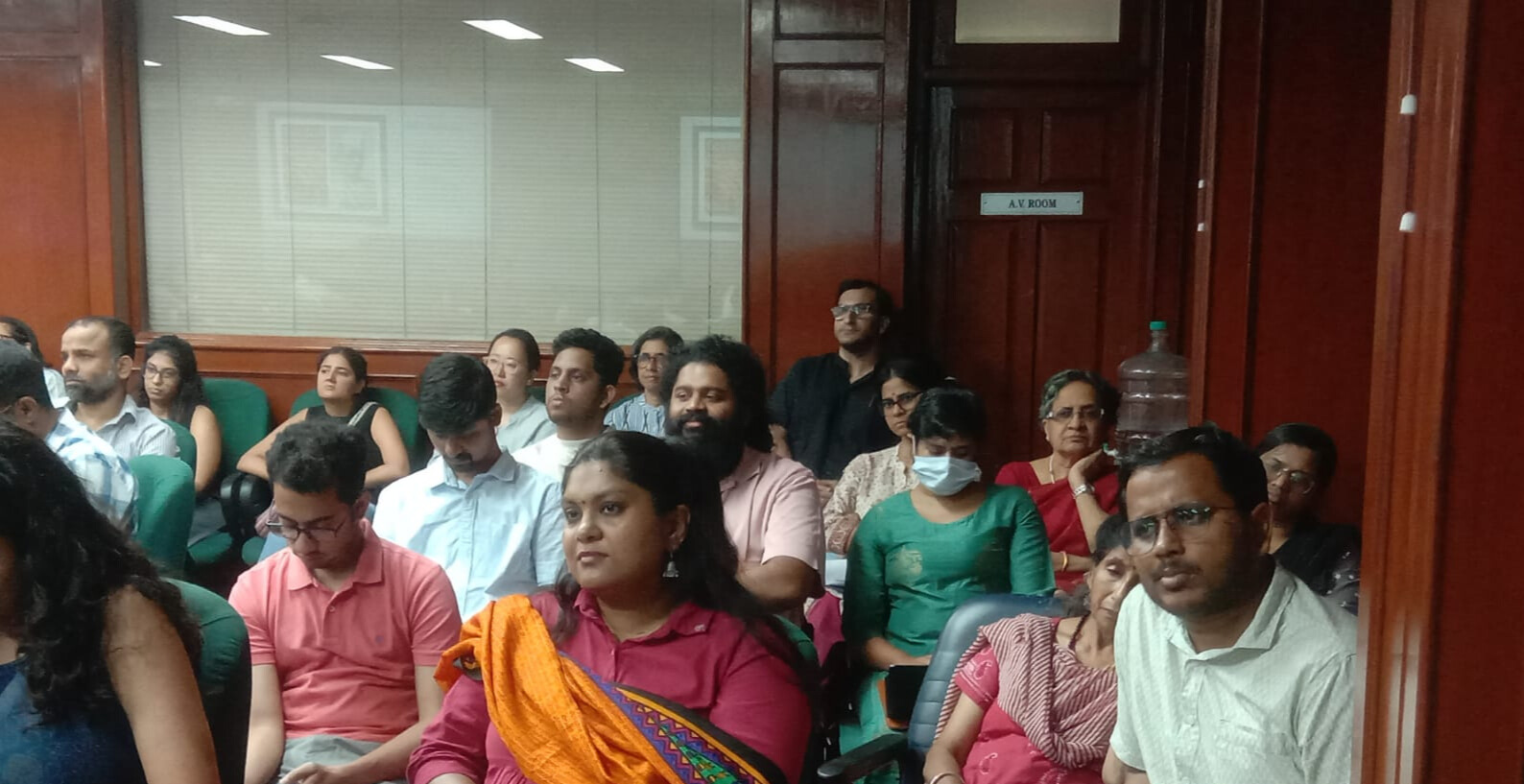
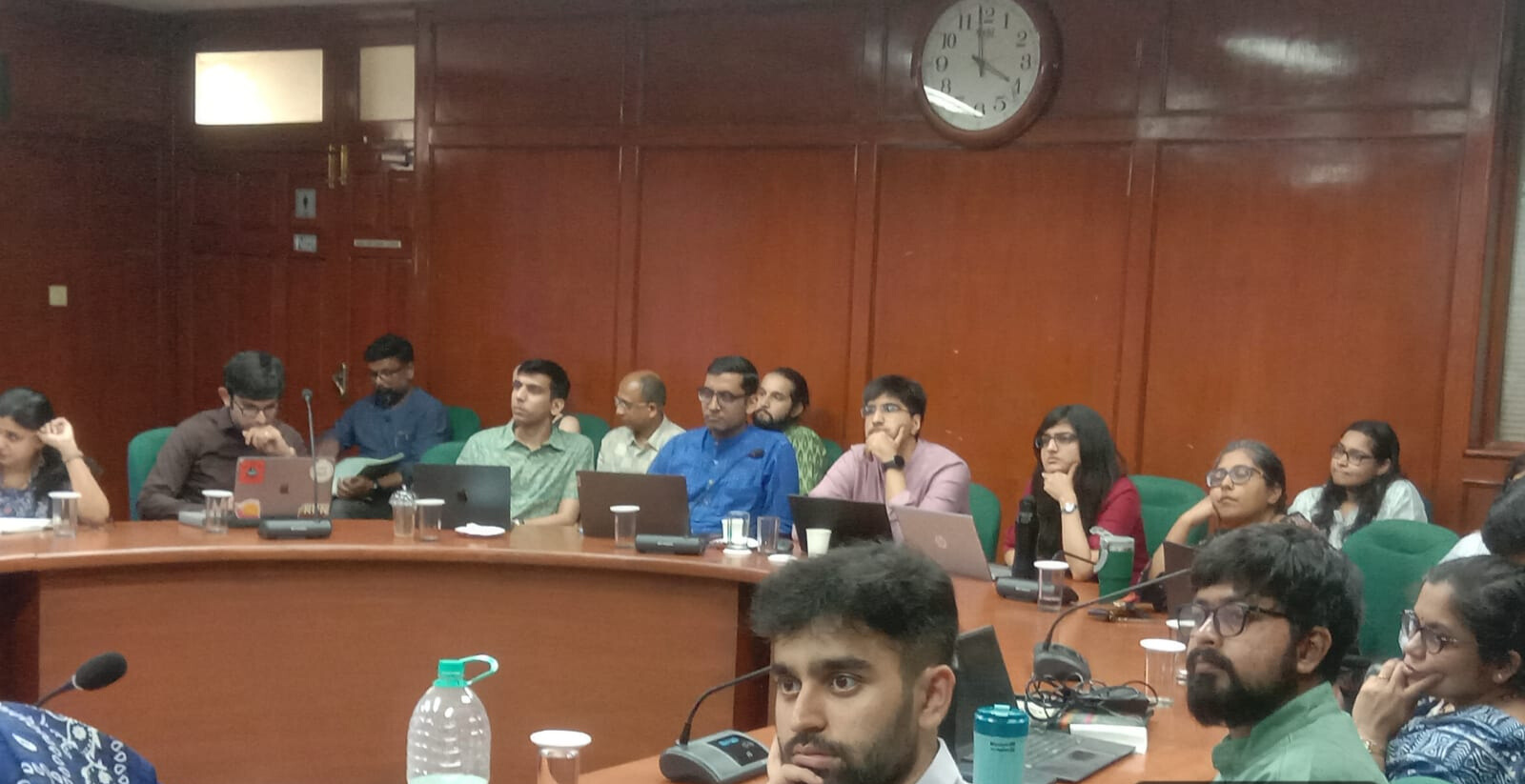
We began our faculty seminar series this trimester with a guest lecture by Prof. Samira Sheikh, historian of South Asia at Vanderbilt, and the Obaid Siddiqi Chair in the History and Culture of Science, 2025-26 at the NCBS in Bengaluru. The seminar was held on March 4, 2026, at 3.30 pm, in the Ground Floor Conference Hall at NLSIU’s Training Centre.
Prof. Sheikh presented the sixth chapter of her book manuscript on the city of Bharuch in western India in the eighteenth century, which examines how, as the East India Company’s power expanded and the Mughal Empire grew ever more remote, the people of Bharuch adapted to new realities. The book brings to life the travails of individuals caught in a rapidly transforming world, while showing how the traces of those who experienced early colonialism have been obscured by subsequent political developments.
Abstract
Remembering and Forgetting the Last Nawab’s Bharuch
In the decades after the British conquest of Bharuch, Persian and Urdu chroniclers composed elegiac accounts of Nawab Mu‘azzaz Khan’s defeat, some blaming Lallubhai Dayaldas, his Hindu Vaishnava land-revenue accountant’s “loose talk” for its fall. On the other side, British documentation offered a cooler, more dismissive portrait of the nawab and denied collusion with Lallubhai. By the twentieth century, nationalist intellectuals such as K. M. Munshi — himself descended from a scribe who had served both Mu‘azzaz and Lallubhai — recast the eighteenth century in moralized terms. For Munshi, the period’s pragmatic alliance politics and fiscal opportunism were inconvenient reminders of a decentralised, plural past. For Munshi and other nationalists, loyalty was rewritten as allegiance to the nation and betrayal became a national sin rather than a breach of patronage.
The stakes of the book lie in this shift. Colonial and nationalist epistemologies have narrowed the field of vision through which eighteenth-century India can be seen. Small polities such as Bharuch, which thrived through multilingualism and alliance, did not fit comfortably within imperial teleologies or nationalist narratives. The Muslim nawab who fled into exile did not resemble the heroic figures later nationalism preferred. The revenue capitalist who speculated and collaborated became an emblem of moral failure. Over time, Mu‘azzaz’s Bharuch faded from view; Lallubhai’s reputation as a self-serving traitor endured.
Chapter 6 also follows the material afterlives of the sources themselves. On the one hand, manuscripts preserved in a Persianate Muslim family archive entered the National Archives of India as dispersed “Oriental Records,” catalogued by genre rather than by provenance. On the other, a Persian letter collection preserved by K.M. Munshi’s family was edited and printed under the auspices of a nationalist institution. The differential visibility of these archives reflects shifts in language regimes, communal politics, and state formation. Archives, in my account, do not merely preserve the past; they structure what later historians can recover and, indeed, the official record itself.
About the Speaker
Samira Sheikh is a historian of South Asia and an Associate Professor of History at Vanderbilt University, where she specialises in the political and religious history of the Indian subcontinent from c. 1200–1950. Her research interests encompass politics and religion in South Asia, early modern trade networks, pre-colonial and early Indian cartography, and the social and economic history of regions such as Gujarat. She has also received fellowships, including support from the American Council of Learned Societies, for projects exploring early modern Gujarati maps and other historical themes. She is the author of Forging a Region: Sultans, Traders and Pilgrims in Gujarat, 1200-1500 (Oxford India, 2010), and co-editor of After Timur Left (Oxford India, 2014), and An Anthology of Ismaili Literature: A Shi’i Vision of Islam (I.B. Tauris and the Institute of Ismaili Studies, 2008).
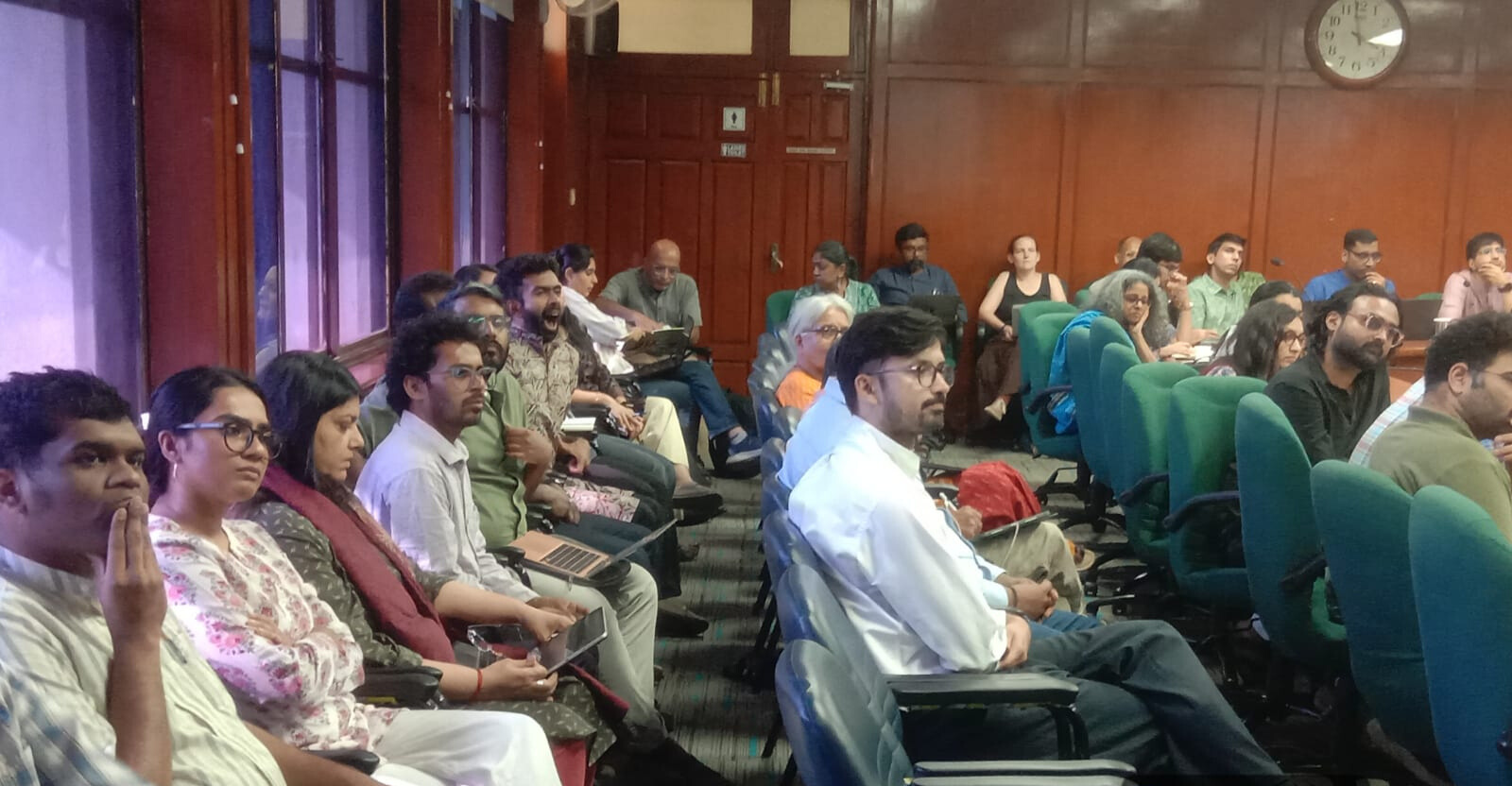
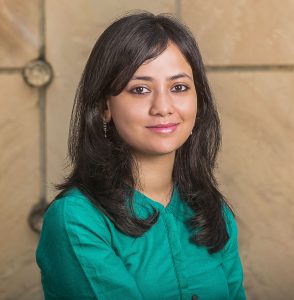
We are pleased to welcome the following faculty members to the NLS community. Our new joinees include Ms. Faiza Rahman (Assistant Professor-Law), Ms. Mihika Poddar (Assistant Professor-Law) and Mr. John Sebastian (Assistant Professor-Law). We wish them the very best for their professional journeys at NLSIU.
Faiza Rahman’s teaching and research interests include constitutional law and theory, administrative and regulatory laws, and media and technology law and policy.
Prior to joining NLSIU, Faiza served as a teaching fellow in the free speech and media law course at Melbourne Law School. In India, she has worked for over six years across research, public policy and practice. She was a research fellow at the National Institute of Public Finance and Policy, New Delhi, where she worked on areas of technology law and regulatory governance. She has also worked as a research fellow with the public law and judicial reforms verticals at Vidhi Centre for Legal Policy, New Delhi. Before venturing into research and academia, Faiza worked as an associate in the capital markets practice at Luthra & Luthra Law Offices, Mumbai.
Faiza was awarded a full scholarship by the Oxford Centre for Islamic Studies to pursue the BCL at the University of Oxford, United Kingdom.
John Sebastian’s general research and teaching interests cover the areas of legal and political theory, constitutional law, criminal law and administrative law. He has published on a range of issues in these areas.
His PhD research at Melbourne Law School, University of Melbourne, focusses on the special rights of linguistic and religious minorities in the Indian Constitution, and analyses the manner in which the Constitution engages with the many conflicting interests and values underlying the legal recognition of these identities.
Prior to joining NLSIU, John taught legal theory in the Juris Doctor programme at Melbourne Law School for three years. Before this, he was at OP Jindal University for over four years, where he taught constitutional law, criminal law and administrative law courses. Earlier, he worked as a law clerk and research assistant to Justice Madan B Lokur in the Supreme Court of India for a year. While doing his BCL from the University of Oxford, John was awarded the Tobias Law Prize.
Mihika’s research interests include, Human Rights Law and Policy, Discrimination Law, Queer and Feminist Legal Theory, Law and Society, Constitutional law, Criminal Law.
She is a DPhil candidate in law at the University of Oxford, where she is undertaking research on legal recognition of personal identities, including race, sex/gender and caste.
Mihika obtained the Bachelor of Civil Law (BCL) with Distinction on a Rhodes Scholarship. She is also a qualified lawyer and university medallist from the West Bengal National University of Juridical Sciences (WBNUJS), India, where she completed her B.A. LL.B. (Hons.) in 2019.
She has been a tutor and lecturer in English Criminal Law and Feminist Perspectives in Law at the University of Oxford, University College London, and Catholic University of Lille, Paris.
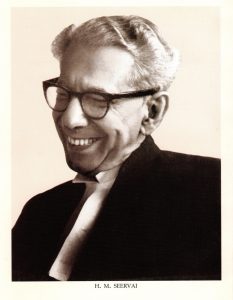
The winner of the 29ᵗʰ Annual H.M. Seervai Essay Competition in Constitutional Law is Anushka Aggarwal, a 4th year student in the BA LLB programme at the time of submission and currently a 5th year student at NLSIU.
We congratulate the winner!
The National Law School of India University, Bengaluru, invites entries for the 29ᵗʰ Annual H.M. Seervai Essay Competition in Constitutional Law. Participants in this pan-India essay competition stand a chance to win the prestigious H.M. Seervai Gold Medal from NLSIU. The winning essay will be published in the National Law School Journal.
About the competition
In 1997, Senior Advocate Navroz Seervai instituted a Gold Medal in the name of the distinguished jurist, the late H.M. Seervai, for the best original essay written on the themes specified in Indian Constitutional Law. Over the years, this essay writing competition has become a prestigious event for law students all over India. The significant rise every year in the number of contributions from the student community shows their mark of respect and tribute to one of the greatest legal luminaries of our country, Hormasji Maneckji Seervai.
The last gold medal was awarded to Niharika Mukherjee, National Law School of India University, for her essay on ‘The Right to Contest Elections and Internal-Party Democracy: A Constitutional Proposal.’ Read the winning essay here.
Essay topic
‘A Decade in the Making of the GST (Goods and Services Tax): Gateway to a Single National Market or a Challenge to Federalism?’
Eligibility
Students currently enrolled in an LLB/ BA LLB/ BBA LLB/ BCom LLB regular mode programme in any recognised Law School/College/University in India may make a submission.
Submission guidelines
Each entry should be an original, unpublished, single-authored essay in English.
Every essay must clear anti-plagiarism checks & be supported by a bonafide certificate, duly signed by the Registrar/Vice-Chancellor or other Appropriate Authority.
Entries should be formatted in Times New Roman, size 12 font, double-spaced on an A4 sheet, & carefully referenced using the OSCOLA citation style.
Word limit: 7,000-10,000 words (inclusive of footnotes).
I am unable to get a bona fide certificate. What should I do?
We ask for a bona fide certificate as proof of your enrolment in a college/university. It can be a digitally signed document too. But in case you are unable to procure it, you may submit your college ID card as proof.
Can law students from countries other than India participate?
Unfortunately, no. Only undergraduate students, either foreign or Indian, currently enrolled in a recognised law school/college/university in India for an LLB or BA LLB or BBA LLB or BCom LLB regular mode programme can participate. Indian or foreign students enrolled in universities outside of India are not eligible.
Can 2024 graduates also participate in this year’s competition as I was unable to take part in 2024?
No. At the time of submission, students must be enrolled in LLB or BA LLB or BBA LLB or BCom LLB regular mode programme in any recognised law school/college/university in India.
Can an incoming student for an undergraduate law course in an Indian law university participate?
You are eligible to participate if you can provide a bona fide certificate from your institution as proof of enrolment.
Are students pursuing LLM eligible to participate in the contest?
The competition is only for undergraduate students.
Can final-year BA LLB students awaiting results participate?
As long as you are still enrolled in your college at the time of submission, you are eligible to participate.
Will I receive an acknowledgment for the submission?
We are unable to provide individual acknowledgments for submissions.
What is the acceptable file format for submission?
The essay can be submitted either in MS Word or PDF format. Please also remember to mention the total word count in your submission.
Can I include speaking/substantiative footnotes in the essay?
The use of speaking footnotes is permitted, though we encourage you to keep them to a minimum.
Is co-authorship permitted?
Co-authored essays will not be accepted. A submission must have a single author to be considered for the competition.
Should the submission be made on behalf of the college or as an individual submission?
The essay competition requires individual submissions. Entries cannot be submitted on behalf of the college.
Is there a registration fee?
No, there is no registration fee.
Should the references in the essay be in the form of footnotes or endnotes?
OSCOLA, the recommended citation style guide for the essay contest, follows only a footnote citation system.
Should I maintain double space in the footnotes or is it only for the main text?
The double spacing is only for the main text. Footnotes can be single-spaced.
Are there any specific guidelines for formatting the headings in the manuscript?
There are no specific guidelines for formatting headings. However, if your essay contains multiple levels of headings, we recommend numbering them clearly, for example, 1 for section heading, 1.1 for sub-section heading, and so on. But, please add a title for the essay.
Do I have to add an abstract for the essay. If yes, what are the guidelines for this?
There is no explicit requirement for an abstract. However, since abstracts can make long essays easier to navigate, you may consider including a summary of 150 words maximum. Please note that the abstract will not be counted towards your total word count.
When will the results be declared?
The results of the competition are generally announced during the month of August/September on the NLSIU website. Only the winning candidate will receive communication over email.
Are there second and third prizes? Will participation certificates be given?
Only one winning essay will be selected, which will be awarded the gold medal. We don’t provide participation certificates.
What is the process of publishing the winning essay in the National Law School Journal?
We will reach out to the winning candidate detailing all the processes.
Do I have to send in a plagiarism report?
Not required. We will conduct our own plagiarism checks.
If my essay is not selected as the winner, can I publish the submitted essay elsewhere?
All essays apart from the winning essay may be published elsewhere after the results are announced.
Dr Sony Pellissery was a speaker at the Delhi Development Authority’s (DDA) Green Expo, held on February 14–15, 2026. The theme of the two-day Expo was “Beyond Growth: Reimagining Urban Futures.”
Session on Development vs. Conservation: Finding a Middle Path
During the Expo, Professor Sony participated in a panel discussion titled “Development vs. Conservation: Finding a Middle Path.”
For the panel, Prof Sony was joined by:
Mr. Davinder Sandhu, Chairperson of Primus Partners (the Knowledge Partner for DDA Green Expo 2026)
Ms. Shubhi Kesarwani, CEO of Gurujal Foundation
Mr. Nikhil Dhar of IES College of Architecture, Mumbai
Professor Sony’s intervention was focussed on how development doctrine evolved from conceptualising cities as vehicles of growth to cities as spaces to realise justice. The latter focus is what is called New Urbanism. In other words, New Urbanism recognises the failures of traditional city-focussed growth models. Urban Planning as a profession has to prioritise whether the exercise is to build cities for growth or to build cities of spatial justice. Traditionally, planning as an instrument borrowed colonial models and focused on making aesthetic cities (to attract capital), to make cities look modern (contrasted to traditional countryside), and functional differentiation (as business areas, residential areas and industrial locations) within city. These three functions primarily served the interests of markets. Within intensified markets exchanges through globalisation, cities across the world began to look alike. This led to loss of ecological character of cities. Ecological crisis is an invitation to restore the ecological character of cities.
Professor Sony in his intervention pointed at requirements of such transformation as a typical example of obsession with infrastructure. Focus on urban infrastructure (at the expense of environment), has the logic of financial markets. He said: “Neglecting urban economy and focussing on infrastructure is like spending on a shiny front door of a leaking and disorderly house”.
The first-ever “DDA Green Expo 2026” was organised at Baansera, Birsa Munda Chowk, New Delhi which was transformed into public park from a mountain looking heap of debris of Delhi Metro construction on the Yamuna Floodplains.
Anchored in the theme “Beyond Growth – Reimagining Urban Futures,” the expo aimed to promote sustainable and climate-resilient urban development. It highlighted how ecological restoration, green infrastructure, and nature-based solutions can transform cities into healthier, more liveable spaces. The event brought together policymakers, urban planners, environmental experts, academic institutions, industry leaders, and citizens to showcase innovative practices in urban greening, biodiversity conservation, and climate-adaptive planning. Through exhibitions, expert sessions, and interactive activities, the expo fostered collaboration, public awareness, and action toward a greener future. It reflected Delhi’s commitment to creating resilient, inclusive, and environmentally conscious urban spaces for generations to come.
The participants showcased innovations and shared knowledge on topics like:
Landscape restoration
Water-sensitive planning
Agri-tech and biodiversity initiatives
Waste-to-green technologies
Broader themes around sustainable city planning and infrastructure.
The Centre for Child and the Law (CCL) at the National Law School of India University (NLSIU), Bengaluru is inviting applications for a Certificate Course on ‘Understanding and Advancing Food and Nutrition Security,’ designed for CSO and NGO representatives, right to food practitioners, and individuals working to advance food and nutrition security in India.
This course combines academic rigor with a deep conceptual understanding of real-world challenges integrating research, teaching and field action to advance food and nutrition security, legal empowerment and social justice for children from marginalised communities.
The course will cover:
▪️ Conceptual and normative approaches to the Right to Food
▪️International normative frameworks
▪️Evolution of the Right to Food discourse in India
▪️Situational analysis of food and nutrition security
▪️Domestic legal and policy frameworks
▪️Nutrition Governance and public accountability mechanisms
▪️Approaches to advocacy for food and nutrition security
Learning outcomes:
It equips participants with the knowledge to operationalise laws in food-insecure societies, bridging theory with practical application through interactive and immersive learning, hands-on legal and policy insights and exclusive access to NLSIU’s expertise.
Course format:
This is a 3-month hybrid course beginning in April 2026. Participants will attend an in-person induction session and a three-day in-person session at NLSIU, Bengaluru, in addition to the scheduled weekly online sessions (Thursdays 4 to 6 pm).
There is no course fee. Travel and accommodation sponsorship is available on request.
Please note that the language of instruction will primarily be in English with Hindi support. All resource materials for the course will be in English.
 The National Law School of India University (NLSIU) invites expression of interest to the sixth edition of the Foundations for Legal Education (FLE) Certificate Course for 2026.
 The
The 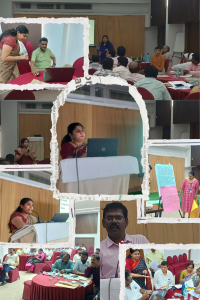 The consultation was a success as the CSOs actively participated in the group discussions and made further commitments to collaborate with CCL to carry forward the dialogue with respective stakeholders towards strengthening the NFSA State Rules through state specific strategic action plan. Representatives from Kerala proposed engaging in dialogue with Members of Parliament (MPs) and Members of Legislative Assembly (MLAs) to strengthen provisions for women empowerment and role of local authorities in the Kerala State Rules. Similarly, representatives from Andhra Pradesh CSOs plan to initiate interdepartmental convergence and dialogue with government stakeholders to strengthen the rules and increase government accountability and transparency in the grievance redressal mechanisms and social audit for all entitlements under NFSA. CSO members from Telangana committed to take forward a bottom-up evidence-based approach in their advocacy action plan to strengthen the State Rules. They aim towards formation of vigilance committees under NFSA provisions at select districts, then further document grassroots impact created by vigilance committees in ensuring right to food in those districts and present it to the government stakeholders to influence them to bolster the rules and implementation. Tamil Nadu plans to include Tamil Nadu Food Security Rules, 2017 specific recommendations in the collective CSO manifesto to engage with MPs and MLAs in light of the upcoming state elections this year.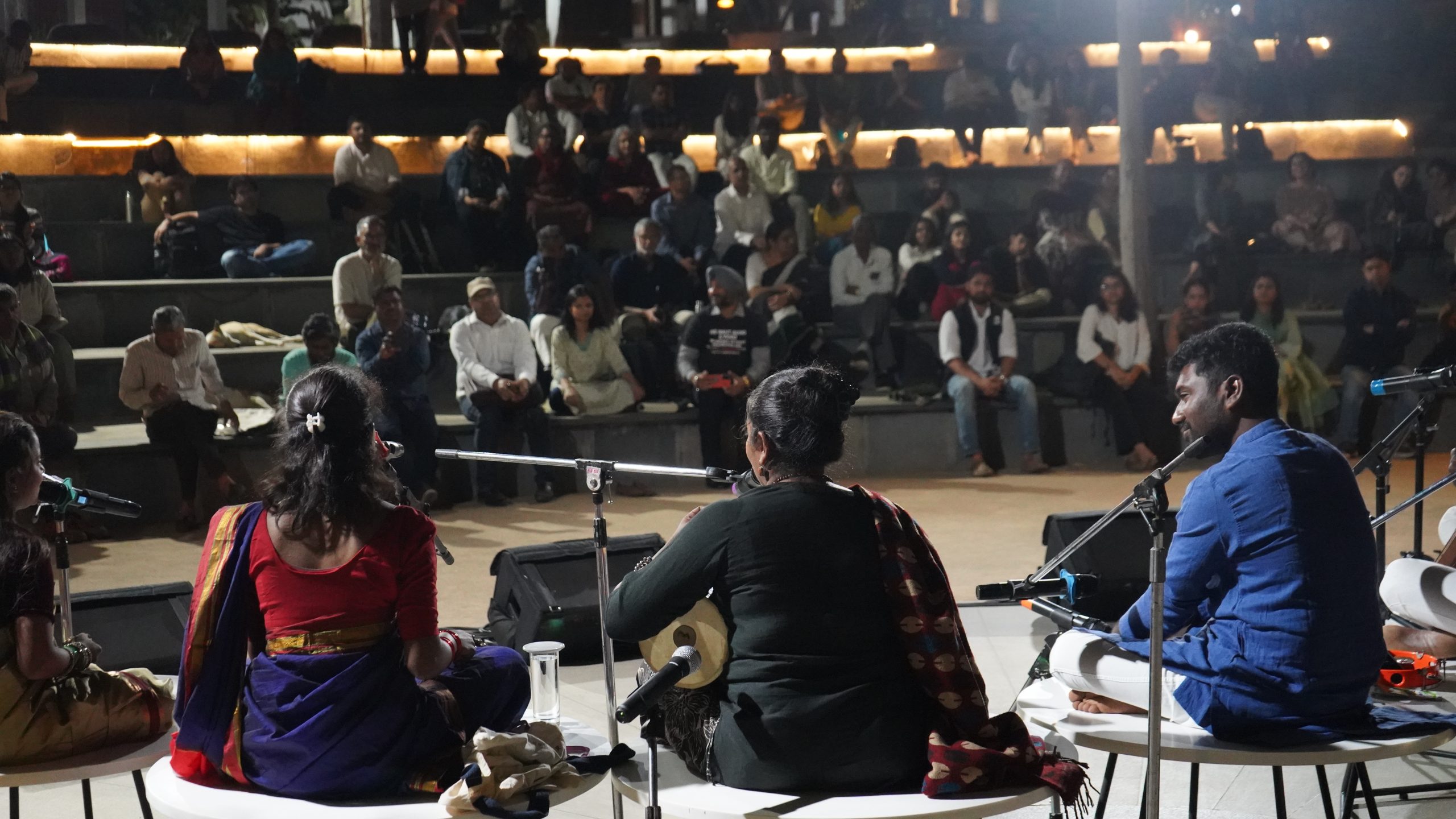
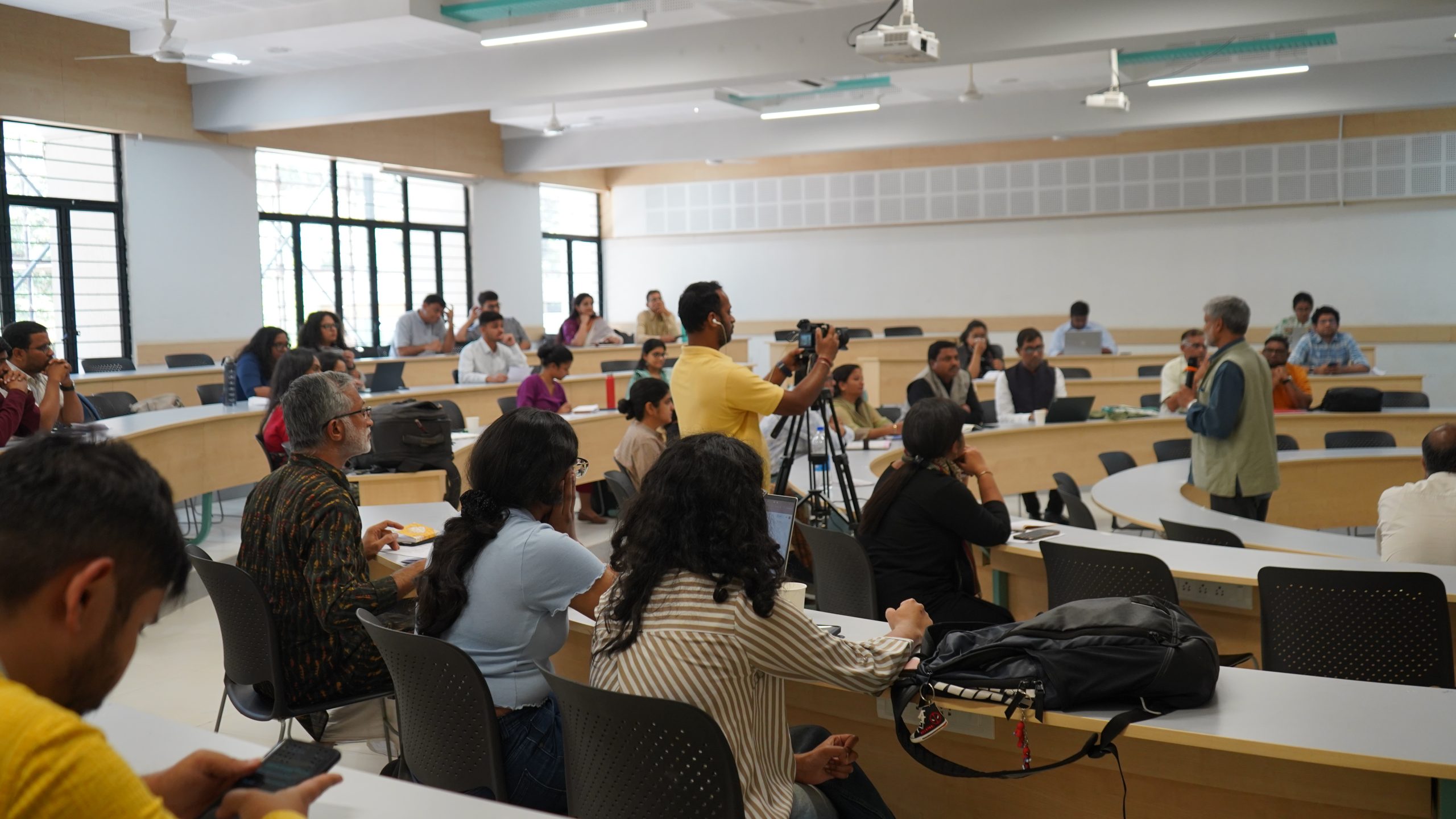
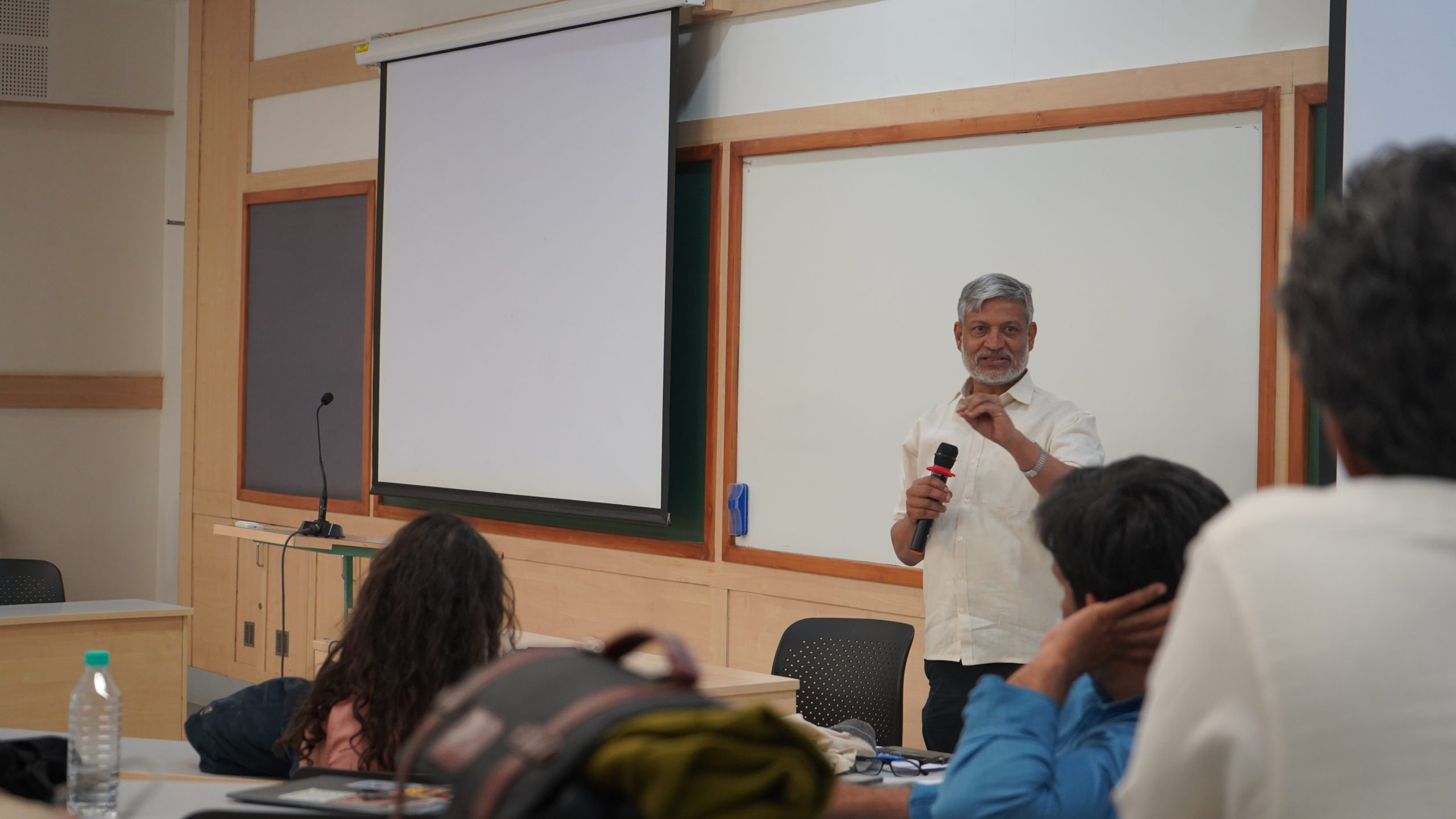
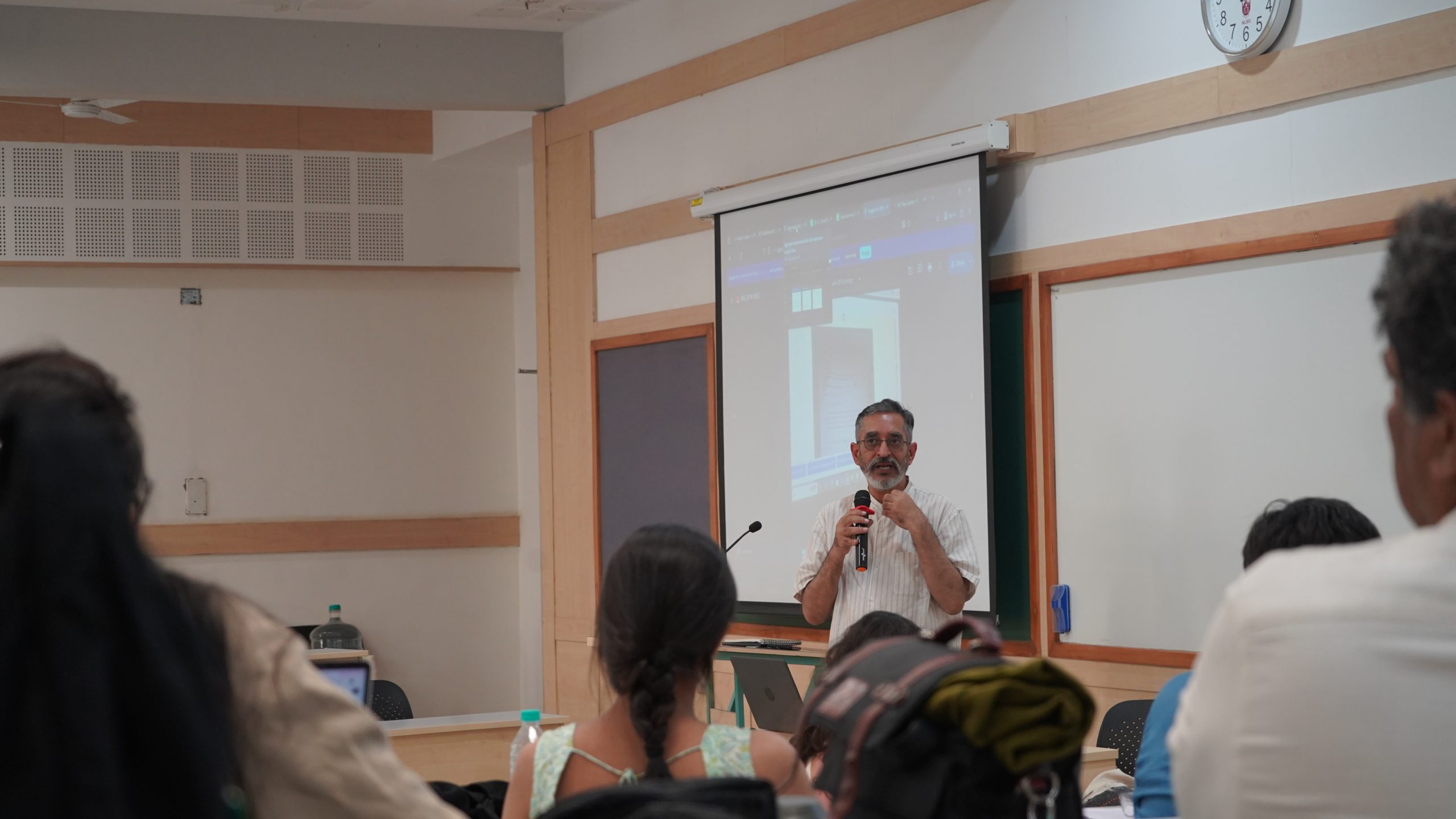
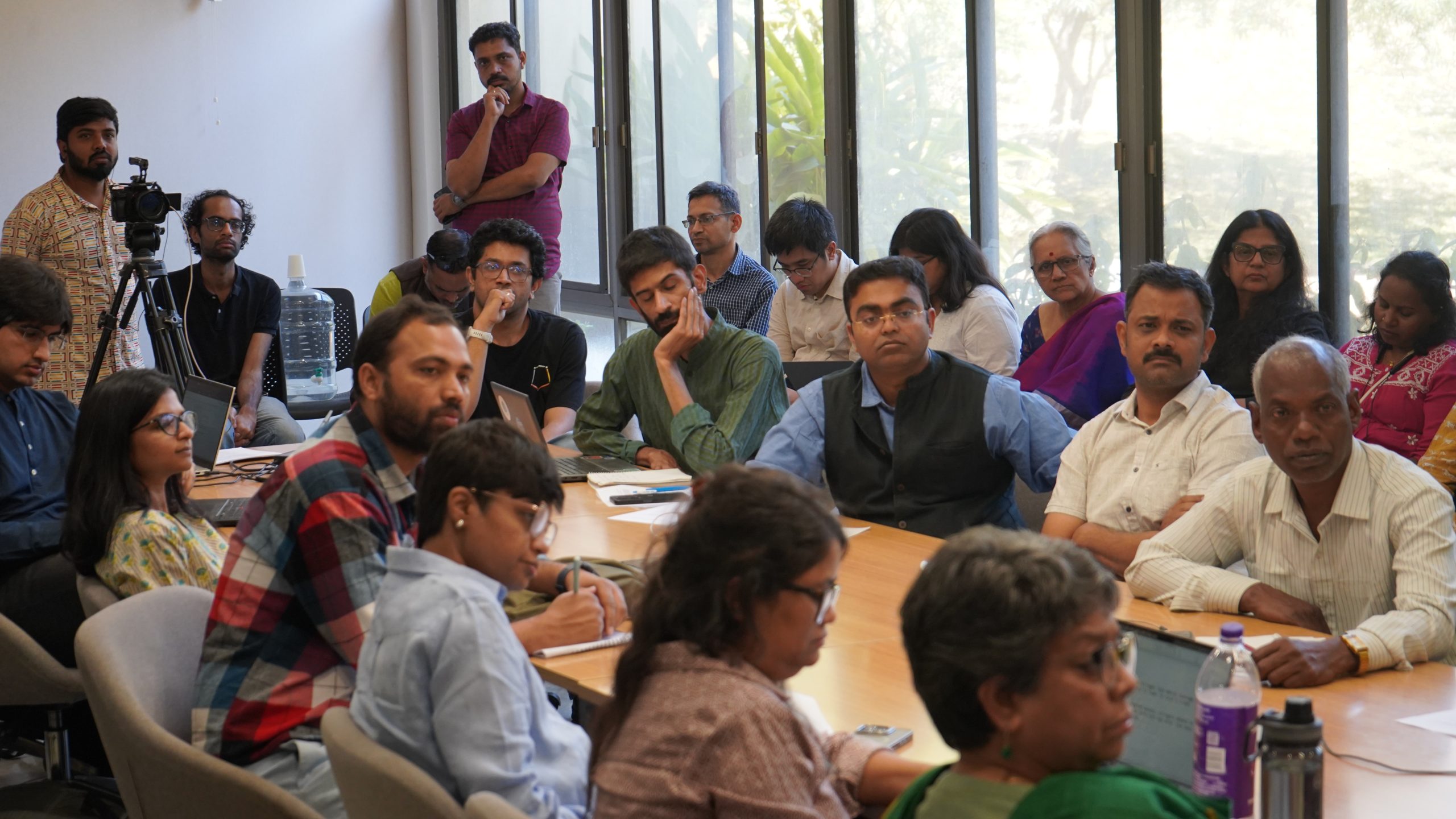
 We began our faculty seminar series this trimester with a guest lecture by Prof. Samira Sheikh, historian of South Asia at Vanderbilt, and the Obaid Siddiqi Chair in the History and Culture of Science, 2025-26 at the NCBS in Bengaluru. The seminar was held on March 4, 2026, at 3.30 pm, in the Ground Floor Conference Hall at NLSIU’s Training Centre.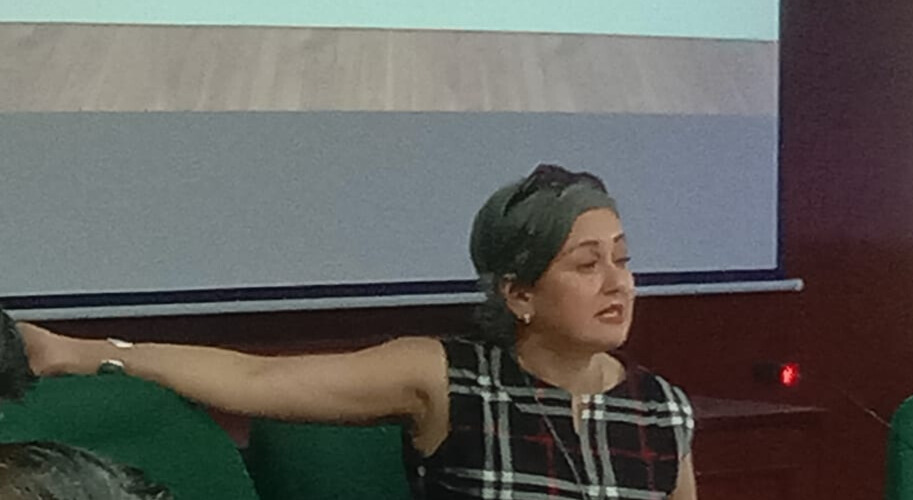
 Ms Faiza Rahman
 Mr. John Sebastian
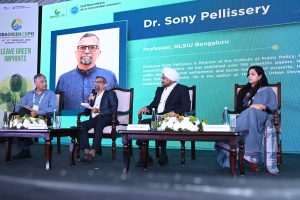 Professor Sony’s intervention was focussed on how development doctrine evolved from conceptualising cities as vehicles of growth to cities as spaces to realise justice. The latter focus is what is called New Urbanism. In other words, New Urbanism recognises the failures of traditional city-focussed growth models. Urban Planning as a profession has to prioritise whether the exercise is to build cities for growth or to build cities of spatial justice. Traditionally, planning as an instrument borrowed colonial models and focused on making aesthetic cities (to attract capital), to make cities look modern (contrasted to traditional countryside), and functional differentiation (as business areas, residential areas and industrial locations) within city. These three functions primarily served the interests of markets. Within intensified markets exchanges through globalisation, cities across the world began to look alike. This led to loss of ecological character of cities. Ecological crisis is an invitation to restore the ecological character of cities.